
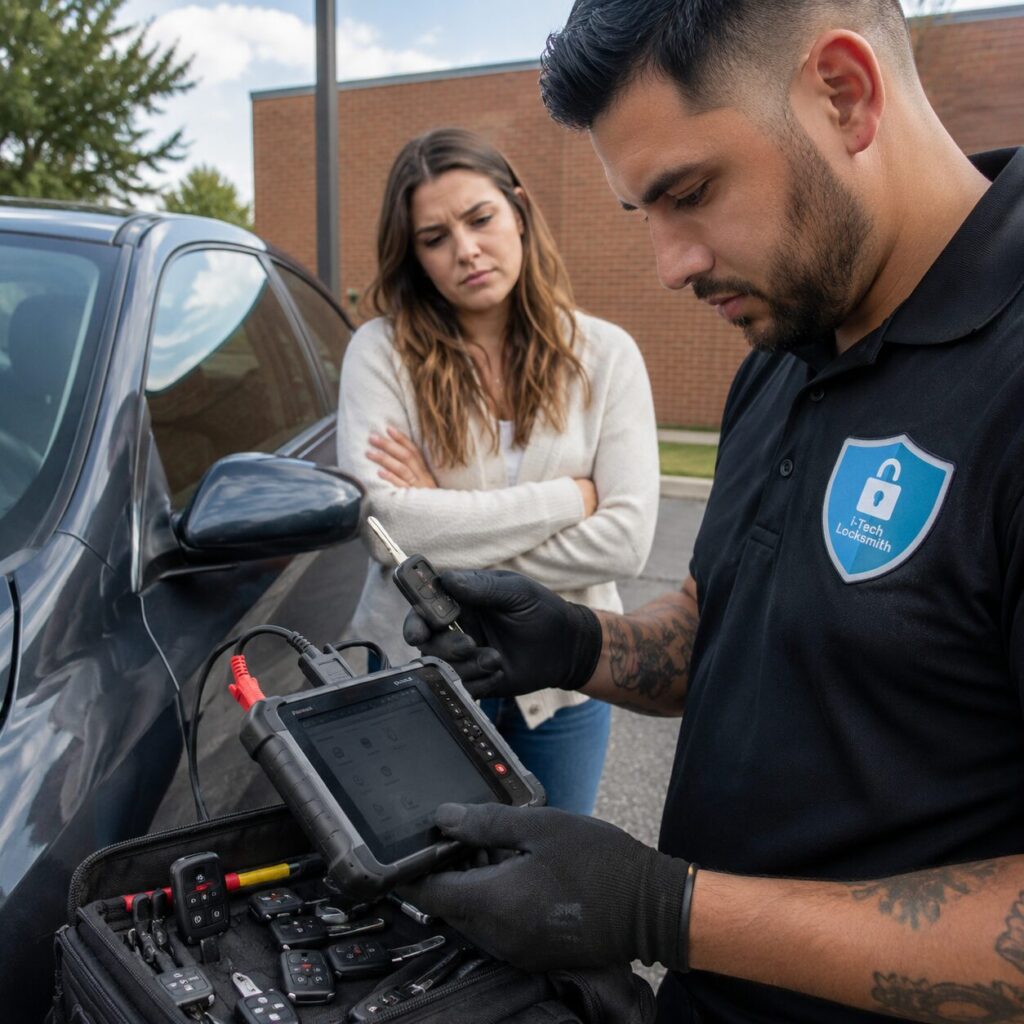
A Clear Guide to Choosing the Right Car Key Service
A car key can unlock your door correctly yet still fail to start your vehicle. That surprising fact matters because many modern car keys contain electronic parts that a basic metal copy cannot replace. Therefore, choosing between a copy and a full replacement requires more than looking at the key blade.
AI Overview: You need a car key replacement instead of a key copy in Arlington when your original key is lost, badly worn, cracked, electronically damaged, or no longer recognized by the vehicle. A basic key copy is usually suitable when you have a fully working key and only need a spare. However, transponder keys, smart keys, proximity fobs, and many remote keys may require both precision cutting and vehicle programming. A locksmith should inspect the key blade, transponder, fob battery, ignition, and vehicle security system before recommending the correct service.
Knowing the difference can save time, prevent another key failure, and help you avoid paying for the wrong solution. It can also prevent a weak copy from leaving you stranded later.
At I-Tech Locksmith Arlington, our professional view is clear. Replacement is usually needed when a key is missing, badly worn, broken, or unable to communicate with the vehicle.
A copy may be enough when the driver has a good working key and simply wants a spare. However, the exact answer always depends on the key and vehicle.
This guide explains when each service makes sense. It also covers warning signs, key types, diagnostic steps, and common customer situations in Arlington.
1. What Is the Main Difference Between a Key Copy and Replacement?
A car key copy is normally made from an existing working key. The locksmith traces or decodes that key and cuts another blade with the same pattern.
A replacement is different because it may restore more than the blade. Depending on the vehicle, replacement may include a new shell, transponder chip, remote, smart fob, or programmed electronic credential.
The key differences include:
- A copy usually depends on having a reliable working key available.
- A replacement may be created when the original key is lost, damaged, or electronically defective.
For older vehicles, a metal key copy may be simple. However, many newer vehicles use an immobilizer that checks for an approved electronic code before allowing the engine to start.
A copied blade may therefore open the door or turn in the ignition. Still, the engine may not start without a correctly programmed transponder.
Manufacturer service information filed with the National Highway Traffic Safety Administration shows that some immobilizer systems require an approved programmed key before the vehicle can start. This confirms why cutting the blade alone may not solve a modern key problem. Review the NHTSA immobilizer information.
Therefore, the most useful question is not simply, “Can this key be copied?” Instead, ask whether copying it will restore every function your vehicle requires.
2. When Do You Need a Full Car Key Replacement?
You normally need a full replacement when the existing key cannot serve as a reliable source for another working key. Replacement may also be necessary when electronic functions have failed.
Common replacement situations include:
- Your only working car key has been lost or stolen.
- Your key is broken, cracked, bent, badly worn, or no longer recognized.
You may also need replacement when the key turns the lock but does not start the engine. In that case, the blade may still be usable while the transponder has failed.
Likewise, replacement may be needed when a smart key is not detected. A new battery can fix some fob problems, but it will not repair every damaged chip, circuit, antenna, or internal connection.
A qualified locksmith should first test the key and related systems. This helps separate a bad key from an ignition problem, weak battery, damaged lock, or vehicle security fault.
Replacement is most likely when:
- The physical key can no longer be used safely or copied accurately.
- The electronic credential cannot be repaired or programmed reliably.
A complete replacement should restore the required blade, chip, remote, and starting functions. However, the exact work varies by vehicle year, make, model, and key system.
3. When Is a Key Copy the Better Choice?
A copy is often the better choice when you still have a fully working key and want an extra one. Creating a spare early is usually easier than waiting until every key is lost.
A copy may be suitable when:
- The existing key starts the vehicle and operates normally.
- The blade is straight, clear, and free from serious wear.
The original key should also work without repeated attempts. If it catches, sticks, or requires special movement, copying it may reproduce the same problem.
Some copies still need programming. For example, a locksmith may cut a duplicate transponder key and then register its chip with the vehicle.
Therefore, “copy” does not always mean mechanical cutting alone. It may describe a duplicate created from an existing key while still requiring electronic programming.
A spare is especially useful when:
- More than one household member regularly drives the vehicle.
- The driver currently depends on only one working key.
Making a spare before an emergency can reduce stress and provide a backup during a loss, lockout, or sudden key failure. It also gives the locksmith a working reference key.
For more preparation tips, read this guide about completing car lock and key checks before a road trip.
4. Why Can a Basic Key Copy Fail?
A basic copy focuses mainly on the physical shape of the blade. However, modern starting systems may require an electronic exchange between the key and vehicle.
A copy may fail because:
- It has no compatible or correctly programmed transponder chip.
- It repeats wear or damage found on the original blade.
For example, imagine that the original key has rounded cuts after years of use. A direct copy of that worn pattern may produce another key that turns poorly.
In some cases, a locksmith can decode the correct factory depth rather than tracing the worn blade. That process may produce a more accurate replacement.
Electronic failure creates another concern. A key may fit perfectly while the car rejects its chip code.
AAA explains that programming synchronizes transponder keys, smart keys, and fobs with a vehicle security system. That function is separate from cutting the physical key. Read AAA information about key programming.
A copy may not solve the problem when:
- The immobilizer does not recognize the original transponder.
- The fob circuit has suffered water, heat, impact, or internal damage.
Therefore, testing is important. Without testing, a customer may pay for a copied blade that still cannot start the vehicle.
5. What Warning Signs Should Arlington Drivers Never Ignore?
Car keys often show warning signs before they stop working completely. Acting early can prevent an urgent lockout or a no start condition.
Watch for these physical signs:
- The blade looks bent, cracked, thin, twisted, or heavily worn.
- The key feels loose or requires force inside the lock or ignition.
Also watch for electronic signs:
- The vehicle displays a key detection or immobilizer warning.
- The remote works only at close range or after several button presses.
A weak fob battery is a common and simple cause of reduced remote range. Therefore, battery testing or replacement may be the right first step.
However, repeated failure after battery replacement may point to a damaged fob, failed internal contact, programming issue, or vehicle receiver problem.
Other warning signs include delayed starting, intermittent key recognition, buttons that stick, and a cracked fob case. A damaged case can expose delicate electronics to moisture and impact.
Do not ignore a key that works only after several attempts. Intermittent operation can become complete failure without much warning.
Drivers should arrange an inspection when:
- Key performance has changed during normal daily use.
- Starting or unlocking requires a new movement, angle, or repeated attempt.
Early diagnosis gives you more options. It may also allow you to create a replacement while the existing key still works.
6. What Should a Locksmith Check Before Replacing Your Key?
A responsible recommendation begins with diagnosis. Replacing a key without checking the full problem can lead to unnecessary cost or an incomplete repair.
The first inspection should include:
- The blade, shell, buttons, battery, and visible physical condition.
- The transponder, remote signal, ignition, and vehicle recognition response.
The locksmith should also confirm the vehicle year, make, model, and exact key type. Two vehicles from the same manufacturer may use different systems.
The diagnostic process may include checking whether the key:
- Unlocks the door and turns smoothly in the ignition.
- Starts the engine and completes every required remote function.
The technician may also compare a second working key when one is available. If one key works and another does not, the faulty key becomes a stronger suspect.
However, when every key fails, the problem may involve the ignition, antenna, immobilizer, receiver, battery, or another vehicle component.
Some no start concerns can even involve radio interference near the key. Manufacturer information submitted to NHTSA notes that nearby radio frequency devices or multiple keys can interfere with authentication in certain systems. Therefore, diagnosis should come before assumptions.
A proper check helps determine whether you need:
- A simple blade copy, fob battery, repair, or new shell.
- A fully cut and programmed replacement key or smart fob.
7. What Usually Causes a Car Key to Fail?
Car keys face daily pressure. They are dropped, twisted, carried with heavy key rings, exposed to heat, and sometimes sent through a washing machine.
Common physical causes include:
- Years of wear against door locks and ignition components.
- Bending, dropping, crushing, or forcing the key.
Electronic keys face additional risks. Moisture can corrode internal contacts, while impact can crack a circuit board or loosen a battery terminal.
Common electronic causes include:
- Water, heat, impact, or damaged internal fob components.
- Failed programming, chip damage, or lost vehicle recognition.
Normal battery depletion can also stop remote buttons from working. However, a dead remote battery does not always mean that the entire key needs replacement.
AAA notes that replacing a dead fob battery is often a basic maintenance step. Therefore, a technician should rule out the battery before recommending a more costly service.
Blade wear is also important. A worn key may gradually require more pressure until it eventually stops turning.
Furthermore, forcing a weak key can break it inside the ignition or door lock. Drivers can learn more about the risks in this guide to handling a key stuck in a lock.
8. How Does Your Vehicle Key Type Affect the Decision?
Not every car key uses the same technology. Therefore, the correct service depends heavily on the system installed in your vehicle.
Common key types include:
- Traditional metal keys and mechanical cut keys.
- Transponder keys, laser cut keys, smart keys, and proximity fobs.
A traditional metal key may need only accurate cutting. However, even a key with a standard looking blade may contain a hidden chip.
A transponder key sends an identification code to the vehicle. If the code is approved, the immobilizer permits the engine to start.
A remote head key combines the blade, transponder, and remote buttons in one housing. Damage to one part does not always mean every part has failed.
A smart key or proximity fob may allow starting without inserting a blade. It can still contain an emergency blade for door access.
Your service may therefore involve:
- Cutting a mechanical blade to match the vehicle locks.
- Programming or registering an electronic key with the security system.
I-Tech Locksmith Arlington states that its automotive service supports standard keys, smart keys, proximity keys, transponder keys, laser cut keys, fobs, and vehicle remotes.
Compatibility must still be confirmed for the exact vehicle. No single blank, chip, or programming process works for every model.
9. What Real Cases Show the Difference Clearly?
Several common service cases explain why diagnosis matters more than the customer’s first guess.
Case 1: A Worn Original Produces a Weak Copy
A driver asks for a spare because the original still starts the car. However, the blade is badly rounded and works only when moved at a certain angle.
Important details include:
- A direct trace may reproduce the worn cuts.
- Decoding and creating a more accurate replacement may be safer.
In this case, the customer asked for a copy. Still, the key’s condition may support replacement from the correct code or decoded lock pattern.
Case 2: The Blade Works but the Engine Does Not Start
The key opens the door and turns in the ignition. However, the security light remains active and the engine will not start.
Possible findings include:
- The blade is functional, but the transponder is damaged.
- The key has lost programming or is not recognized.
A metal copy would repeat the working blade. However, it would not restore the missing electronic authorization.
Case 3: Every Original Key Is Lost
A driver has no working key available. Therefore, there is nothing reliable to duplicate.
The service may require:
- Identifying and cutting the correct blade.
- Programming a replacement chip, remote, or smart fob.
Some smart key systems have formal reset procedures when every master key is lost. Manufacturer service documents show that reset procedures can erase previously registered keys before new ones are added.
Case 4: A Damaged Fob Unlocks but Works Intermittently
The emergency blade opens the door, but the fob is not consistently detected. The problem continues after a fresh battery is installed.
The technician should check:
- Internal fob damage, signal output, and programming.
- The vehicle receiver, antenna, immobilizer, and related systems.
These cases show why the correct solution may be a copy, repair, reprogramming, or full replacement.
10. What Should You Expect During Car Key Replacement?
A professional replacement process should follow clear steps. The technician should not begin by guessing what key your vehicle uses.
First, expect ownership and vehicle details to be confirmed. This protects the vehicle owner and helps the locksmith identify the correct components.
The opening steps normally include:
- Confirming lawful access or ownership of the vehicle.
- Recording the vehicle year, make, model, and key type.
Next, the technician examines the existing key when it is available. The ignition, door lock, transponder response, and remote functions may also be checked.
The production stage may include:
- Cutting the correct blade with suitable equipment.
- Programming the chip, remote, or proximity fob when required.
Finally, the technician should test the finished key. Testing may include the door locks, trunk, ignition, remote buttons, proximity features, and engine starting system.
The process should confirm that:
- The key turns smoothly without excessive force.
- Every required electronic and mechanical function operates correctly.
The customer should also receive a clear explanation of the service. Vehicle key replacement varies greatly, so pricing should reflect the actual key and work involved.
11. How Can You Avoid Choosing the Wrong Service?
Begin by explaining every symptom, even when one detail seems minor. A key that unlocks the door but does not start the engine gives the technician useful information.
Before approving service:
- Ask whether the problem is physical, electronic, or both.
- Ask which functions the completed key will support.
You should also ask whether programming is included. Some online products are only shells or unprogrammed blanks.
An inexpensive blank may not contain the correct chip. Likewise, a used smart key may have limitations that prevent successful registration with another vehicle.
Protect yourself by requesting:
- A clear service explanation before work begins.
- Testing of all promised functions before the technician leaves.
Be cautious when a provider gives a final price without knowing the vehicle details. The required blade, transponder, fob, and programming process can differ significantly.
The Federal Trade Commission advises consumers to slow down, verify unexpected claims, and avoid pressure designed to force an immediate payment decision. Those general fraud prevention steps are useful when selecting any urgent service provider. Review FTC guidance for avoiding scams.
For more locksmith specific warning signs, read this guide about how to recognize and avoid a locksmith scam.
12. Why Is Making a Spare Key Early a Smart Decision?
Waiting until your only key fails can turn a planned service into an emergency. Therefore, a spare should be created while your working key remains reliable.
A spare can help when:
- Your main key is lost, damaged, locked inside, or misplaced.
- Another authorized driver needs dependable vehicle access.
Having a working key may also simplify diagnosis and duplication. The locksmith can compare key operation and confirm whether the vehicle currently recognizes the original.
However, do not copy a weak key without inspection. A spare made from a damaged source may create false confidence.
Instead, ask the locksmith to confirm:
- Whether the blade remains accurate enough for duplication.
- Whether the chip and electronic functions are stable.
Store the spare in a secure place outside the vehicle. Do not leave it inside the same bag or key ring as your main key.
You can also review these practical tips for preventing car lockouts and lost key emergencies.
13. What Is Our Professional Recommendation?
Based on our experience, replacement is the stronger choice when a key is broken, badly worn, lost, or no longer communicating with the vehicle.
A copy is usually appropriate when:
- You have a fully working original in good physical condition.
- You want a dependable spare before an emergency occurs.
Replacement is usually appropriate when:
- The only key is lost, damaged, unreliable, or electronically defective.
- The vehicle needs a newly cut and programmed key.
However, the key should not be blamed automatically. Ignition wear, a weak vehicle battery, antenna problems, or security system faults can create similar symptoms.
Therefore, the best first step is a complete inspection. Diagnosis protects the customer from purchasing a key that does not address the real cause.
At I-Tech Locksmith Arlington, the intended process is to identify whether the customer needs duplication, repair, programming, or full replacement. The completed key should then be tested across all required functions.
Frequently Asked Questions
Can a copied car key start a modern vehicle?
A copied key can start a modern vehicle only when it has the correct blade and an approved electronic credential. Many vehicles require a programmed transponder chip. Therefore, a plain metal copy may unlock the door or turn the ignition while the immobilizer still prevents the engine from starting.
Can I copy a key that works only sometimes?
You should have the key inspected before copying it. Intermittent operation may indicate worn blade cuts, a cracked shell, weak battery, chip damage, or a vehicle recognition problem. A direct copy could repeat physical wear and may not correct an electronic fault.
Do I need replacement when my fob battery dies?
Not always. A weak or dead battery is often solved by installing the correct replacement battery. However, continued failure may indicate damaged contacts, circuit problems, lost programming, or another fault. Testing should determine whether battery service, repair, reprogramming, or replacement is appropriate.
Can a locksmith make a key when every original is lost?
In many cases, yes. The locksmith may identify the correct key, cut the blade, and program the required chip or fob. The exact process depends on the vehicle. Ownership verification and accurate vehicle information are normally required before lost key service begins.
Why does my key unlock the car but not start it?
The mechanical blade and electronic transponder perform different jobs. Your blade may operate the door while the vehicle rejects or fails to detect the chip. A weak battery, damaged transponder, programming issue, interference, or immobilizer fault may cause this symptom.
Is a smart key copy the same as a metal key copy?
No. A smart key normally requires compatible electronic hardware and vehicle registration. It may also include an emergency blade that needs cutting. Therefore, producing a working smart key can involve identification, cutting, programming, synchronization, and complete function testing.
Can a badly worn car key damage my ignition?
A worn or bent key can place added stress on the ignition and may stop turning smoothly. Forcing it can increase the risk of breakage. However, poor turning can also result from ignition wear. Both the key and ignition should be checked before replacement.
Should I replace a cracked key fob case?
A cracked case should be addressed before moisture, dirt, or further impact damages the internal electronics. Sometimes the internal components can be moved into a correct new shell. However, a damaged circuit, chip, or button assembly may require a fuller replacement solution.
How do I know whether my car key contains a transponder?
Many transponder keys have a plastic head containing a hidden chip, but appearance alone is not conclusive. A locksmith can identify the key system using the vehicle year, make, model, key information, and diagnostic equipment. Testing confirms whether programming is required.
Should I make a spare before my only key fails?
Yes. A spare made while the original works can reduce the risk of an urgent lost key situation. However, the original should first be checked for wear and electronic problems. A properly cut and programmed spare is more useful than a copy based on a failing source key.
Conclusion: Choose the Service That Solves the Whole Problem
A car key copy is usually best when your current key works correctly and you simply need a spare. In contrast, replacement is generally needed when the key is lost, broken, badly worn, unreliable, or electronically defective.
The visible blade tells only part of the story. Transponders, smart fobs, remotes, and immobilizers can determine whether the vehicle accepts the key.
Therefore, do not assume that a cheap metal copy will restore every function. Likewise, do not assume that every remote failure requires a completely new key.
The safest decision begins with inspection. A locksmith should check the blade, battery, chip, remote functions, ignition, and vehicle recognition system.
That process identifies whether you need a copy, repair, reprogramming, or full car key replacement instead of a key copy in Arlington.
Contact I-Tech Locksmith Arlington
Do not wait until an unreliable key leaves you unable to enter or start your vehicle. Contact I-Tech Locksmith Arlington for an automotive key inspection and a service recommendation based on your exact vehicle.
Phone: 817 383 1387
Location: 1738 W Division St, Arlington, TX 76012
Website: www.i-tech-locksmith.com