
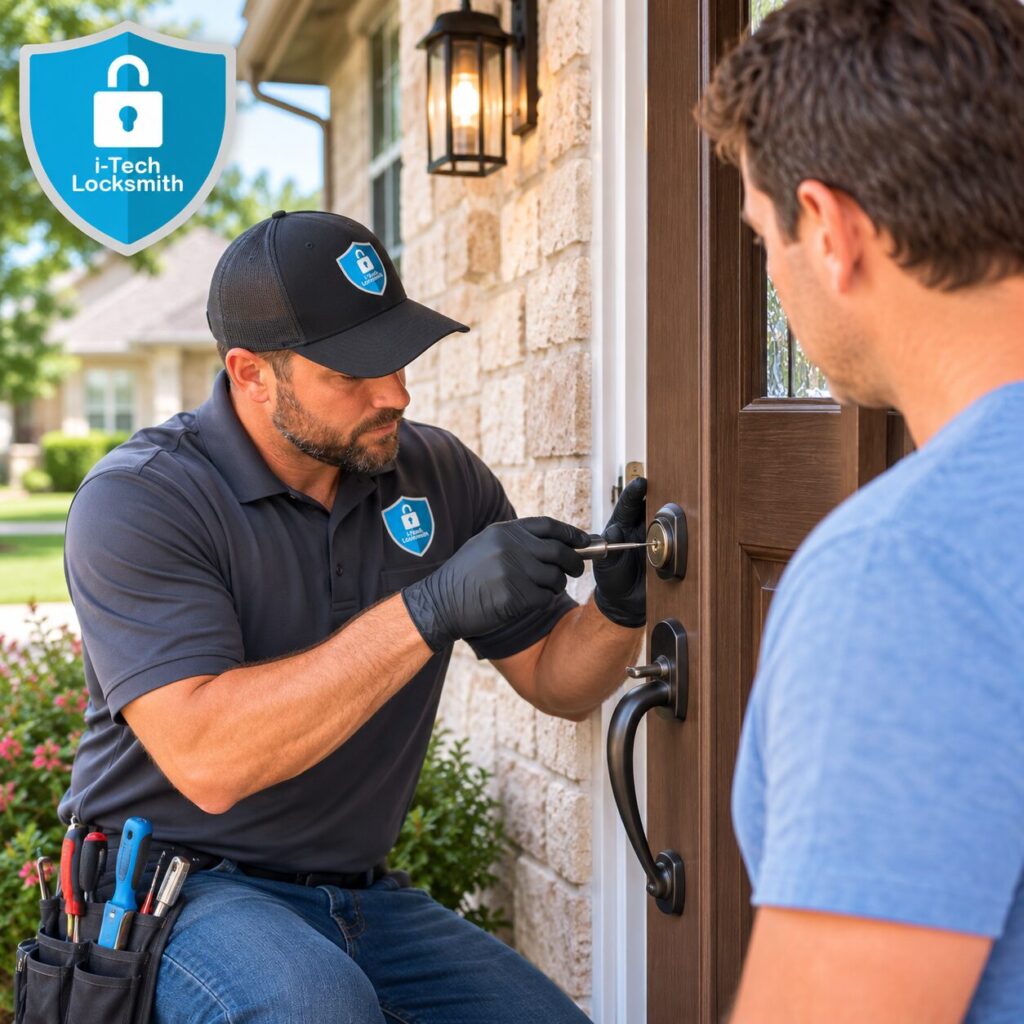
Here is a surprising fact for every new homeowner: even a newly built home may have keys that passed through several hands before closing. Builders, contractors, real estate agents, cleaners, inspectors, and former owners may have received access. Therefore, receiving keys at closing does not prove that you have every working copy. The ALOA Security Professionals Association recommends changing locks after purchasing either a new or older home.
AI Overview: Why Fort Worth Homeowners Should Rekey Locks
Fort Worth homeowners should rekey locks after moving because the history of the existing keys is rarely clear. Previous owners, relatives, agents, contractors, cleaners, and other workers may still have copies. Rekeying changes the working parts inside each suitable lock, so the old keys stop working. However, the existing lock hardware usually remains installed.
For most sound locks, rekeying offers a practical way to restore key control without replacing every lock. A locksmith should first inspect each selected lock, verify authorized access, explain the price, complete the rekeying work, cut new keys, and test every door. If a lock is outdated or offers weak security, replacement may be the safer recommendation.
Key reasons to schedule rekeying include:
- Old copies may remain with people you do not know.
- Rekeying gives your household control over current access.
- Several compatible locks may be set to use one new key.
- A professional inspection may reveal outdated security hardware.
- New keys can provide greater confidence from the start.
1. Why Unknown Keys Create a Serious Security Gap
Moving day is full of urgent work. You may be arranging furniture, transferring utilities, checking appliances, and updating your mailing address. As a result, the existing locks may receive little attention.
However, those locks control physical access to your new home. You may trust the seller, yet the seller may not remember every key made during their ownership. A key could have been given to a relative years ago and never returned. Another copy could remain with a cleaner, contractor, pet sitter, or former neighbor.
Based on the experience shared for I-Tech Locksmith Fort Worth, the most likely people to have received old keys include:
- Previous homeowners and members of their families
- Real estate agents involved with showing or managing the property
- Contractors who completed repairs or improvements
- Cleaners who prepared the property before closing
The concern is not that these people intend to enter your home. Instead, the concern is that you cannot confirm where every copy is now. A missing key could have been lost, copied, or passed to someone else.
Therefore, rekeying is mainly about restoring key control. After properly rekeying a lock, the old key should no longer operate it. Your household can then decide who receives each new copy.
2. What Rekeying Actually Changes Inside Your Locks
Rekeying is different from replacing an entire lock. During a standard rekeying service, a locksmith changes the internal key combination of a compatible lock. The existing key no longer aligns with the revised internal parts. Therefore, it can no longer turn the lock.
The exterior lock hardware often stays in place. This makes rekeying useful when the current hardware remains secure, suitable, and functional.
The main results of rekeying include:
- Existing keys are disabled for each completed lock.
- A new key is cut to match the revised combination.
- Compatible locks may be arranged to use the same key.
- The homeowner avoids replacing sound hardware without a clear reason.
ALOA lists changing and rekeying locks among the standard services provided by professional locksmiths. It also explains that locksmiths can assess doors, frames, hardware, and broader security needs.
Rekeying does not repair every physical weakness. For example, it will not strengthen a damaged door, reinforce a weak frame, or modernize outdated hardware. That is why an inspection should come before the final recommendation.
3. Seven Powerful Reasons to Rekey After Moving
3.1 You Cannot Confirm Every Existing Key Copy
The closing documents may show that you received two or three keys. However, they cannot confirm how many duplicates were made during earlier years.
Several common situations can create unknown copies:
- A former owner gave a spare to a relative or neighbor.
- A contractor received a key during a renovation.
- A cleaning company used a copy before the property was listed.
- A real estate agent kept access during property showings.
Rekeying solves this concern by changing which key operates the lock. Therefore, you do not need to locate every old copy before securing your home.
3.2 Previous Owners May Still Have Working Keys
Most sellers return the keys they currently use. Still, an older copy may remain in a drawer, vehicle, office, storage box, or family member’s home.
This situation can happen without dishonest intent. Nevertheless, your home security should not depend on another person remembering every copy.
Rekeying helps because:
- The seller’s former keys should stop working.
- Your household receives a fresh set of controlled keys.
- You can record who receives each new duplicate.
This is also why rekeying should not be treated as an accusation against the former owner. It is a normal access control step after ownership changes.
3.3 Contractors and Service Providers May Have Received Access
Homes often receive repairs before being listed or sold. Painters, flooring crews, plumbers, electricians, cleaners, and other workers may need access when the owner is absent.
Although most workers act responsibly, a key can still be misplaced or copied. In addition, the new owner may never receive a complete list of everyone who entered the home.
Consider these questions:
- Was a lockbox used while the property was listed?
- Did any contractor keep a temporary key?
- Were cleaners or maintenance workers allowed inside alone?
- Did an agent make extra copies for easier access?
You may never receive complete answers. However, rekeying removes the need to rely on uncertain key history.
3.4 Rekeying Restores Control From the First Day
Home security begins with knowing who can unlock each exterior door. Therefore, the strongest benefit of rekeying is not merely receiving new metal keys. The real benefit is restoring control.
After the service, homeowners can establish clear access rules:
- Give keys only to trusted household members.
- Record every duplicate made later.
- Avoid hiding keys in visible outdoor locations.
- Collect keys when access is no longer needed.
The Fort Worth Police Department offers crime prevention programs, security surveys, and inspections that help residents evaluate broader risks. These services show why home protection works best as a planned process rather than one isolated product.
3.5 One New Key May Work With Several Doors
Many homeowners inherit a crowded key ring after moving. The front door may use one key, while the back door, garage entry, and side door use different keys.
When the locks are compatible, a locksmith may be able to key several doors alike. This means one new key can operate multiple selected locks.
Possible benefits include:
- Fewer keys to carry and identify
- Easier access for trusted household members
- Simpler control over future duplicates
- Less confusion during an urgent situation
However, not every lock can be keyed together. Brands, keyways, lock types, and hardware conditions affect compatibility. Therefore, the technician must inspect the locks before promising a single key solution.
3.6 Rekeying May Cost Less Than Replacing Sound Locks
If the existing hardware is secure and works correctly, full replacement may not be necessary. Rekeying retains the suitable hardware while changing the key that operates it.
This can reduce unnecessary expense because:
- Sound handles and deadbolts remain installed.
- Labor may be lower than a complete hardware replacement.
- The homeowner pays for a security reset without buying every lock again.
However, the cheapest option is not always the correct option. Outdated or weak locks may deserve replacement instead. Homeowners can review the practical differences in this guide to rekeying versus replacing locks.
3.7 A Lock Inspection Can Reveal Hidden Weaknesses
Your locks may open and close while still offering poor security. Older hardware can be worn, basic, or unsuitable for the current door.
A professional inspection may identify:
- Outdated locks that offer limited protection
- Loose hardware or damaged internal parts
- Weak deadbolts or unsuitable strike plates
- Doors that do not close or align correctly
ALOA notes that weather, door alignment, worn keys, and worn locks can affect lock operation. Therefore, a difficult lock should not automatically be blamed on the key alone.
You can also compare your home against this detailed locksmith home security checklist.
4. When Should New Fort Worth Owners Schedule Rekeying?
Based on the service guidance provided, homeowners should arrange rekeying as soon as possible when the history of the keys is unclear.
Ideally, schedule the service near the ownership transfer. Some homeowners arrange it for closing day. Others complete it immediately after receiving authorized access.
Fast scheduling is helpful because:
- Fewer unknown keys remain active after you take possession.
- Your household can begin using controlled keys immediately.
- Any outdated locks can be identified before daily routines begin.
- You avoid forgetting the task after unpacking becomes busy.
You do not need to wait until a suspicious event occurs. In fact, rekeying works best as a preventive measure.
A useful moving sequence is:
- Confirm that you are legally authorized to change the locks.
- List every exterior door, gate, garage entry, and detached structure.
- Schedule an inspection as soon as the key history becomes uncertain.
- Decide which trusted people should receive new copies.
- Store spare keys in a controlled and secure place.
Homeowners who are unsure where to keep backups can review these ideas for securing spare keys before hosting guests.
5. Which Locks Should Be Included in the Service?
The front entrance receives the most attention. However, an overlooked rear or garage door can create the same access problem.
A complete walk through should include:
- Front, back, and side exterior doors
- Interior doors connecting the garage and living space
- Detached garages, sheds, workshops, and storage rooms
- Exterior gates with keyed locks
- Doors with both knob locks and separate deadbolts
Homeowners should also identify any door that was rarely used by the previous owner. An unused side entrance may still have a working lock and an unknown key copy.
For each opening, ask:
- Does this lock protect access to the home or valuable property?
- Do I know who has held a key?
- Does the lock work smoothly?
- Is the hardware modern enough for my security goals?
- Should this lock match the same key as another door?
This review helps the locksmith create a clear scope before work begins.
6. When Is Replacement Better Than Rekeying?
The selected recommendation from I-Tech Locksmith Fort Worth is clear: outdated hardware may need replacement instead of rekeying.
Rekeying changes access, but it does not improve the physical design of an old lock. Therefore, replacement may be more appropriate when the hardware no longer meets the homeowner’s security needs.
Possible reasons to replace include:
- The lock uses an outdated or weak design.
- The homeowner wants higher security hardware.
- The lock cannot accept the preferred key system.
- The existing hardware does not match the new security plan.
- The owner wants electronic or smart access features.
Homeowners should also learn the warning signs that locks need replacement.
The technician should explain why replacement is recommended. Clear reasoning helps the homeowner separate a necessary upgrade from an unnecessary sale.
7. What Happens During a Professional Rekeying Visit?
A dependable appointment should follow a careful process. Based on the experience provided, I-Tech Locksmith Fort Worth uses the complete service sequence listed below.
7.1 Ownership or Authorized Access Is Verified
A locksmith should not change access without confirming that the customer has authority over the property.
The customer may need to provide:
- Government issued identification
- Closing or ownership information
- Lease or management authorization when applicable
The exact proof can vary by situation. However, verification protects homeowners, tenants, property managers, and the locksmith.
7.2 Every Selected Lock Is Inspected
The technician examines the lock before deciding whether rekeying is suitable.
The review may cover:
- The age and general condition of the lock
- The lock type, brand, and keyway
- Signs of wear, damage, or outdated security
- Compatibility with other locks selected for matching keys
This is especially important because the owner selected outdated hardware as the main reason to recommend replacement.
7.3 Pricing Is Explained Before Work Starts
The homeowner should understand the proposed work and price before authorizing the service.
A clear explanation should identify:
- How many locks will be rekeyed
- How many keys are included
- Which locks require separate keys
- Whether any lock needs repair or replacement
- What optional upgrades are available
This approach lets the homeowner approve the plan based on actual conditions.
7.4 The Lock Cylinders Are Rekeyed
The technician changes the internal key combination of each compatible lock. The old key should no longer align with the new combination.
The work should be completed carefully because:
- Incorrect parts can cause unreliable operation.
- Poor assembly can create sticking or failure.
- Every completed cylinder must match the intended key.
7.5 New Keys Are Cut and Tested
After the locks are rekeyed, the technician cuts the new keys and tests them.
Testing should confirm that:
- Each new key enters smoothly.
- The key turns without unusual force.
- Every lock secures and releases correctly.
- The door can be locked from normal operating positions.
- Old keys no longer operate the completed locks.
The customer should also test the new keys before the technician leaves.
8. A Practical Fort Worth Rekeying Case Example
The following example reflects the type of situation selected for this article. It is an illustrative case based on common service conditions rather than a claim about one identified customer.
A Fort Worth homeowner moved into an older property and planned to keep the existing locks. The keys still worked, so replacement did not initially seem necessary.
During the inspection, the technician found that some exterior locks used outdated hardware. Although those locks could still turn, their design did not match the owner’s current security goals.
The technician then explained two separate needs:
- Suitable locks could be rekeyed to disable the old keys.
- Outdated locks should be replaced rather than preserved.
This approach avoided replacing every lock without reason. At the same time, it prevented the homeowner from assuming that a working lock was automatically a strong lock.
After the approved work, the homeowner gained:
- New controlled keys for the selected doors
- Fewer unknown access risks
- A clearer understanding of the home’s weak points
- Updated hardware where rekeying alone was not enough
This case shows why a professional recommendation should follow inspection rather than a fixed sales script.
9. Common Rekeying Mistakes New Owners Should Avoid
9.1 Waiting Until an Old Key Causes Concern
Some homeowners delay rekeying because nothing suspicious has happened. However, prevention is the main value of changing key access.
Avoid waiting because:
- An unknown key remains useful until the lock changes.
- You may forget the task after settling into the home.
- A concern may arise when fast access control matters most.
9.2 Rekeying Only the Front Door
The front door may be the main entrance, but it is not the only possible entry.
Remember to review:
- Rear and side doors
- Garage entry doors
- Detached structures
- Gates and storage areas
9.3 Assuming a New Home Has Controlled Keys
A newly built home can still have keys used by builders, subcontractors, inspectors, and sales staff. ALOA specifically recommends changing locks after purchasing either a new build or an older home.
9.4 Choosing the Lowest Quote Without Reviewing the Scope
A quote may look low because it excludes keys, service charges, complex locks, or required hardware.
Before approving service, ask:
- How many locks does the quote cover?
- How many new keys are included?
- Will the technician inspect outdated hardware?
- Are additional charges explained before work?
9.5 Attempting Work Without the Right Tools or Experience
A rekeying kit may appear simple. However, locks vary by brand, design, keyway, and condition. Incorrect assembly can leave a lock unreliable.
This guide explains why homeowners should be cautious with do it yourself lock installation.
10. How to Choose a Reliable Fort Worth Locksmith
A rekeying service changes who can enter your home. Therefore, the provider must be selected with care.
I-Tech Locksmith states that it offers residential rekeying, lock installation, lock repair, emergency service, and other security solutions. Its website also lists Texas license number B04093501 and describes the company as insured and bonded.
Homeowners should look for:
- Clear business identification and contact details
- Proof of required licensing or registration
- A written or clearly explained price before work
- Inspection before recommending replacement
- Answers that separate essential work from optional upgrades
- New keys that are tested on every completed lock
The service strengths selected for I-Tech Locksmith Fort Worth include local knowledge, licensed and insured technicians, clear pricing, careful inspection, practical rekeying, fast scheduling, and dependable service.
These points matter because a good locksmith should not push full replacement when secure hardware can be rekeyed. Likewise, the locksmith should not preserve outdated hardware merely to offer the lowest immediate price.
11. A Simple New Home Security Checklist
Rekeying is an important first step, but it should be part of a wider review.
Access Control Tasks
- Rekey or replace exterior locks as needed.
- Limit new key copies to trusted people.
- Record who receives each spare.
- Change garage codes and electronic access credentials.
- Remove old hidden keys left around the property.
Door and Hardware Tasks
- Check that exterior doors close fully.
- Test every deadbolt from inside and outside.
- Review strike plates and visible screws.
- Inspect sliding doors and secondary entrances.
- Replace outdated hardware when security is weak.
Digital Security Tasks
- Reset smart lock owners and access codes.
- Change connected camera and doorbell passwords.
- Enable available account security protections.
- Remove former residents from shared applications.
The Federal Trade Commission recommends securing connected home devices, changing default credentials, using strong passwords, and keeping device software current.
Frequently Asked Questions
Why should Fort Worth homeowners rekey locks after moving?
Fort Worth homeowners should rekey after moving because previous owners, relatives, agents, contractors, and cleaners may still have old keys. Rekeying changes the lock’s working combination, so those keys stop working. This gives the new household control over access without requiring every suitable lock to be replaced.
How soon should I rekey my locks after buying a home?
Schedule rekeying as soon as possible when the existing key history is unclear. Many owners arrange service on closing day or shortly after receiving authorized access. Acting quickly limits the time that unknown copies remain useful and helps your household begin with a controlled set of keys.
Is rekeying the same as changing a lock?
No. Rekeying changes the internal key combination while usually keeping the existing hardware installed. Changing or replacing a lock removes the old hardware and installs new equipment. Rekeying often suits sound locks, while replacement may be better for outdated, damaged, or weak hardware.
Will the old keys work after rekeying?
Old keys should no longer operate a lock after that lock has been properly rekeyed. The locksmith creates a new internal combination and cuts matching keys. Before the service ends, the technician and homeowner should test the new keys and confirm that old keys no longer unlock the completed doors.
Can one new key operate all my exterior doors?
Possibly. Several locks can sometimes be keyed alike when their brands, keyways, and designs are compatible. However, mixed hardware may prevent one key from working everywhere. A locksmith must inspect each lock before confirming whether one key can operate all selected doors.
Should I rekey a newly built Fort Worth home?
Yes, rekeying can still be wise after purchasing a newly built home. Builders, contractors, inspectors, sales representatives, and other workers may have used keys during construction. Rekeying gives the owner a fresh key system and removes uncertainty about copies used before closing.
When should a lock be replaced instead of rekeyed?
Replacement may be more appropriate when a lock is outdated, physically damaged, unreliable, incompatible with the desired key system, or too weak for the homeowner’s security goals. A professional should inspect the hardware and explain why replacement provides a meaningful benefit.
Does rekeying improve the physical strength of a lock?
Rekeying changes which key works, but it does not automatically make the lock stronger. If the hardware is outdated or weak, replacement may be needed. Door condition, frame strength, strike plates, deadbolts, and correct installation also affect the security of an entrance.
What should I expect during a rekeying appointment?
Expect the technician to verify authorized access, inspect each selected lock, explain pricing, rekey compatible cylinders, cut new keys, and test every completed door. The locksmith should also identify outdated hardware and explain whether replacement is necessary or simply an optional upgrade.
Is professional rekeying worthwhile after moving?
Professional rekeying is worthwhile when you cannot confirm who holds old keys. It restores access control, may let compatible doors use one key, and provides an opportunity to identify outdated hardware. The service also avoids replacing suitable locks when a secure rekeying solution is available.
Conclusion: Take Control of Every Key
Moving into a new Fort Worth home should feel exciting. However, that confidence is incomplete while unknown keys may still operate the doors.
Previous owners, family members, agents, contractors, and cleaners may have received copies. Even when everyone acted responsibly, you cannot know whether every key was returned, lost, or duplicated.
Rekeying offers a direct solution. It disables the old keys, gives your household controlled access, and may allow several compatible doors to use one new key. Moreover, a professional inspection can identify outdated hardware that deserves replacement.
I-Tech Locksmith Fort Worth can inspect each selected lock, verify whether rekeying is suitable, explain the price, complete the approved work, cut new keys, and test every door. When the hardware is outdated, the technician can explain why replacement may provide a stronger result.
Do not let uncertain key history follow you into your new home. Secure the doors, control the new copies, and begin homeownership with a clear access plan.
Contact I-Tech Locksmith Fort Worth
Contact us for a professional review of your new home’s locks.
Phone: 817 663 0642
Location: 8520 Tamar Trail, Fort Worth, TX 76118
Website: www.i-tech-locksmith.com