
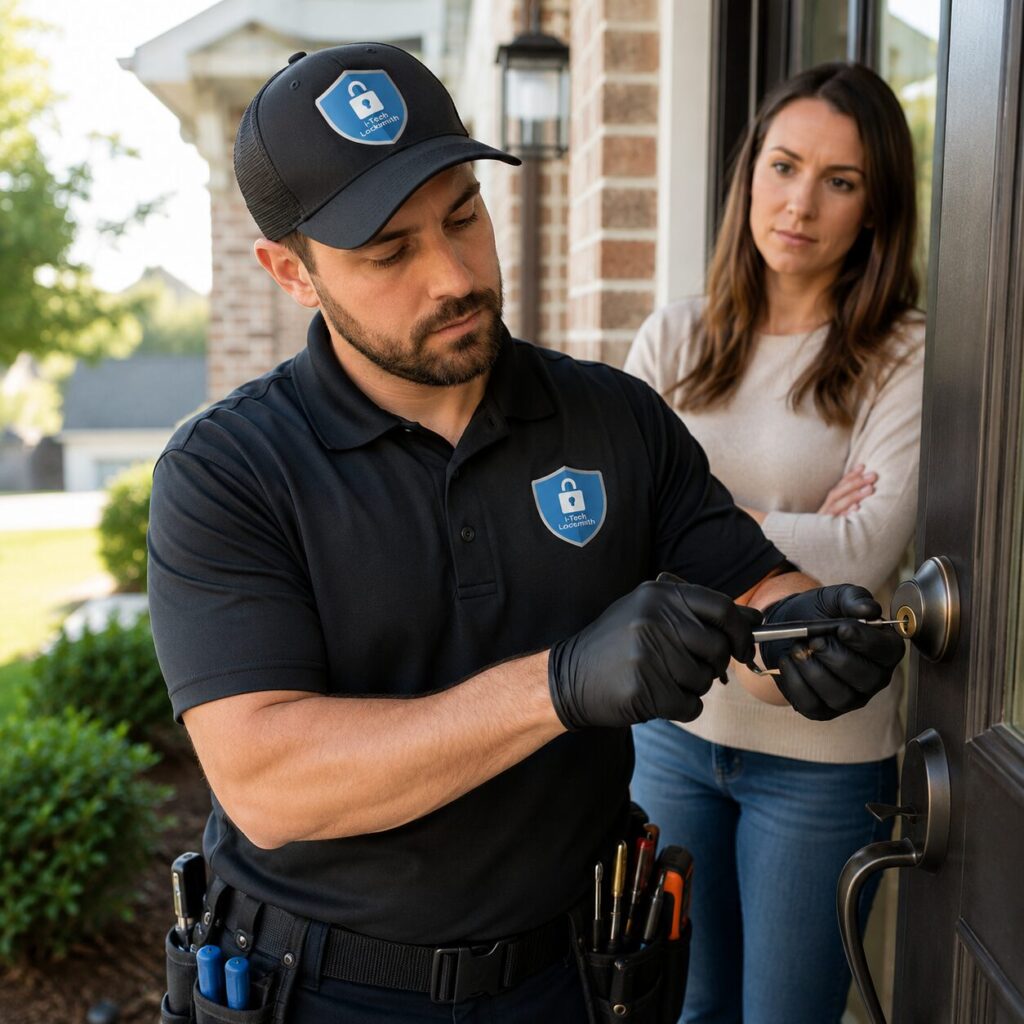
The Safest Way to Handle a Broken Key in Arlington
Here is a surprising fact about broken keys. The final turn may not be the true cause of the break. A worn key, poor duplicate, stiff lock, bad door alignment, or worn cylinder may have weakened the system first. The break is often the last warning that a lock or key already needed attention. ALOA Security Professionals Association lists worn keys, poor duplication, weather, alignment, lubrication problems, and lock wear among common causes of difficult lock operation.
AI Overview
The safest way to handle a broken key is to stop turning, pushing, or probing the lock. Do not use glue, pliers, knives, wire, or random household tools. These methods can push the fragment deeper or damage the cylinder.
First, check for another safe entrance. Then, keep the broken key piece and inspect the visible lock area without touching it. A locksmith can assess the key position, lock type, door alignment, and internal condition. Professional extraction tools may remove the fragment while preserving the lock.
After extraction, the lock should be tested. Replacement or rekeying may be needed when internal parts are damaged or security concerns remain.
Key actions include:
• Stop applying force as soon as the key breaks.
• Request a lock inspection before approving replacement.
1. Why a Broken Key Requires a Calm Response
A broken key can quickly turn a normal day into an urgent problem. You may be unable to enter your home, start your car, or open your business.
However, panic often leads to costly mistakes. A person may grab pliers or insert another object into the keyway. Others may add glue and hope the fragment sticks.
These reactions seem practical at first. Yet they can make professional removal harder. They can also change a simple extraction into a lock repair or replacement.
The safest response has two clear goals:
• Keep the broken piece from moving deeper.
• Protect the cylinder from added damage.
A professional locksmith does more than pull out the key. Locksmiths may service locks, cut replacement keys, rekey cylinders, and inspect door hardware. ALOA describes locksmiths as security professionals who perform these broader services.
Therefore, the goal is not only removing metal. The goal is restoring safe and reliable access.
2. What Should You Do Immediately After the Key Breaks?
The first few minutes can affect the final repair. Your actions should be simple, controlled, and safe.
Step 1: Stop Turning the Remaining Key
Release the key as soon as you feel it break. Do not keep twisting the part still in your hand.
Extra movement can shift the fragment. It may also damage pins or other small parts inside the cylinder.
Follow these immediate rules:
• Do not turn the broken piece with pliers.
• Do not insert another key behind the fragment.
Step 2: Do Not Push the Fragment
A visible piece may look easy to reach. However, touching it can push it past the front of the keyway.
Once the fragment moves deeper, extraction may require more work. The cylinder may also need removal.
Keep the opening clear:
• Do not press the fragment with a screwdriver.
• Do not test its depth using wire or a pin.
Step 3: Check for Another Safe Entrance
Before touching the lock, look for another approved entrance. You may have access through another door, garage entry, or authorized gate.
Never force a window or unsafe opening. That creates a separate security and injury risk.
Safer choices include:
• Use another door for which you have permission and a working key.
• Wait in a secure location while arranging professional help.
Step 4: Keep the Broken Outer Piece
Do not throw away the piece that remains in your hand. It may help identify the key profile or show signs of wear.
A locksmith can inspect the broken edge. That inspection may reveal bending, cracking, or long term stress.
Keep it protected:
• Place the piece in a small bag or container.
• Avoid bending or filing the remaining metal.
3. What Should You Never Put Inside the Lock?
The biggest mistakes often involve common household items. These tools were not designed for lock cylinders.
Based on I-Tech Locksmith Arlington’s service approach, customers should avoid pushing, gluing, forcing, or probing the fragment.
Never Use Glue
Glue is one of the riskiest home extraction methods. It may spread from the key fragment into the keyway.
Once cured, glue can bind internal components. It may also attach the fragment to the cylinder instead of removing it.
Avoid these glue methods:
• Do not place glue on another key.
• Do not apply glue to a stick, wire, or tool.
Never Use Pliers Without a Clear Grip
Pliers may help only when enough metal extends outside the lock. Even then, poor grip can twist the piece.
Most customers cannot see the fragment’s internal angle. Pulling at the wrong angle may bind it against the pins.
Potential problems include:
• The pliers push the fragment deeper.
• The fragment bends and becomes harder to grip.
Never Insert Knives, Pins, or Screwdrivers
A thin tool may appear suitable for hooking the fragment. However, the tool can scratch the keyway or affect internal parts.
Sharp objects also create a risk of hand injury. That risk increases when someone is frustrated or working in poor light.
Keep these objects away:
• Pocket knives, scissors, and razor blades
• Safety pins, paper clips, and screwdrivers
Never Force Another Key Into the Lock
Another key cannot safely push the fragment out from the front. Instead, it usually presses the broken piece deeper.
It may also become stuck. You could then have two damaged items inside one cylinder.
Choose safer actions:
• Leave the keyway untouched.
• Arrange an inspection by a trained locksmith.
4. Why Do Keys Break Inside Arlington Locks?
A key can break in a house lock, vehicle lock, ignition, office door, gate, mailbox, or padlock. I-Tech Locksmith Arlington handles a mix of these situations.
The cause is not always obvious. In many cases, several conditions work together.
Worn or Damaged Keys
Keys weaken through repeated use. Their cuts can wear, while the blade may bend or crack.
A key can still work several times after damage begins. Then, one normal turn causes the final break.
Warning signs include:
• A visible bend, crack, or worn edge
• A key that only works at one angle
Stiff or Worn Locks
A stiff cylinder creates more resistance. The user then applies extra turning force.
This pressure affects both the key and lock. Eventually, the weaker part may fail.
Watch for these signs:
• The key requires more force than before.
• The cylinder feels rough during each turn.
Poor Door Alignment
Sometimes the key is not the main problem. A door can sag or press against its frame.
That pressure transfers to the latch or deadbolt. The customer then forces the key to overcome the misalignment.
Common clues include:
• The door must be pushed before the key turns.
• The deadbolt rubs against the strike plate.
Weak or Poorly Cut Duplicate Keys
Not every duplicate has the same strength or accuracy. A poor duplicate may not align cleanly inside the lock.
The user may wiggle or force it. That repeated stress can weaken the blade.
Check duplicate keys for:
• Rough edges or visibly uneven cuts
• Frequent sticking compared with the original key
Weather and Moisture
Temperature changes, rain, dirt, and moisture can affect lock performance. However, weather alone should not be blamed without inspection.
The more useful question is whether conditions increased existing wear.
Consider these signs:
• Lock movement changed after severe weather.
• The cylinder already felt stiff before the key broke.
For more preventive guidance, read this guide about common lock problems and how to prevent them.
5. How Does Professional Broken Key Extraction Work?
A responsible technician should inspect the situation before choosing a tool. Immediate drilling should not be the automatic first step.
I-Tech Locksmith Arlington’s stated process begins with a full assessment.
Initial Inspection
The technician checks how much of the fragment is visible. The technician also considers the lock type and key position.
The assessment may include:
• Inspecting whether the cylinder can move safely
• Asking what happened before the key broke
The technician should also check the door. A misaligned door may have caused the pressure that broke the key.
Ownership and Authorization
Before opening or servicing secured property, the technician may request identity and access authorization.
Requirements depend on the situation. A home, vehicle, rental, or commercial property may require different proof.
Useful items may include:
• Government issued identification
• Proof connecting the customer to the property
Professional Extraction Tools
When part of the broken key remains visible, I-Tech Locksmith Arlington prefers professional extractors and fine locksmith tools.
These tools are designed to grip or guide the fragment. The technician works carefully to avoid damaging the cylinder.
The process may involve:
• Positioning an extractor beside the broken key
• Pulling the fragment along the keyway’s natural path
The exact method depends on the lock. Therefore, no single technique fits every situation.
Lock Testing After Removal
Removing the fragment does not finish the service. The technician should inspect and test the lock.
According to the process provided for this article, the inspection covers:
• The keyway, pins, and internal components
• Door alignment, strike position, and lock movement
The technician may also inspect the customer’s other keys. A second worn key could break soon afterward.
6. Can the Lock Usually Be Saved?
In many cases, professional extraction may preserve the lock. However, no technician should promise this before inspection.
The outcome depends on the fragment’s position, prior damage, lock condition, and customer attempts.
When the Lock May Remain Usable
The lock may continue working when the fragment comes out cleanly. Internal parts must also pass testing.
The technician should confirm:
• A working key enters and turns normally.
• The latch or deadbolt moves without force.
The cylinder should not feel rough, loose, or unpredictable.
When Replacement May Be Needed
I-Tech Locksmith Arlington recommends considering replacement when internal parts are damaged.
Damage may result from the original break. It may also come from glue, tools, force, or existing wear.
Replacement may make sense when:
• Pins, the cylinder, or other internal parts are damaged.
• The lock remains stiff or unreliable after extraction.
When Rekeying May Be Needed
Your selected service policy also recommends rekeying when security concerns remain.
For example, the customer may not know who has other copies. A broken piece may also be missing.
Rekeying may be appropriate when:
• Key control is uncertain.
• The owner wants old keys to stop working.
Learn more by comparing rekeying and replacing locks.
7. Why Should You Request an Inspection Before Replacement?
A broken key does not always mean the entire lock must be replaced. However, extraction does not prove the lock is healthy.
A careful inspection separates these two questions.
First question:
• Can the broken fragment be removed?
Second question:
• Can the lock still operate safely and reliably?
This distinction helps customers avoid unnecessary work. It also prevents a damaged lock from returning to service without testing.
A professional recommendation should explain:
• What damage was found
• Why repair, rekeying, or replacement is advised
Customers should understand the reason before approving work. Clear findings support better security decisions.
8. Arlington Broken Key Case Example
The following example is an illustrative case based on the scenario selected for this article. It is not presented as a documented customer record.
An Arlington homeowner inserts a key into the front door. The key breaks while the homeowner turns it.
Part of the key remains visible. The homeowner first tries to push the piece using another object.
That action moves the fragment deeper. The lock becomes harder to inspect from the front.
The safer response would have been:
• Stop touching the fragment immediately.
• Request professional extraction and a full lock inspection.
A technician would first assess the fragment’s depth. Next, the technician would inspect the cylinder and door alignment.
After removal, the technician would test the lock with a working key. The door and strike plate would also be checked.
If internal parts remained undamaged, the lock might stay in service. If damage existed, replacement could become necessary.
The central lesson is simple. Early restraint often protects more options.
9. How Can You Avoid Another Broken Key?
Prevention begins before the key snaps. Pay attention when a lock starts feeling different.
Inspect Your Keys
Look at frequently used keys under good light. Replace a key that is bent, cracked, deeply worn, or difficult to use.
Do not wait for complete failure.
Check for:
• Fine cracks near the shoulder or cuts
• Bending along the blade
Stop Forcing Difficult Locks
A working lock should not require extreme force. Repeated forcing can damage the key, cylinder, door, or bolt.
Instead:
• Stop when the key resists.
• Have the lock and door inspected.
Correct Door Alignment Problems
If the door must be lifted, pushed, or pulled before locking, alignment may need attention.
The problem may involve hinges, the frame, the strike plate, or seasonal movement.
Look for:
• Scraping around the frame
• A deadbolt that misses the strike opening
Use Better Duplicate Keys
A poorly cut duplicate can create repeated sticking. Compare new copies with the original before relying on them.
Test new keys while another safe entry option remains available.
Helpful steps include:
• Discard duplicates that require force.
• Keep a reliable spare in a secure place.
Arrange Routine Lock Maintenance
Lock maintenance should follow the hardware maker’s instructions. Random oils or household sprays may collect dirt or affect components.
A locksmith can identify the correct service method.
Maintenance goals include:
• Smooth key entry and turning
• Early detection of wear and alignment problems
Read about common lock mistakes homeowners make.
10. How Do You Choose a Locksmith in Arlington?
A broken key creates urgency. However, urgency should not remove basic consumer checks.
ALOA advises consumers to use professional locksmiths for security related work. It also provides guidance for identifying questionable providers.
Ask for Clear Service Information
Before work starts, ask what the technician plans to inspect.
You should understand whether the visit covers extraction, testing, repair, rekeying, or replacement.
Ask these questions:
• Is the quoted amount an estimate or final price?
• What conditions could change the price?
Confirm the Business Identity
Make sure the arriving technician represents the company you contacted.
The Federal Trade Commission advises consumers to verify organizations through contact information they know is trustworthy.
Confirm:
• The business name and service vehicle details
• The technician’s connection to the company
Avoid Pressure Based Decisions
A technician should explain why drilling or replacement is needed. You should not feel pushed into unexplained work.
Pause when:
• The final recommendation differs greatly from the phone description.
• The technician will not explain the lock’s condition.
For more consumer guidance, review this article about protecting yourself from locksmith scams.
11. Detailed Broken Key Safety Checklist
Use this checklist when a key breaks in a home, vehicle, office, gate, or other lock.
Immediate Actions
- Stop turning the key.
- Remove your hand without disturbing the fragment.
- Keep the outer key piece.
- Check for another safe and authorized entrance.
- Contact a professional when the fragment cannot be safely removed.
Remember:
• Do not push the metal deeper.
• Do not add glue or household tools.
Information to Share With the Locksmith
Provide a clear description of the lock and location.
Explain what happened before the break.
Useful details include:
• Whether the lock felt stiff
• Whether any tools or glue were already used
Honest details help the technician prepare suitable tools. They also reduce surprises during inspection.
Frequently Asked Questions
What is the safest way to handle a broken key?
Stop applying force and leave the fragment undisturbed. Do not use glue, pliers, knives, pins, or another key. Keep the outer piece and check for another safe entrance. A locksmith can inspect the fragment’s position, remove it with suitable tools, and test the lock afterward.
• Stop touching the keyway.
• Request extraction and inspection.
Can I pull out a broken key with pliers?
Pliers may twist or push the fragment when there is not enough metal to grip safely. They may also bend the exposed piece. Because the key’s internal position is difficult to see, professional extraction is usually safer when the fragment does not slide out freely.
• Do not squeeze the lock face.
• Do not twist the fragment.
Should I use glue to remove a broken key?
No. Glue can spread into the keyway and bind internal components. It can also attach the fragment to the cylinder. This may turn a basic extraction into a larger repair. Leave the lock dry and tell the locksmith if glue has already been used.
• Avoid all adhesive products.
• Report previous glue use.
Does a broken key mean I need a new lock?
Not always. The lock may remain usable when the fragment is removed without damage. However, the cylinder, pins, keyway, door alignment, and bolt movement should be inspected. Replacement may be recommended when internal damage or continued stiffness remains.
• Extraction and replacement are separate decisions.
• Testing should guide the recommendation.
Should the lock be rekeyed afterward?
Rekeying may be wise when key control is uncertain. It may also help when the owner worries about other copies. Rekeying changes the lock so old keys no longer work. The final decision should reflect the lock condition and security needs.
• Consider who may hold copies.
• Ask whether the cylinder supports rekeying.
Can a broken car key be removed from an ignition?
A locksmith may be able to remove a broken ignition key. However, vehicle systems vary. Avoid turning the ignition, inserting another object, or disconnecting parts without proper knowledge. The technician should identify the vehicle, key position, and ignition condition before choosing a method.
• Keep the steering area undisturbed.
• Provide the vehicle year and model.
Why did my key break without warning?
The warning may have been subtle. The key may have been bent, worn, cracked, or poorly copied. The lock may also have been stiff or misaligned. Review whether the key required force, worked only at one angle, or showed visible wear.
• Inspect other copies.
• Correct the underlying cause.
Can the broken piece be used to make another key?
The pieces may help identify the key and its condition. However, a replacement should not be assumed from damaged fragments alone. The locksmith must evaluate the key, lock, and available records. A fresh key should also be tested before regular use.
• Keep every recovered piece.
• Do not file or reshape it
How can I prevent keys from breaking?
Replace worn or bent keys early. Stop forcing locks that resist normal turning. Correct door alignment problems and use accurate duplicates. Have recurring stiffness inspected. Prevention protects both the key and the lock from greater damage.
• Watch for changing lock movement.
• Replace weak keys promptly
When should I call an Arlington locksmith?
Call when the fragment does not come out freely, the lock protects essential access, or home methods may cause damage. You should also call when glue or tools were already used. A professional can assess extraction, lock condition, alignment, and security needs.
• Call before applying more force.
• Ask for inspection before replacement.
Conclusion: Protect the Lock Before Damage Spreads
The safest way to handle a broken key is to stop immediately. Do not push, glue, twist, or probe the fragment.
Instead, preserve the outer piece and check for another safe entrance. Then, request professional extraction and a detailed inspection.
The lock should be tested after the fragment comes out. The technician should inspect the cylinder, pins, keyway, door alignment, and key condition.
Replacement may be needed when internal parts are damaged. Rekeying may be recommended when security concerns remain.
Most importantly, ask for an inspection before approving replacement. This step helps protect your lock, property, and budget.
Key final actions include:
• Stop all do it yourself extraction attempts.
• Request a professional lock assessment before replacement.
Contact I-Tech Locksmith Arlington
Stop trying home removal methods before the key or cylinder suffers more damage. Ask for a professional inspection before deciding whether the lock needs repair, rekeying, or replacement.
Contact us at:
Phone: 817 383 1387
Location: 1738 W Division St, Arlington, TX 76012
Website: www.i-tech-locksmith.com