
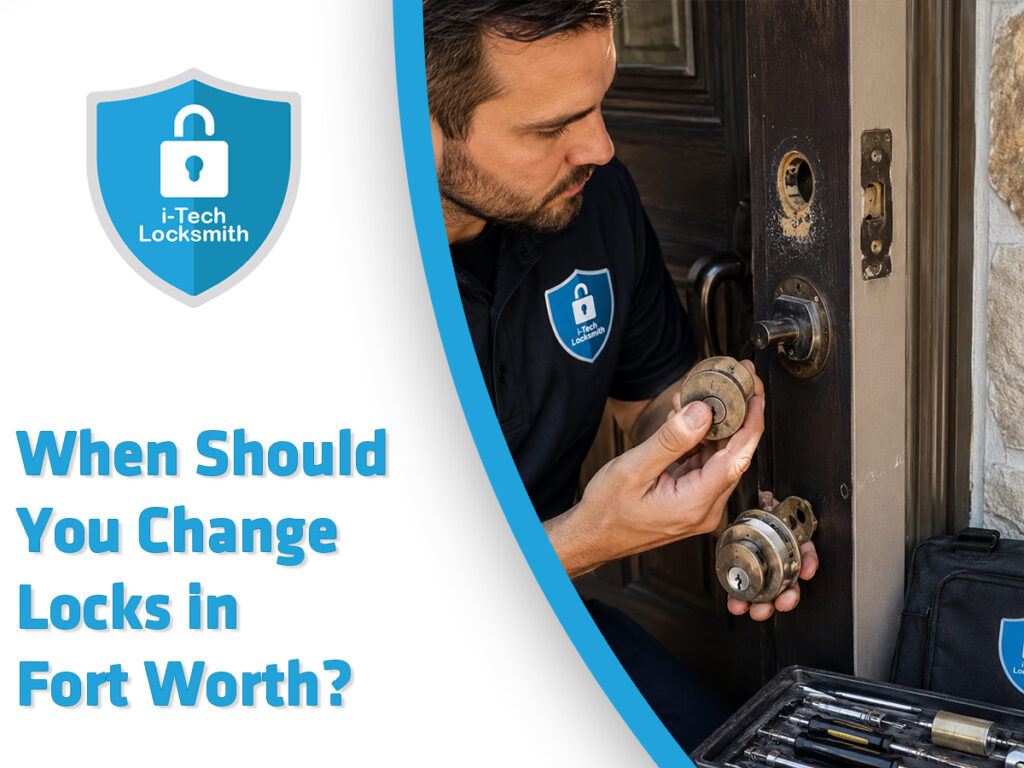
When Should You Change Locks in Fort Worth?
Here is a surprising fact about lock security. Rekeying can stop an old key from working, but it cannot restore a damaged lock, reinforce a weak entry, or make outdated hardware stronger. Therefore, changing the key is not always the same as improving security. ALOA Security Professionals Association explains that a locksmith may need to rekey a lock, replace a latch, or replace the full lock based on the problem found during an inspection.
AI Overview
You should change locks in Fort Worth instead of rekeying when the existing hardware is damaged, weak, incompatible, or unable to meet your current security needs. Full replacement is often the better choice after a break in attempt, internal cylinder damage, forced entry, or repeated lock failure.
Rekeying is usually suitable when the lock still works well, but former tenants, workers, contractors, or other key holders should lose access. It can also be a practical lower cost choice when the hardware remains sound.
A locksmith should inspect the lock, latch, strike plate, door, and frame before recommending either option. Replacement may also allow upgrades such as stronger deadbolts, high security cylinders, smart locks, commercial hardware, reinforced strike plates, and matching locks that use one key.
Key points include:
• Rekeying changes which key operates the existing lock.
• Replacement changes the hardware and can address damage or security limits.
What Is the Difference Between Rekeying and Changing Locks?
Rekeying and replacing a lock solve different problems. Understanding that difference helps Fort Worth property owners avoid paying for the wrong service.
During rekeying, a locksmith changes parts inside the cylinder. As a result, the old key stops operating the lock.
However, the main lock body usually remains on the door. Therefore, rekeying does not automatically repair broken hardware or improve its strength.
During replacement, the technician removes the existing lock and installs new hardware. This option may address damage, wear, poor performance, or a need for better protection.
The basic difference is simple:
• Rekeying changes key access while keeping usable hardware.
• Lock replacement changes the hardware and may improve security or function.
ALOA lists both lock installation and lock rekeying among the services professional locksmiths provide. It also notes that locksmiths can review doors, frames, hardware, and broader security needs.
Therefore, the right choice depends on more than price. It depends on the lock condition, door condition, security goal, and access risk.
When Is Rekeying Usually the Better Choice?
Rekeying is often practical when the existing lock operates correctly. It lets a property owner change access without replacing hardware that still performs well.
Based on the service approach selected for this article, I-Tech Locksmith Fort Worth may recommend rekeying when former tenants, workers, contractors, or previous key holders should no longer have access.
Rekeying may also suit a customer seeking a more affordable option. However, the current hardware must remain safe, compatible, and reliable.
Common rekeying situations include:
• A former employee, tenant, contractor, or service provider may still have a key.
• The owner wants a lower cost access change while retaining sound hardware.
For example, a landlord may have a working deadbolt after a tenant leaves. The lock may turn smoothly, align correctly, and show no damage.
In that case, rekeying can prevent the former key from working. Full replacement may not provide enough extra value to justify new hardware.
Likewise, a business may need to remove access after staffing changes. If its compatible commercial cylinders remain in good condition, rekeying may restore control without replacing every lock.
Property owners can learn more from this guide comparing rekeying and replacing locks.
When Should You Change Locks After a Break In?
Full replacement often becomes the better choice after a break in or attempted break in. The main concern is not only whether an unauthorized person has a key.
Forced entry may damage the cylinder, latch, lock body, strike plate, door, or frame. Some damage is easy to see, while other damage may remain hidden.
Rekeying changes the key pattern. However, it does not repair bent metal, cracked parts, loose hardware, or a damaged locking mechanism.
Replacement may be safer because:
• Forced entry may weaken parts that still appear to operate.
• New hardware can restore function and support a stronger security plan.
Based on your selected service approach, I-Tech Locksmith Fort Worth considers several factors after forced entry. These include possible hidden damage, reduced trust in the old hardware, upgrade needs, and the condition of the door and frame.
A complete review should answer several questions. Does the bolt extend fully? Does the cylinder move smoothly? Did the strike plate shift? Did screws pull away from the frame?
If the existing hardware cannot provide reliable protection, changing the lock is more useful than changing only the key.
Read more about whether to rekey or replace locks after a break in.
Why Hidden Lock Damage Matters After Forced Entry
A damaged lock may continue working for a short time. However, temporary operation does not prove that the lock remains dependable.
For example, a deadbolt may extend during a basic test. Yet internal parts may have shifted or weakened under force.
A latch may also appear normal while failing to hold firmly. Likewise, a cylinder may turn but feel loose, rough, or inconsistent.
Hidden damage can affect:
• The cylinder, bolt, latch, screws, strike plate, or internal mechanism.
• The door edge, frame, hinges, and alignment around the lock.
This is why a full inspection matters after an attempted break in. The technician should review the complete entry system rather than focusing on the keyway alone.
Rekeying cannot correct a bent bolt. It cannot strengthen a loose strike plate. It also cannot repair a cracked door frame.
Therefore, replacement may be only one part of the solution. Reinforcement or door repair may also be necessary.
The recommendation should match the damage found. A responsible locksmith should explain the findings before asking the customer to approve new hardware.
When Does Internal Cylinder Damage Require Replacement?
The cylinder is the part that receives and reads the key. Rekeying depends on that cylinder remaining suitable for safe service.
However, internal components can wear, bend, break, or become damaged. A customer may notice rough turning, sticking, looseness, or inconsistent operation.
Sometimes a locksmith can repair or service the cylinder. In other situations, replacement offers a more reliable result.
Replacement may be appropriate when:
• Internal damage prevents smooth and dependable lock operation.
• Rekeying would not correct the mechanical failure inside the cylinder.
A damaged cylinder may create more than an inconvenience. It may prevent the door from locking, trap a key, or fail when access is urgently needed.
Therefore, the technician should not rekey a damaged cylinder merely because rekeying costs less. Saving the old hardware is useful only when that hardware remains dependable.
The lock should be tested from both sides when appropriate. The technician should also test the latch or bolt while the door is open and closed.
For related warning signs, review this guide on when to replace your locks.
When Do Incompatible Locks Make Replacement Better?
Many properties have locks installed at different times. As a result, one door may use a different brand, keyway, cylinder type, or hardware grade.
A homeowner may want one key to operate several doors. However, not every group of locks can be rekeyed to the same key.
The locks must have compatible keyways and suitable cylinders. When they do not, replacing some or all hardware may be necessary.
Replacement may solve two problems:
• It can create compatible locks that support one key.
• It can remove mismatched or outdated hardware across the property.
Using one key may reduce confusion for homeowners, managers, and approved workers. However, convenience should not weaken access control.
A business may still need separate key groups for offices, storage rooms, exterior doors, and management areas. Therefore, the system should match the property’s operational needs.
Before replacement, a locksmith should inventory the existing hardware. That review can identify which locks are compatible, which locks remain serviceable, and which doors need new hardware.
Replacing every lock is not always required. Sometimes only the incompatible units need to change.
When Is a High Security Upgrade Worth Replacing Locks?
Some customers want more than a new key. They want stronger resistance, better key control, improved hardware, or a system designed for current risks.
In that situation, rekeying a basic lock may not meet the goal. Full replacement can provide access to more suitable products.
Possible upgrades include:
• Stronger deadbolts and high security lock cylinders.
• Improved key control and hardware designed for the entry type.
A high security upgrade may be appropriate after repeated security concerns. It may also suit a property with valuable equipment, private records, controlled areas, or frequent staff changes.
However, the phrase high security should not be used as a vague sales claim. The locksmith should explain the exact features and limits of the proposed hardware.
The customer should understand what the new lock improves. For example, the improvement may involve stronger construction, restricted key options, better drill resistance, or stronger integration with the door.
The door and frame must also support the upgrade. A strong lock installed on a damaged door cannot provide the expected result.
Learn about the benefits of installing high security locks.
When Should You Replace Locks With Smart Locks?
A smart lock changes how authorized users enter and manage a property. Depending on the model, access may use a keypad, phone application, code, card, or physical key.
Rekeying a standard mechanical lock cannot add those functions. Therefore, replacement is normally required when a customer wants smart access.
Smart locks may help when:
• The owner needs temporary codes or easier access management.
• A household or business wants fewer shared physical keys.
For example, a rental manager may want to issue temporary access without making new keys. A business may want controlled access for staff or service providers.
However, smart locks also introduce new decisions. The customer should consider power, battery replacement, user permissions, account security, emergency access, and compatibility.
The door must be aligned correctly before installation. A smart deadbolt that meets resistance may drain batteries or fail to lock fully.
Therefore, technology does not replace sound door preparation. The hardware, frame, bolt path, and user setup must work together.
Customers considering this change can review the truth about smart locks and whether they are worth it.
Why Reinforced Strike Plates Matter With New Locks
The lock is only one part of an exterior door. The bolt enters a strike plate, which is attached to the door frame.
If the strike plate or frame is weak, replacing the lock alone may leave an important weakness unresolved.
Based on your selected service approach, I-Tech Locksmith Fort Worth may recommend reinforced strike plates and longer suitable screws when the door and frame allow them.
A stronger entry plan may include:
• A properly aligned reinforced strike plate.
• Suitable fasteners that connect securely with the supporting frame.
The exact hardware must match the door, frame, lock, and building conditions. Therefore, property owners should avoid assuming that longer screws alone solve every issue.
The technician should inspect for cracks, loose trim, previous repair holes, poor alignment, and weak mounting points.
If the frame is seriously damaged, a locksmith may recommend additional repair by a qualified door or construction professional.
The goal is a complete entry system. A quality deadbolt should work with a sound door, stable frame, proper strike, and correct installation.
When Should Commercial Properties Change Locks?
Business access needs can change quickly. Employees leave, contractors finish work, vendors change, and restricted areas gain new uses.
Rekeying is often suitable when access must change but the commercial hardware remains in good condition. However, replacement may be better when the existing system cannot support current operations.
Commercial replacement may be needed when:
• Hardware is damaged, incompatible, outdated, or unsuitable for the door.
• The business needs stronger hardware or a more controlled access system.
A storefront may need durable commercial locks because the entrance receives heavy daily use. An office may need separate access levels for management, records, storage, and common areas.
Likewise, a rental property may need hardware that supports frequent access changes. The right choice depends on use, door type, security risk, and management needs.
Commercial doors may also need to follow building, fire, accessibility, and life safety requirements. Therefore, hardware decisions should not focus on security alone.
NIST describes electronic physical access control as a combination of physical components and technology used to control access to real world resources. Although its guidance addresses larger systems, the same principle shows why access decisions must consider both hardware and management.
How Does Cost Affect Rekeying or Replacement?
Rekeying often costs less because the existing hardware stays in place. However, choosing the least expensive service does not always produce the lowest long term cost.
If the lock is damaged, rekeying may delay replacement rather than prevent it. The customer may pay for rekeying first and new hardware later.
A fair comparison should consider:
• The condition and expected life of the current hardware.
• The security, access, and convenience gained through replacement.
Replacement usually involves the price of new hardware plus installation. Costs may vary based on lock type, door condition, number of locks, compatibility, and requested features.
Rekeying costs may vary based on the number of cylinders, key system, current condition, and whether locks are compatible.
Customers should request a clear explanation before work begins. The estimate should distinguish between service, hardware, additional keys, and related repairs when applicable.
Price matters, but the correct service matters more. Paying less for a solution that cannot fix the problem does not create real value.
What Should a Locksmith Inspect Before Recommending Replacement?
A professional recommendation should follow an inspection. The technician should not assume that every lost key requires new locks.
Likewise, the technician should not assume that every damaged lock can be saved through rekeying.
The inspection should cover:
• The lock cylinder, latch, bolt, strike plate, and mounting hardware.
• The door, frame, alignment, key condition, and access requirements.
The technician should ask why the customer is considering service. A lost key creates a different concern from forced entry.
A former tenant with a key creates an access control issue. A bent deadbolt creates a hardware issue. Incompatible cylinders create a system design issue.
The technician should then explain the available choices. These may include rekeying, repair, partial replacement, full replacement, reinforcement, or an electronic access upgrade.
ALOA explains that locksmiths can assess locks, doors, frames, and other security needs rather than only cutting keys.
Fort Worth Lock Replacement Case Example
The following example reflects the service situation you selected. It is presented as an illustrative case, not as a documented customer record.
A Fort Worth homeowner discovers damage around an exterior door after an attempted break in. The key still enters the lock, but the hardware feels loose.
At first, the homeowner considers rekeying. However, rekeying would only change which key operates the cylinder.
A complete inspection identifies several concerns. The lock has been placed under force, the strike area needs review, and the homeowner no longer trusts the hardware.
The better plan includes:
• Removing hardware that may have suffered forced entry damage.
• Installing suitable new locks and reviewing the strike and frame.
The customer may also choose a stronger deadbolt, improved cylinder, reinforced strike plate, or smart lock based on actual needs.
This example shows why the service choice should follow the problem. The customer does not merely need old keys disabled.
The customer needs confidence that the entry can lock securely after an attempted intrusion. Therefore, replacement offers a more complete response than rekeying alone.
How Can Property Owners Make a Better Decision?
Start by identifying the problem you need to solve. Do you need to stop former key holders, repair damage, improve strength, simplify access, or add technology?
Next, look at how the lock behaves. A lock that sticks, shifts, loosens, or requires force may need more than a new key pattern.
Use these decision points:
• Choose rekeying when the lock is sound and only key access must change.
• Consider replacement when the hardware is damaged, incompatible, weak, or no longer suitable.
Avoid choosing solely by price. Instead, compare the expected outcome of each service.
Ask whether the current cylinder can be rekeyed safely. Ask whether the door and strike remain aligned. Ask whether the proposed hardware suits the door.
Also ask whether every lock must change. A partial replacement may solve compatibility issues while preserving other usable locks.
A clear explanation should help you understand why the recommendation fits your property.
How Can You Choose a Reliable Fort Worth Locksmith?
Lock concerns often create urgency. However, customers should still verify the business and understand the proposed service.
A professional should explain whether the lock can be rekeyed, repaired, or replaced. The customer should also receive clear information about the work and hardware.
Before approving service:
• Confirm the company identity and request a clear estimate.
• Ask why the recommended option is necessary for the lock condition.
Be cautious when a provider gives an unusually low phone quote and then demands a much higher amount without a clear reason.
The FTC advises consumers to verify organizations using contact information they know is legitimate and to avoid pressure based payment demands commonly linked with scams.
ALOA also provides consumer guidance on recognizing questionable locksmith practices and documenting concerns.
Customers can also review these tips for avoiding locksmith scams.
Frequently Asked Questions
When is it better to change locks instead of rekeying?
Changing the full lock is usually better when the hardware is damaged, weak, incompatible, or unable to meet your security needs. It may also be appropriate after forced entry or when upgrading to high security or smart locks. Rekeying is more suitable when sound hardware only needs a new key.
• Replace hardware when function or strength is in doubt.
• Rekey sound locks when only access must change.
Should I change locks after an attempted break in?
Replacement is often worth considering after an attempted break in because force may damage the lock, latch, strike, door, or frame. Rekeying only changes the operating key. A locksmith should inspect the full entry before recommending replacement, reinforcement, or another repair.
• Check for both visible and hidden damage.
• Review the complete door and frame system.
Is rekeying enough after an employee leaves?
Rekeying may be enough when the former employee had a mechanical key and the existing commercial hardware remains sound. However, the business should review every affected door and key holder. Incompatible, damaged, or unsuitable hardware may require replacement or a broader access control change.
• Identify every area the old key could open.
• Review whether the current system still fits business needs.
Can damaged locks be rekeyed?
Some damaged locks may technically accept new pins, but that does not mean they should return to service. Rekeying does not repair a broken cylinder, bent bolt, weak latch, or loose lock body. The technician should test the complete mechanism before recommending rekeying.
• Do not treat rekeying as a mechanical repair.
• Base the decision on inspection and testing.
Is rekeying cheaper than changing locks?
Rekeying is often less expensive because the main hardware remains installed. However, cost depends on lock type, number of cylinders, condition, and compatibility. Replacement may offer better value when the old locks are damaged, unreliable, or unable to support the desired security level.
• Compare the complete outcome, not only the first price.
• Avoid paying to rekey hardware that soon needs replacement.
Can different lock brands use the same key?
Some locks can be keyed alike when their cylinders and keyways are compatible. However, locks from different brands or product lines may not support the same key. A locksmith should inspect every cylinder before promising a one key solution.
• Compatibility must be confirmed before service.
• Incompatible locks may require partial replacement.
Should I replace old locks even if they still work?
Age alone does not always require replacement. However, replacement may be wise when old locks feel loose, turn poorly, lack needed features, or no longer inspire confidence. A professional inspection can identify wear, damage, compatibility limits, and security upgrade options.
• Watch for changes in daily operation.
• Review whether the hardware still matches current risks.
Are smart locks safer than standard locks?
A smart lock can improve access management through codes, applications, or temporary permissions. However, safety depends on the product, installation, door alignment, account controls, and user habits. A smart lock should be chosen for practical needs rather than technology alone.
• Review both physical and digital security.
• Keep an emergency access plan.
Do new locks improve door security by themselves?
New locks can improve security, but the door and frame must also be sound. A strong deadbolt cannot correct a cracked frame, loose strike plate, poor alignment, or weak mounting point. The locksmith should inspect the complete opening before installation.
• Match hardware to the door and frame.
• Correct alignment and structural concerns.
Should a landlord rekey or replace locks between tenants?
Rekeying may be suitable when the hardware is in good working condition and only old tenant access must end. Replacement may be better when the locks are damaged, worn, incompatible, or unsuitable for continued rental use. Each door should be inspected individually.
• Change access before a new tenant moves in.
• Replace only when condition or security needs justify it.
Conclusion: Make the Choice That Solves the Real Problem
The decision to rekey or replace a lock should begin with the problem, not the price.
Rekeying is usually useful when the hardware remains reliable, but a former tenant, employee, contractor, or other key holder should lose access.
Changing locks is often better when forced entry has caused damage, the cylinder has failed, the locks are incompatible, or the property needs stronger security.
A complete inspection should include the lock, latch, bolt, strike plate, door, frame, alignment, and access requirements.
The final choice should provide a clear result:
• Rekey sound hardware when the goal is new key control.
• Replace damaged or unsuitable hardware when security or function requires more.
After a break in attempt, do not assume that changing the key is enough. Ask a locksmith to inspect the entire entry and explain whether the current hardware remains safe.
Likewise, do not replace every lock automatically when a simple rekey can securely remove old access.
The strongest decision is the one supported by the lock’s actual condition and your current security needs.
Contact I-Tech Locksmith Fort Worth
Contact I-Tech Locksmith Fort Worth for a professional lock inspection before deciding between rekeying and replacement.
The team can review damage, key access, compatibility, door alignment, and upgrade options. You can then choose the service that fits your property instead of guessing.
Contact us at:
Phone: 817 663 0642
Location: 8520 Tamar Trail, Fort Worth, TX 76118
Website: www.i-tech-locksmith.com