
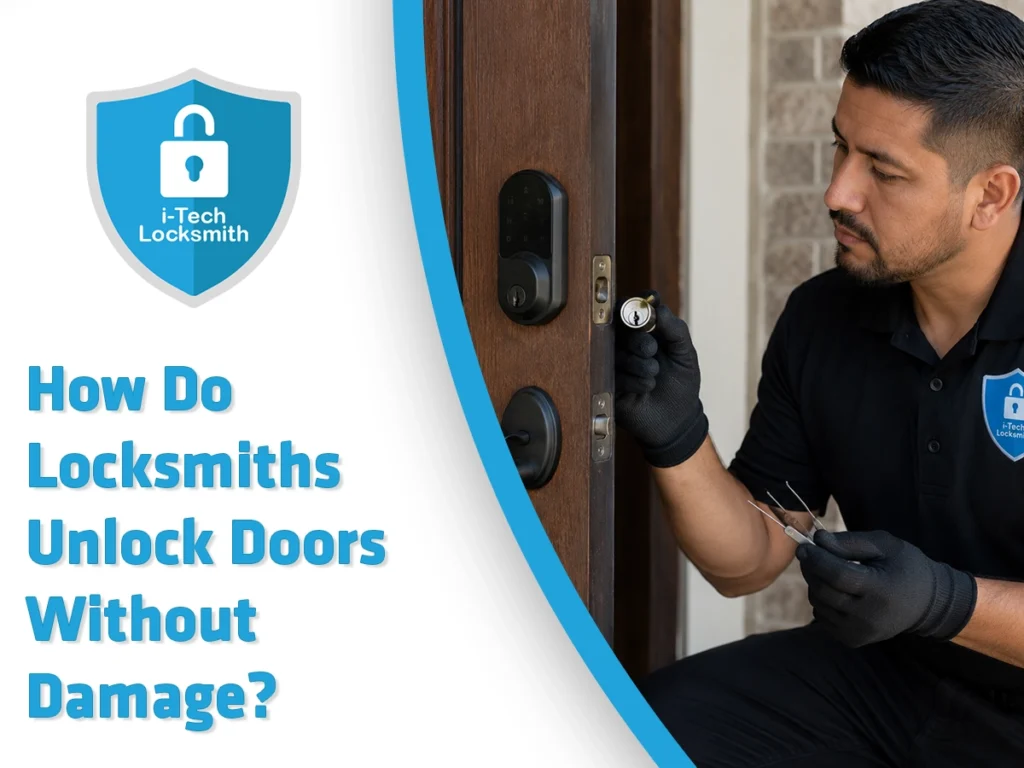
Ways Locksmiths Protect Your Door and Lock
A locked door does not always require drilling, lock replacement, or damage to the frame. In many cases, a trained locksmith can first identify the hardware, assess its condition, and select a method designed to preserve the lock. However, the final approach depends on the lock type, security level, internal condition, and any prior damage.
AI Overview
Locksmiths unlock doors without damaging the lock by identifying the exact hardware before choosing an entry method. I Tech Locksmith Arlington begins by checking the lock type, brand, design, and security level.
When the lock is suitable, professional lock picking is often the preferred first method. A locksmith uses controlled tension and specialized tools to move internal components into the position normally created by the correct key.
If the first picking method does not work, the technician may choose another nondestructive technique suited to that exact lock. High security features, internal damage, poor installation, and blocked components can affect the available options.
Drilling should not be the automatic first response. When drilling becomes necessary, the technician should explain the reason, describe the parts that may need replacement, provide the updated cost, and obtain the customer’s approval.
A careful locksmith should:
• Identify the lock and security level before touching the hardware.
• Try suitable nondestructive methods before discussing controlled drilling.
No technician can promise a damage free result before inspecting the door. However, a professional process reduces unnecessary damage and helps protect the lock, frame, finish, and surrounding hardware.
How Do Locksmiths Unlock Doors Without Damage?
Professional locksmiths do not begin every lockout by forcing the door. Instead, they first identify the lock and determine how it normally operates.
This first step matters because locks can look similar while using different internal designs. A standard pin cylinder requires a different approach from a high security cylinder or electronic deadbolt.
Based on the process provided by I Tech Locksmith Arlington, the technician first checks:
• The lock type, brand, design, and security level.
• The entry options that may preserve the existing hardware.
After that assessment, professional picking may be attempted when the lock condition allows it. The locksmith applies controlled tension while positioning internal components.
The goal is to recreate the action of the correct key without breaking the cylinder. Therefore, skill, tool control, and accurate identification are more important than force.
ALOA Security Professionals Association describes locksmiths as security professionals who install, service, rekey, and open locks while also working with doors and related hardware.
Why Must the Locksmith Identify the Lock First?
Lock identification guides every decision that follows. Without it, the technician may choose an ineffective method or damage a lock that could have been preserved.
The locksmith may examine the keyway shape, exterior design, brand markings, cylinder position, deadbolt, handle, and surrounding hardware.
Identification can reveal:
• Whether the lock is a standard residential cylinder or a higher security design.
• Whether the hardware includes features that resist common entry techniques.
Some locks contain security pins, restricted keyways, sidebars, rotating components, or other features designed to make unauthorized opening more difficult.
Those features do not mean the door must always be drilled. However, they may require different tools, more time, or another approved method.
The technician should also determine whether the door is locked normally or whether something has failed inside the hardware.
For example, a working cylinder may be picked successfully while a broken internal part still prevents the latch or deadbolt from moving.
Therefore, identifying the lock means more than reading the brand. It means understanding the entire locking system.
How Does Professional Lock Picking Work?
Professional lock picking uses specialized tools to manipulate the cylinder without using the original key.
In a common pin cylinder, the correct key raises internal pins to specific positions. Once those positions align, the plug can turn.
A locksmith may use:
• A tension tool to apply controlled turning pressure.
• A pick suited to the lock’s internal design.
The technician feels how the components respond and adjusts pressure carefully. Too much tension can bind the pins, while too little may prevent progress.
This process requires practice and an understanding of lock mechanics. Randomly scraping the keyway is not the same as professional picking.
When successful, picking may allow the cylinder to turn without permanent changes. The lock can often continue working with its normal key afterward.
However, not every lock can be picked safely or efficiently during every service call. Internal damage, foreign objects, corrosion, poor installation, or advanced security features may prevent normal manipulation.
Therefore, a responsible locksmith should never promise that picking will work before inspecting the lock.
Does Lock Picking Damage the Lock?
Correctly performed picking is intended to preserve the cylinder. However, no technique is completely risk free when hardware is already worn, damaged, or poorly maintained.
A trained locksmith uses controlled movement rather than brute force. The technician also selects tools that fit the keyway and internal design.
The risk can increase when:
• The cylinder already contains broken or bent internal parts.
• Someone previously inserted glue, wire, knives, or other objects.
A lock may also have damaged springs, worn pins, blocked components, or corrosion. These problems may exist before the technician arrives.
Therefore, the locksmith should explain that damage free entry is a goal, not an unconditional guarantee.
After opening the door, the technician should test the lock with the normal key. The lock should turn smoothly, move the latch or bolt correctly, and secure the door again.
If the hardware remains rough or unreliable, the customer should receive repair or replacement options.
What Happens When the First Picking Method Fails?
A failed first attempt does not automatically mean drilling is required. Based on the process selected for this article, I Tech Locksmith Arlington tries another nondestructive method suited to the exact lock.
A locksmith may reassess:
• Whether the original lock identification was complete.
• Whether another approved technique better matches the hardware.
The technician may change tools, tension, working position, or entry strategy. However, the method should remain controlled.
Different locks can respond differently because of their internal design, security features, condition, and installation.
For example, a cylinder may have features that limit one picking approach but remain suitable for another professional method.
The locksmith should avoid repeatedly forcing the same technique when the lock does not respond. Excessive pressure may create damage that was not present at the start.
Instead, the process should remain deliberate:
• Stop and reassess the hardware.
• Choose the next method based on evidence rather than frustration.
What Other Nondestructive Methods May Be Used?
The available methods depend on the lock, door, hardware, and legal authorization. For security reasons, a responsible public article should not provide detailed instructions that could help someone bypass a lock.
At a high level, a locksmith may consider:
• Another lock specific manipulation or decoding approach.
• An authorized access option that does not damage the main lock.
In some situations, the customer may have a spare key, another approved entrance, or a key code that supports proper key creation.
In other cases, the technician may inspect whether accessible hardware can be serviced safely after authorization.
The important point is that the method must match the exact situation. A technique used for one latch may be unsuitable for a deadbolt or commercial lock.
A professional should also protect the door’s finish, weather seal, trim, frame, and nearby hardware.
ALOA notes that locksmiths work with complete security openings, including locks, doors, frames, and electronic access hardware.
Why Do High Security Locks Require More Care?
High security locks are designed to provide stronger resistance against unauthorized manipulation, key copying, drilling, or other attacks.
The exact protections vary by product. Therefore, the technician must identify the actual model rather than relying on appearance alone.
A high security lock may contain:
• Advanced internal components or several locking elements.
• Reinforced materials or features that resist common tools.
These protections can limit nondestructive entry options. They may also increase the time and skill required for a lawful lockout service.
Based on the example selected for this article, the technician should identify the high security lock and explain the available options before continuing.
That explanation should include:
• Which nondestructive methods remain reasonable.
• What may happen if those methods do not restore entry.
The customer should understand the possible cost, time, risks, and replacement needs before approving the next step.
A strong security lock should not be treated like basic hardware. Likewise, the technician should not damage it simply because the first method was unsuccessful.
When Is Drilling a Lock Necessary?
Drilling may become necessary when reasonable nondestructive methods are unsuccessful or unsuitable. However, it should not be the automatic first choice.
Based on your selected service policy, I Tech Locksmith Arlington proceeds with drilling only after the technician explains why it is needed and receives customer approval.
Possible reasons may include:
• Severe internal failure or hardware that cannot operate normally.
• Security features that prevent other practical entry methods.
A broken cylinder may no longer respond to picking because its parts cannot move into their normal positions.
Likewise, a damaged deadbolt mechanism may remain trapped even after the cylinder turns.
Before drilling, the technician should explain:
• What component is preventing entry.
• Which part may need replacement afterward.
The customer should also receive an updated price when the service changes from nondestructive entry to drilling and replacement.
Drilling without explanation removes the customer’s ability to make an informed decision.
Does Drilling Always Destroy the Entire Lock?
Controlled drilling usually targets a specific component rather than the entire door. However, the result depends on the hardware and the reason entry is blocked.
A professional should limit the work to what is necessary. The technician should also protect the surrounding finish and prepare for proper replacement.
After drilling, the affected cylinder or lock component may no longer be usable.
The technician should discuss:
• Which part must be replaced.
• Whether the remaining hardware can stay in service.
Sometimes only the cylinder needs replacement. In other situations, damage or age may justify replacing more of the lock assembly.
The door and frame should not be damaged simply because the cylinder requires removal. Careful tool placement and protective materials can reduce cosmetic harm.
However, customers should understand that controlled destructive entry is still destructive to the targeted part.
That is why customer approval is essential before drilling begins.
How Does the Locksmith Protect the Door and Frame?
A careful entry process protects more than the keyway. The technician should avoid scratching the finish, bending trim, damaging weather seals, or splitting the frame.
Before starting, the locksmith may check:
• The condition of the door surface and surrounding hardware.
• Existing scratches, cracks, looseness, or signs of earlier force.
This inspection protects both the customer and technician. It creates a clearer record of what existed before the service.
Protective materials may be placed near the work area when appropriate. Tools should also be positioned to avoid unnecessary contact with painted, stained, plated, or finished surfaces.
When drilling has been approved, the technician should control tool depth and direction.
After entry, the locksmith should inspect the door again. The customer should understand any damage caused by the required method and any damage that already existed.
Can a Misaligned Door Look Like a Lockout?
Yes. Sometimes the key or cylinder works, but the latch or deadbolt cannot move because the door is pressing against the frame.
ALOA lists poor door alignment, weather, worn hardware, and lock wear among common reasons a lock becomes difficult to operate.
Warning signs include:
• The key turns more easily when the door is pushed or pulled.
• The lock works while the door is open but binds when closed.
A locksmith may inspect the strike plate, bolt path, hinges, door gap, and frame.
If pressure is the true cause, opening the door may require relieving that pressure rather than manipulating the cylinder.
Afterward, the alignment problem should be corrected. Otherwise, the customer may experience another lockout or damage the key and lock.
For more prevention advice, read about common lock problems and how to prevent them.
Why Should Customers Avoid Do It Yourself Entry?
Improvised lockout methods can damage the lock, door, finish, glass, frame, wiring, or nearby hardware.
Common risky attempts include:
• Inserting random tools into the keyway.
• Prying the door or applying uncontrolled force.
A person may also search for a method that does not match the actual lock. What appears to be a simple latch may have additional security features.
Damage can turn a basic lockout into a larger repair. It may also weaken the entry after the door is opened.
Instead, customers should check for another safe and authorized entrance. They should then contact a qualified locksmith when normal access is unavailable.
This guide explains what to do during an emergency lockout.
How Does Ownership Verification Protect Customers?
A locksmith should confirm that the person requesting entry owns or is authorized to access the property.
This step may require:
• Government issued identification.
• A lease, ownership record, business authorization, or other supporting proof.
Requirements depend on the situation. A homeowner, tenant, property manager, employee, or family member may need different documents.
When identification is locked inside, the technician may use another reasonable verification process and confirm the documents after entry.
These checks protect customers because locksmith skills should not be used to open property for an unauthorized person.
Texas regulates locksmiths through the Department of Public Safety Private Security Program. Locksmiths are included among regulated private security professionals, and individual locksmiths generally must be licensed and affiliated with an approved company or entity.
How Should a Locksmith Explain the Price?
A customer should understand what the service includes before work begins.
The initial estimate may cover a standard lockout. However, the price may change if the technician finds high security hardware, internal damage, or a need for replacement.
A clear explanation should cover:
• The service call and expected entry work.
• Any added cost for drilling, repair, parts, or replacement.
The technician should pause before changing the agreed method. The customer can then approve or decline the added work.
ALOA warns that some questionable providers advertise very low prices and then raise the amount substantially after arrival. It also warns that poor work may leave locks and doors damaged.
The Federal Trade Commission advises consumers to slow down when someone uses pressure to force an immediate decision.
What Should Happen After the Door Opens?
Opening the door is not the final step. The locksmith should verify that the lock and door still work correctly.
The technician may test:
• Key insertion, cylinder movement, latch action, and deadbolt travel.
• Door alignment, strike position, and secure locking.
If the lock was picked successfully, the customer’s key should normally continue to work.
However, testing may reveal wear or internal damage that existed before the lockout.
The technician should explain any concern without assuming that replacement is automatically required.
Possible outcomes include:
• No further service because the lock works normally.
• Repair, adjustment, rekeying, or replacement after customer approval.
Read this comparison of rekeying and replacing locks when the existing hardware needs further service.
When Should the Lock Be Replaced After Entry?
A successfully opened lock does not always need replacement. Replacement should follow the condition of the hardware, not the fact that a lockout occurred.
Replacement may be appropriate when:
• The cylinder or internal mechanism is damaged.
• The lock remains unreliable after testing.
It may also be considered when controlled drilling has made the cylinder unusable.
A customer may choose an upgrade when the existing lock is outdated or no longer meets security needs. However, that decision should remain separate from the emergency entry.
A technician should not use the lockout to pressure the customer into unnecessary hardware.
For warning signs, see when to replace your locks.
Illustrative Arlington High Security Lockout
The following example reflects the situation selected for this article. It is illustrative and is not presented as a documented customer record.
An Arlington homeowner becomes locked outside a front door. The hardware appears similar to a normal deadbolt, but closer inspection identifies a high security cylinder.
The technician first confirms the homeowner’s authorization. Next, the technician explains that the lock includes features designed to resist standard entry methods.
The customer receives a clear explanation of the available choices:
• Attempt suitable nondestructive methods first.
• Discuss controlled drilling only if those methods fail.
The technician begins with professional picking. When the first approach does not open the cylinder, another suitable nondestructive method is considered.
Before any destructive work, the technician explains the reason, affected component, replacement need, and updated price.
This example shows why correct identification matters. Treating the hardware like a basic lock could waste time or create unnecessary damage.
How Can You Choose a Careful Arlington Locksmith?
Ask how the provider approaches nondestructive entry before booking the service.
Useful questions include:
• Will you identify the lock before choosing a method?
• Will you explain and obtain approval before drilling?
Also confirm the company name and technician identity. In Texas, customers can review locksmith licensing information through the state’s Private Security Program and Texas Online Private Security resources.
Be cautious when a provider promises one very low price without asking about the door or lock.
You should also pause when a technician immediately recommends drilling without inspecting the hardware.
For more consumer guidance, review how to avoid locksmith scams.
Frequently Asked Questions
How do locksmiths unlock doors without damaging the lock?
Locksmiths first identify the lock, security level, and hardware condition. When suitable, they use professional picking tools and controlled tension to manipulate internal components. If the first method fails, they may select another nondestructive approach. Drilling should be discussed only when safer methods are unsuccessful or unsuitable.
Can every door lock be picked without damage?
No. Many locks may be suitable for professional picking, but outcomes depend on the design, security features, installation, wear, and internal condition. A damaged or jammed mechanism may not respond normally. Therefore, a locksmith should inspect the lock before estimating the likely entry method.
Does professional lock picking ruin the lock?
Correct professional picking is designed to preserve a working cylinder. However, an already damaged, corroded, worn, or obstructed lock may have problems before service begins. After opening the door, the technician should test the cylinder, key, latch, and deadbolt to confirm reliable operation.
Why would a locksmith drill a lock?
A locksmith may recommend drilling when suitable nondestructive methods have failed or cannot address an internal failure. The technician should explain why drilling is necessary, which part will be affected, and what must be replaced. The customer should approve the updated work and price first.
Can a high security lock be opened without drilling?
Sometimes, depending on the lock model, condition, installation, and technician’s available methods. High security features are designed to resist common attacks, so nondestructive entry may take more time or may not be practical. The locksmith should identify the hardware and explain realistic options.
Will my key still work after the lock is picked?
Normally, a successful nondestructive picking service does not change the key pattern. Therefore, the existing key should continue working when the lock is healthy. The technician should test the key afterward because existing wear, damage, or alignment problems may have contributed to the lockout.
How does door alignment affect a lockout?
A shifted door can press the latch or deadbolt against the strike plate. The cylinder may turn while the bolt remains trapped. A locksmith can inspect the hinges, frame, strike, and bolt path. Correcting the alignment helps prevent repeat lockouts and hardware damage.
Should I let a locksmith drill immediately?
You should first ask why drilling is necessary and whether suitable nondestructive options were considered. Drilling may be justified for damaged or resistant hardware, but it normally destroys the targeted component. Request the updated price and replacement plan before approving the work.
What proof does a locksmith need before unlocking a door?
A locksmith may request government identification and evidence that you own, rent, manage, or are authorized to access the property. Requirements vary by situation. When documents are inside, the technician may use another reasonable process and verify them after entry.
How can I prevent damage during a home lockout?
Avoid inserting household tools, forcing the keyway, prying the door, or drilling the cylinder. Check for another safe authorized entrance, then contact a qualified locksmith. Explain the lock type and symptoms so the technician can prepare suitable tools before arriving.
Conclusion: Careful Entry Starts With Identification
Locksmiths unlock doors without damaging the lock by choosing a method based on the actual hardware.
The first step is not drilling. Instead, the locksmith should identify the lock type, brand, design, and security level.
When conditions allow, professional picking is a preferred first option. The technician uses specialized tools and controlled pressure instead of brute force.
If the first picking method fails, the locksmith can consider another nondestructive technique suited to that exact lock.
A high security cylinder requires extra care. Its protective features may change the available methods and the time needed for lawful entry.
Drilling may sometimes become necessary. However, the customer should receive a clear explanation and updated price before approving destructive work.
The best service process protects:
• The lock, door, frame, finish, and surrounding hardware.
• The customer’s right to understand and approve the work.
After entry, the technician should test the lock, key, latch, deadbolt, strike, and door alignment.
A lock that works normally may remain in service. A damaged or unreliable lock may require repair or replacement after the customer reviews the options.
Most importantly, avoid do it yourself force. Random tools and prying can transform a routine lockout into an expensive repair.
Contact I Tech Locksmith Arlington
Contact I Tech Locksmith Arlington when you need professional help opening a residential or commercial door.
The technician can identify the lock, evaluate its security level, and try suitable nondestructive methods before discussing controlled drilling.
Contact us at
Phone: 817 383 1387
Location: 1738 W Division St, Arlington, TX 76012
Website: www.i-tech-locksmith.com