15 Powerful Locksmith Solutions for Homes, Cars, and Businesses
Many locksmith calls begin with a lockout, yet opening doors represents only one part of modern locksmith work. Locksmith services in Fort Worth can also include rekeying, key replacement, lock repair, commercial access planning, and security upgrades.
AI Overview
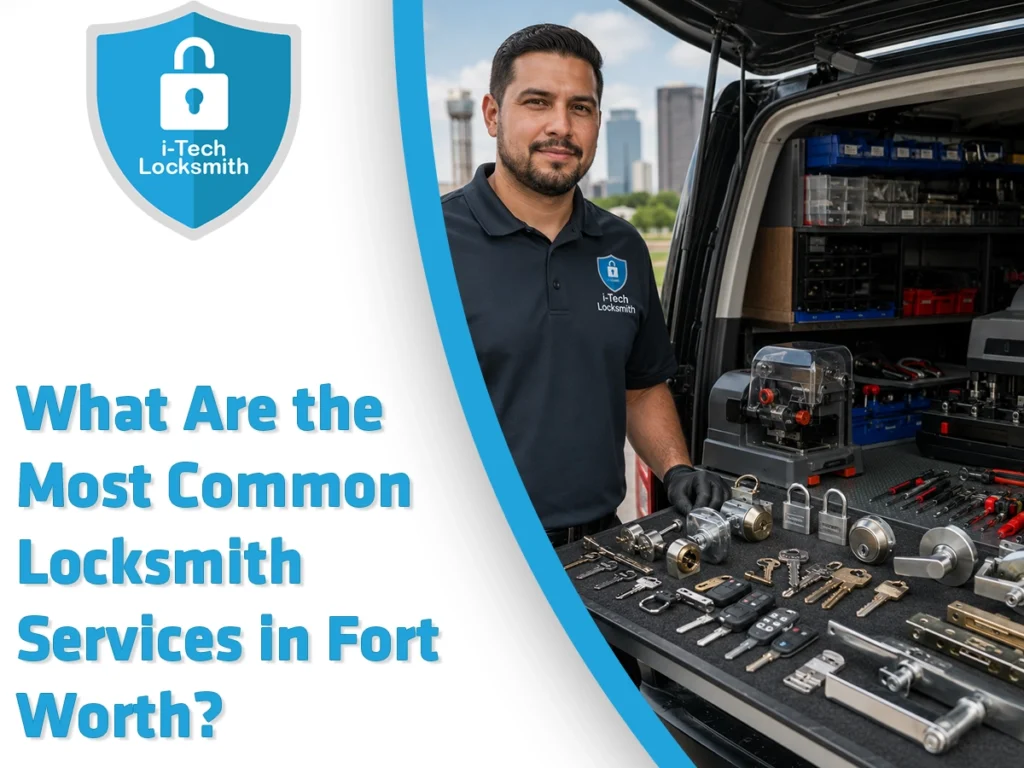
The most common locksmith services in Fort Worth include residential, automotive, commercial, and emergency assistance. Customers often call for house lockouts, vehicle entry, business lockouts, broken key extraction, lock rekeying, lock replacement, and lost key replacement.
Automotive locksmith work may also include cutting car keys, programming transponder keys, replacing key fobs, and addressing certain ignition key problems. Commercial services may include master key systems, office rekeying, restricted key planning, access control, storefront locks, and exit door hardware.
However, the correct service depends on the cause of the problem. A door that will not lock may have a damaged cylinder, poor alignment, a worn latch, or frame movement. Therefore, a professional locksmith should inspect the complete opening before recommending repair or replacement.
Customers should also expect clear verification and pricing. A responsible locksmith should confirm the requester has authority to enter, explain the proposed method, provide an estimate, and obtain approval before adding work.
1. Emergency House Lockout Service
A house lockout is one of the most familiar locksmith calls. It may happen because the key is inside, lost, broken, or no longer turning the lock.
Common house lockout situations include:
- Keys left on a table inside the home
- A key that breaks inside the front door
- A deadbolt that stops turning
- A smart lock that loses power
- A damaged key that no longer works
- A door that closes before the key is retrieved
Before opening the door, the locksmith should verify that the customer has authority to enter. This step protects homeowners, tenants, property managers, and lawful occupants.
The technician should then inspect:
- The lock cylinder
- The keyway
- The latch or deadbolt
- The door position
- The strike plate
- Any visible damage
Drilling should not be treated as the automatic first choice. Depending on the lock and its condition, another entry method may preserve the existing hardware.
However, no method works for every lock. Severe internal failure, high security hardware, or prior damage may require a different approach.
Once access is restored, the technician should identify why the lockout happened. Otherwise, the customer may face the same problem again.
For practical first steps, review this guide about what to do when locked out of a house.
2. Residential Lock Rekeying
Rekeying changes the internal key combination of a compatible lock. As a result, the old key stops working and a new key controls the cylinder.
Homeowners often request rekeying after:
- Moving into another home
- Losing a house key
- Ending a rental agreement
- A roommate moves out
- A contractor finishes work
- Unknown key copies become a concern
Rekeying can restore key control without replacing all usable hardware. Therefore, it may cost less than installing complete new locksets.
However, rekeying does not repair:
- Broken lock bodies
- Cracked cylinders
- Severe corrosion
- Bent deadbolts
- Weak door frames
- Worn internal components
The locksmith should inspect every affected lock before confirming that rekeying is suitable.
A homeowner may also ask to have several compatible locks operate with one key. This arrangement can reduce the number of keys needed for exterior doors.
Still, the locks must share a compatible format. Different brands or keyways may limit what can be combined.
For a fuller comparison, read this guide to rekeying versus replacing locks.
3. Lock Repair and Adjustment
A lock that feels difficult does not always require complete replacement. In some cases, repair or adjustment can restore reliable operation.
Common lock problems include:
- A key that sticks
- A deadbolt that rubs
- A loose cylinder
- A latch that misses the strike
- A lever that does not return
- A door that must be pushed before locking
The technician should test the lock with the door open and closed. This simple comparison can reveal whether the lock or the door position causes the problem.
If the lock works while the door is open, the issue may involve:
- Door alignment
- Hinge movement
- Strike plate position
- Door swelling
- Frame movement
- Closing pressure
If the lock remains difficult while the door is open, the cylinder or internal mechanism may need service.
A proper repair should address the cause rather than only the visible symptom. Tightening one screw may not solve recurring movement if internal mounting parts are damaged.
Customers should also stop forcing difficult keys. Extra pressure can break the key or damage the cylinder.
This guide about common lock problems and prevention explains several early warning signs.
4. Complete Lock Replacement
Replacement becomes appropriate when the current lock is damaged, unreliable, incompatible, or unsuitable for the property’s needs.
A locksmith may recommend replacement when:
- The cylinder was forced or drilled
- The lock body is cracked
- Internal parts repeatedly fail
- Severe rust affects movement
- The deadbolt is bent
- Replacement parts are unavailable
The technician should explain why replacement offers more value than another repair.
The inspection should cover:
- The cylinder
- The latch or bolt
- The strike plate
- The door frame
- The hinges
- The surrounding door material
A new lock cannot correct every door problem. For example, a strong deadbolt may still fail to align when the door sags.
Likewise, a new cylinder cannot strengthen a split frame. The replacement plan may need to include door adjustment or reinforcement.
Customers should also consider the door’s use. A low traffic interior room may require different hardware from a busy commercial entrance.
The article about warning signs that locks need replacement provides additional details.
5. Car Lockout Assistance
Vehicle lockouts happen when keys remain inside the passenger area, trunk, or cargo space. They may also result from a failed fob or damaged door cylinder.
Common vehicle lockout calls involve:
- Keys visible on a seat
- A fob left inside the trunk
- A vehicle that locked automatically
- A damaged physical key
- A failed door cylinder
- A lost key with no available spare
The waiting location matters. A driver beside traffic, in a dark parking area, or during extreme weather should move to a safer place.
AAA advises drivers to consider roadside assistance, a spare key, supported vehicle apps, or a qualified locksmith. It also requires photo identification for its vehicle lockout assistance.
A locksmith should use methods suited to the vehicle. Modern vehicles may contain:
- Side curtain airbags
- Wiring near the door
- Delicate weather seals
- Window controls
- Security sensors
- Electronic locking components
Therefore, improvised tools can cause expensive damage. Screwdrivers, coat hangers, and pry bars may harm the paint, seals, glass, or internal wiring.
After entry, the customer should test the window, door controls, locks, and weather seal before the service ends.
6. Car Key Cutting and Duplication
A working spare key can reduce the risk of being stranded after losing the original. In addition, making a spare while a working key remains available may be simpler than replacing every lost key.
Automotive key cutting may cover:
- Traditional metal keys
- Side cut keys
- Laser cut keys
- Keys with transponder chips
- Remote head keys
- Emergency insert keys
The locksmith may need:
- The vehicle make
- The vehicle model
- The model year
- The vehicle identification number
- Proof of ownership
- The existing key when available
A newly cut key should be tested in every intended location. Depending on the vehicle, that may include the door, ignition, and trunk.
However, cutting the metal portion may not complete the service. Many modern keys also require electronic programming before the vehicle will start.
AAA distinguishes basic vehicle entry from broader locksmith work. It notes that locksmith companies may provide cutting, duplication, transponder programming, fob service, broken key extraction, and some ignition services.
7. Transponder Key and Key Fob Programming
Many vehicles use an electronic chip, remote, proximity key, or smart fob. The vehicle must recognize the credential before allowing normal operation.
Programming may be needed when:
- A new transponder key is cut
- A replacement fob is purchased
- Every original key is lost
- A spare key is added
- A damaged key housing is replaced
- An existing fob stops communicating
The exact service depends on the vehicle. Different makes, models, and years use different procedures, equipment, and key types.
Before programming, the technician may need to confirm:
- The correct key part
- The vehicle identification number
- The security system type
- Whether a working key remains
- Whether the problem is the key or vehicle
- Whether the battery is functioning
A failed fob does not always mean programming is lost. The cause may involve a weak battery, damaged buttons, internal circuit damage, or a vehicle receiver issue.
Therefore, diagnosis should occur before unnecessary replacement.
After programming, the locksmith should test:
- Door locking
- Door unlocking
- Trunk release
- Remote functions
- Proximity detection
- Vehicle starting
8. Broken Key Extraction
Keys may break because of wear, bending, corrosion, internal lock resistance, or too much force.
Broken key extraction may be needed for:
- House door locks
- Commercial cylinders
- Vehicle doors
- Ignition cylinders
- Mailbox locks
- Storage locks
Customers should avoid pushing the fragment deeper.
Unsafe attempts may include:
- Household glue
- Knives
- Drill bits
- Large pliers
- Another key
- Unapproved sharp tools
The extraction method depends on how much of the key remains visible and whether the cylinder was turned when the break occurred.
After removing the fragment, the locksmith should inspect:
- The broken key
- The cylinder
- Internal movement
- Door alignment
- The condition of spare keys
- The reason the key broke
Cutting another key without checking the cylinder may lead to another failure.
When the lock remains safe, a new key may solve the problem. However, a damaged cylinder may need repair or replacement.
9. Commercial Lockout Service
A business lockout can delay employees, customers, deliveries, and scheduled work. Still, the need for quick access does not remove the need for authorization.
The locksmith may request:
- Business identification
- Management approval
- Lease information
- Property management confirmation
- Government identification
- Company contact verification
Commercial lockouts may affect:
- Storefront entrances
- Office suites
- Warehouses
- Stockrooms
- Private offices
- Records rooms
The service should also identify why entry failed.
Possible causes include:
- A worn cylinder
- A broken key
- A failed electronic credential
- Door misalignment
- A damaged latch
- A missing manager key
After opening the door, the locksmith may recommend repair, rekeying, replacement, or access control service.
The goal is not only to open the business. The goal is to prevent another interruption and restore controlled access.
10. Office and Business Rekeying
Businesses often rekey locks after employee departures, tenant changes, missing keys, or changes in management.
Commercial rekeying may involve:
- Exterior entrances
- Employee doors
- Management offices
- Stockrooms
- File rooms
- Utility areas
A business should first identify which doors the missing or unreturned key could open.
Then, the locksmith can determine:
- Which cylinders require service
- Whether existing hardware is compatible
- How many new keys are needed
- Which employees need access
- Whether a master key system is appropriate
- Whether any locks need replacement
CISA recommends monitoring workplace access, reporting broken locks promptly, and keeping an inventory of organizational keys and access items.
A written key record should include:
- The key holder
- The key number
- The authorized doors
- The date issued
- The approving manager
- The return date
Rekeying works best when paired with an organized key policy.
11. Master Key System Planning
A master key system creates levels of mechanical access. Employee keys may open selected doors, while approved managers use one key for a wider group.
A system may include:
- Individual change keys
- Department keys
- Management master keys
- Property level keys
- Building master access
- Restricted room keys
Master key planning can help:
- Reduce large key rings
- Match access to job roles
- Separate sensitive areas
- Simplify management entry
- Support property management
- Organize several doors
However, master keys require strict control. A missing high level key can affect many doors.
Therefore, the business should limit:
- The number of master keys
- Who may carry them
- Where spares are stored
- Who may authorize copies
- Which doors each level opens
- How losses are reported
The locksmith should prepare an access chart before changing cylinders. This chart reduces mistakes and supports future maintenance.
12. Access Control and Keyless Entry
Electronic access control allows a business to use codes, cards, fobs, or digital credentials instead of relying only on mechanical keys.
Common components may include:
- Electronic locks
- Electric strikes
- Keypads
- Proximity readers
- Credential fobs
- Door release devices
Access control may help businesses that need:
- Faster employee access changes
- Time based permissions
- Entry records
- Fewer physical keys
- Separate department access
- Central credential control
However, an access control system must also support safe exit. OSHA requires workplace exit routes to remain free and unobstructed. Exit door arrangements must allow required egress without improper locks or barriers.
The locksmith or access professional should review:
- The door function
- Existing hardware
- Required exit operation
- Power and wiring
- Credential management
- Backup access
Complex projects may require coordination with door, electrical, alarm, fire, or low voltage professionals.
13. Commercial Door and Panic Hardware Service
Commercial doors often use hardware that differs from standard residential locks.
Service may involve:
- Panic bars
- Exit devices
- Door closers
- Storefront locks
- Mortise locks
- Exterior trim
Common problems include:
- A panic bar that sticks
- A door that does not relatch
- A closer that slams
- A loose exterior cylinder
- A latch that misses the strike
- A key that no longer retracts the bolt
A technician should test the complete opening rather than replacing the first worn part found.
The inspection may cover:
- Door movement
- Latching
- Exit operation
- Exterior access
- Strike alignment
- Closing speed
OSHA defines an exit route as a continuous and unobstructed path from the workplace to a place of safety. Therefore, repairs must preserve required emergency exit functions.
Improvised chains, bars, or added locks should not interfere with safe egress.
14. Smart Lock Installation and Troubleshooting
Smart locks can offer codes, mobile access, temporary credentials, and automatic locking. However, their performance still depends on the physical door.
A smart lock may fail because of:
- Weak batteries
- Dirty battery contacts
- Poor door alignment
- A dragging deadbolt
- Motor failure
- Connection problems
Before replacing the unit, inspect:
- Manual key operation
- Bolt movement
- Battery condition
- Door position
- App settings
- Approved reset options
A blank keypad may indicate a power problem. Meanwhile, a motor that runs without moving the bolt may indicate mechanical resistance.
The installer should test:
- Manual locking
- Manual unlocking
- Code entry
- Mobile access
- Automatic locking
- Emergency backup access
A smart lock should not be installed simply because it offers more features. It must fit the door, user needs, weather exposure, and required access plan.
15. Deadbolt and Security Lock Installation
A deadbolt can improve resistance against forced entry when it is installed on a suitable door and frame.
Installation may involve:
- Preparing the door
- Positioning the cylinder
- Installing the bolt
- Aligning the strike
- Securing the mounting screws
- Testing inside operation
The locksmith should consider:
- Door thickness
- Door material
- Frame condition
- Existing holes
- Backset
- Daily use
A strong deadbolt will not perform well when the frame is split or the strike barely holds.
Therefore, the complete opening should be examined. This includes the door, frame, hinges, latch area, and surrounding material.
High security cylinders may also provide stronger construction or tighter key control. However, the locksmith should explain the actual product features rather than using high security as a general sales phrase.
16. Emergency Lock Repair After Damage
A lock may require urgent service after a break in, attempted entry, accident, storm, or sudden mechanical failure.
Emergency repair may address:
- Forced cylinders
- Bent deadbolts
- Broken latches
- Loose strikes
- Cracked lock housings
- Doors that cannot be secured
After a suspected crime, contact law enforcement before changing the scene when appropriate.
Once the property is released, the locksmith can inspect:
- The cylinder
- The bolt
- The strike plate
- The door
- The frame
- Nearby access points
The service may include temporary securing, rekeying, repair, or replacement.
However, replacing the cylinder alone may not solve severe frame damage. A complete plan should address every part that affects security.
17. Key Duplication for Homes and Businesses
Key duplication creates an additional copy from an existing key. It is different from rekeying and different from replacing every lost key.
Customers may request copies for:
- Household members
- Employees
- Property managers
- Trusted relatives
- Maintenance workers
- Emergency storage
Before copying a key, inspect the original. A worn key may produce an inaccurate duplicate.
A better source may be:
- A less worn spare
- The original code
- A newly decoded key
- Manufacturer information
- An authorized key record
- A correctly operating cylinder
Businesses should also control who may request copies. Informal duplication can weaken an otherwise organized key system.
Restricted key systems may require authorization before new keys are produced. The specific control depends on the product and keyway.
18. Ignition Key and Vehicle Lock Diagnosis
Some automotive locksmiths handle certain ignition key problems. However, the source of a starting issue must be diagnosed carefully.
Possible causes include:
- A worn physical key
- A damaged ignition cylinder
- A failed transponder
- A steering lock issue
- A key programming problem
- A vehicle electrical problem
A key that turns poorly in the ignition may be worn. However, the ignition cylinder may also contain damaged or worn components.
The technician should compare:
- Spare key operation
- Door key operation
- Ignition movement
- Transponder recognition
- Dashboard security indicators
- Battery condition
Not every no start problem is a locksmith issue. The cause may involve the vehicle battery, starter, wiring, or another mechanical system.
Therefore, a qualified provider should explain when another automotive professional is needed.
19. Security Assessments for Homes and Businesses
A locksmith security assessment reviews how locks, keys, doors, and access procedures work together.
A residential review may cover:
- Exterior deadbolts
- Sliding doors
- Garage entry
- Spare key practices
- Smart locks
- Door frames
A commercial review may cover:
- Employee entrances
- Key records
- Master key levels
- Restricted rooms
- Exit hardware
- Electronic access
CISA provides physical security resources that encourage organizations to evaluate facilities and choose protective measures based on actual risks.
After the assessment, recommendations should be grouped by priority.
Immediate issues may include:
- Doors that do not latch
- Lost master keys
- Broken locks
- Forced hardware
- Uncontrolled access
- Unsafe exit conditions
Longer term improvements may include master key planning, restricted keys, access control, standard hardware, and scheduled maintenance.
20. Safe Locksmith Selection and Clear Pricing
A locksmith may receive temporary access to a home, vehicle, office, or restricted room. Therefore, customers should verify the provider before approving work.
Ask the company to explain:
- The business name
- The service call charge
- The expected labor range
- Possible parts
- Payment methods
- The verification process
The technician should also provide:
- Identification
- An inspection
- A clear service explanation
- An updated estimate
- Approval before extra work
- An invoice
The FTC warns that scammers often create urgency and demand payment through hard to reverse methods such as gift cards, wire transfers, or cryptocurrency.
Be cautious when a provider:
- Refuses to identify the company
- Gives an unrealistic low price
- Pushes immediate drilling
- Will not explain added charges
- Demands unusual payment
- Leaves no written invoice
Urgency should not remove the customer’s right to understand the work and cost.
21. A Practical Locksmith Service Example
Consider a hypothetical Fort Worth homeowner whose front door key has become difficult to turn.
A complete service process would include:
- Verifying the customer’s authority
- Inspecting the key and cylinder
- Testing the lock with the door open
- Testing it again with the door closed
- Reviewing the strike and door position
- Explaining the findings
Suppose the lock works smoothly while open but binds when closed. In that case, door alignment may be the main issue.
Now consider a second situation:
- The cylinder moves inside the door
- The key turns without moving the bolt
- The housing shows visible damage
- The lock fails with the door open
That condition may support replacement rather than adjustment.
These examples explain decision methods. They do not describe verified I-Tech Locksmith – Fort Worth customers.
Frequently Asked Questions
What services can a professional locksmith provide?
A professional locksmith may provide home, vehicle, business, and emergency services. Common work includes lockouts, rekeying, lock repair, lock replacement, key cutting, car key programming, broken key extraction, master key planning, access control, and commercial door hardware service.
Can a locksmith make a car key without the original?
A locksmith may be able to create a replacement key without the original, depending on the vehicle make, model, year, security system, and available equipment. Proof of ownership is normally required. Modern transponder keys and fobs may also need programming before the vehicle will start.
Is it cheaper to rekey or replace a lock?
Rekeying often costs less because the existing hardware stays installed. However, it is suitable only when the lock remains compatible and safe. Replacement may provide better value when the cylinder is damaged, worn, corroded, unreliable, or no longer fits the property’s security needs.
Can a locksmith open a lock without damaging it?
Many lockouts may have a non destructive or lower damage entry option. However, the method depends on the lock design, internal failure, security level, and existing damage. The technician should inspect the opening and explain why the proposed method is appropriate before beginning.
How should I choose a locksmith in Fort Worth?
Verify the company name, service area, pricing process, technician identity, and payment terms. Choose a provider that checks your authority, inspects before drilling, explains repair and replacement choices, obtains approval before extra work, tests the completed service, and provides an invoice.
Conclusion
The most common locksmith services in Fort Worth cover much more than opening locked doors. Locksmiths help homeowners, drivers, business owners, tenants, property managers, and employees restore access and improve key control.
Residential services often include house lockouts, rekeying, deadbolt installation, lock repair, smart lock service, and complete replacement.
Automotive services may include vehicle entry, key cutting, transponder programming, fob replacement, broken key extraction, and certain ignition key services.
Commercial locksmith work may include office rekeying, master key systems, access control, storefront locks, panic hardware, restricted keys, and security assessments.
However, the correct service depends on the cause of the problem. A sticking lock may need adjustment. A lost key may require rekeying. A damaged cylinder may require replacement. A vehicle key may need both cutting and programming.
Therefore, the locksmith should inspect the lock, key, door, frame, or vehicle before recommending work.
Customers should also expect clear verification and pricing. A responsible locksmith confirms the requester has authority, explains the proposed method, provides an estimate, and obtains approval before adding services.
Most importantly, do not wait for complete failure when a lock already shows warning signs. Keys that stick, loose cylinders, doors that do not latch, weak fobs, and uncertain key records can become larger problems.
A planned service call offers more time to compare options, understand costs, and correct the cause before an emergency occurs.
Contact I-Tech Locksmith – Fort Worth
I-Tech Locksmith – Fort Worth provides residential, automotive, commercial, and emergency locksmith services based on the customer’s actual lock, key, door, or vehicle problem.
The technician can inspect the issue, explain available options, and determine whether entry, repair, rekeying, key replacement, programming, or new hardware is appropriate.
Contact us at
Phone: 817-663-0642
Location: 8520 Tamar Trail, Fort Worth, TX 76118
Website: www.i-tech-locksmith.com