1. The Essential Answer Every New Owner Needs
Here is a surprising fact. A professional locksmith association warns that new owners rarely receive every key made for a property. Former owners may return their keys, yet other copies can remain with relatives, neighbors, workers, cleaners, or property managers.
That does not mean any former key holder plans to enter. However, it means the new owner cannot confirm complete control over access.
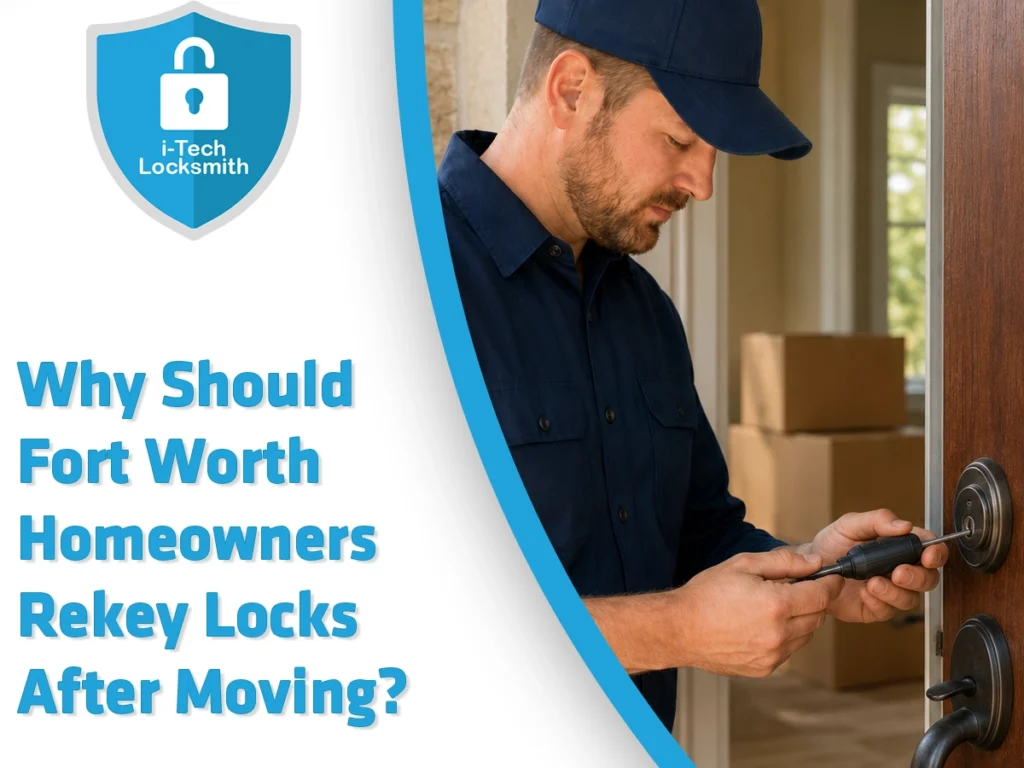
This is why Fort Worth homeowners should rekey locks after moving. Rekeying changes the working parts inside a compatible lock cylinder. As a result, the old keys stop operating that lock, and a new key takes their place.
AI Overview
Fort Worth homeowners should rekey exterior locks after taking legal possession because the history of every old key is usually unknown. Rekeying changes the lock cylinder so prior keys no longer work. It can restore key control without replacing suitable lock hardware. Homeowners should review the front door, back door, side entry, garage entry, gates, storage areas, and detached buildings. However, rekeying is not the right answer for every lock. Worn, broken, poorly installed, or outdated hardware may need repair or replacement instead. Smart locks, garage remotes, alarm codes, and keypad codes also need a separate reset. Therefore, a complete move in security plan should combine rekeying with an entry audit, code changes, key tracking, and repairs.
- Rekeying removes the access provided by unknown copies of old mechanical keys.
- A full entry review finds doors, gates, windows, codes, and remotes that rekeying alone cannot secure.
The goal is not to distrust the prior owner. Instead, the goal is to create a clear access boundary for the new household.
2. What Rekeying Changes Inside Your Existing Lock
Rekeying does not usually replace the entire lock. Instead, a locksmith removes or accesses the cylinder and changes its internal key pattern.
Most common pin tumbler locks contain small parts that must align when the correct key enters. During rekeying, the locksmith changes that alignment so a different key operates the cylinder.
Afterward, the old key should no longer turn the rekeyed lock. The new key becomes the authorized mechanical key for that entry.
This approach can preserve suitable handles, deadbolts, trim, and door hardware. Therefore, it may be practical when the existing lock is sound and meets the homeowner’s needs.
However, not every cylinder is compatible with every key. Different brands, keyways, and lock designs may limit which locks can share one key. A locksmith must inspect the hardware before promising one key for every door.
- Rekeying changes which key operates a compatible existing lock.
- Rekeying does not automatically repair worn hardware or upgrade its strength.
The process is different from making a copy. A copied old key preserves the old access pattern. Rekeying creates a new pattern and removes access from old keys.
3. Seven People Who May Have Received an Old Key
A seller may honestly deliver every key they possess. Still, the complete history of a home can span many years and several households.
1. Former residents
Past owners, tenants, adult children, or roommates may have received their own copies.
2. Trusted neighbors
A neighbor may have held a spare for emergencies, mail collection, pets, or travel.
3. Real estate professionals
Agents, inspectors, appraisers, photographers, or staging teams may have used approved access during the sale.
4. Repair workers
Contractors, painters, cleaners, flooring teams, pest workers, and appliance installers may have received temporary access.
5. Property managers
A rental or managed property may have used office keys, maintenance keys, or coded lockboxes.
6. Care providers
Pet sitters, caregivers, housekeepers, and lawn workers may have received a key for regular service.
7. Unknown previous copies
A key may have been copied without a record. It could also remain in a drawer, key box, vehicle, or old office.
- Assume the history is incomplete unless a controlled key record proves otherwise.
- Rekey exterior access points even when the seller appears honest and helpful.
Again, an unknown copy does not prove bad intent. It only shows why the new owner cannot rely on the prior access system.
4. How Rekeying Restores Clear Key Control
Key control means knowing which keys operate the property and who is allowed to hold them. Moving into a home creates a natural point for resetting that control.
First, rekeying makes the prior mechanical keys ineffective for the changed locks. Next, the homeowner decides how many new keys should exist. Finally, each new key can be assigned to a household member or trusted person.
A simple written record can help. Record the number of keys, not the key cuts. Then note who received each key and when it was returned.
Avoid placing the property address on a spare key label. If the key is lost, that label can connect it directly to the home.
Also think about future service providers. Temporary access should be limited when possible. Smart codes or managed lockboxes may help in some homes, but those systems require careful setup.
- Count every new key and record who receives it.
- Replace or rekey again when a key is lost and the access risk is unclear.
For more planning ideas, see these top reasons to rekey after moving into a home.
5. Which Fort Worth Doors Should Be Rekeyed First?
The front door is obvious, but it is rarely the only mechanical entry. A complete review should follow the entire property boundary.
Begin with every exterior door. Include the back door, side door, patio entry, garage service door, and any door connecting the attached garage to the home.
Next, review gates, detached garages, sheds, workshops, storage rooms, pool equipment areas, and outdoor cabinets. Some of these locks may use padlocks or cylinders that need separate service.
Also inspect rarely used doors. A door hidden behind boxes or furniture may still provide exterior access. Its key history matters even when the household seldom opens it.
Mailbox locks and community access devices may follow separate rules. Contact the proper property manager, postal service, or association before changing controlled equipment.
- Prioritize every door that provides direct access to the living area.
- Include garages, gates, storage buildings, and overlooked exterior entries in the audit.
One common weak point is the garage. This guide explains why a garage door lock may be the home’s weakest link.
6. When Rekeying Is Better Than Replacing the Locks
Rekeying is often practical when the installed hardware works smoothly, fits the door correctly, and provides suitable security.
The door should close without heavy force. The latch and bolt should move freely. Likewise, the cylinder should not spin, bind, pull loose, or show major damage.
Rekeying can also make sense when the new owner likes the current hardware. It may preserve the finish and appearance while changing the operating key.
In addition, several compatible locks may sometimes be keyed alike. This can reduce the number of keys needed for daily use. However, compatibility must be confirmed first.
Rekeying is not automatically cheap in every situation. The total depends on the number of cylinders, lock design, keyway, condition, service needs, and local pricing.
- Consider rekeying when the lock is sound but the key history is unknown.
- Ask whether compatible exterior locks can safely operate with one new key.
A careful comparison should consider security, hardware condition, convenience, and long term plans. Read this guide to rekeying versus replacing locks before choosing.
7. When Full Lock Replacement Is the Safer Choice
Some locks should not remain in service. A new key pattern cannot correct broken, weak, outdated, or poorly installed hardware.
Replace a lock when its body is cracked, loose, heavily corroded, or unreliable. Also consider replacement when the bolt does not extend fully into the strike.
Mismatched parts can create another problem. A strong deadbolt provides limited value when the strike is weak or the screws do not secure it properly.
Some new homeowners also want an upgrade. They may prefer stronger hardware, a different key system, accessibility features, electronic access, or a new finish.
However, smart locks are not a complete security plan. Their installation, mechanical parts, codes, batteries, emergency access, and account settings all require attention.
- Replace locks that are broken, unsafe, badly worn, or unsuitable for the door.
- Improve the strike, alignment, screws, and door condition when those parts limit security.
Warning signs are not always obvious. Review this list of when to replace locks during your move in inspection.
8. Why New Construction Homes May Still Need a Review
Being the first homeowner does not always mean only one person handled the keys. Builders, supervisors, inspectors, sales staff, contractors, cleaners, and service teams may have needed property access.
Some construction key systems are designed to change after the owner uses a final key. However, features vary by lock and builder. Do not assume that every home uses such a system.
Ask the builder how access was managed. Then request written details about construction keys, final keys, garage remotes, keypad codes, and smart home accounts.
Inspect every exterior lock after closing. Check whether all hardware matches, functions smoothly, and closes correctly. Construction dust, paint, and door movement can affect new locks.
- Ask whether construction keys stop working after the owner key is used.
- Confirm the result by testing only through an approved process.
A new lock can still be poorly aligned or incorrectly installed. Therefore, a first owner should complete the same access audit used for an older property.
9. An Illustrative Fort Worth Move In Case Study
The following example is hypothetical. It is not a verified I-Tech Locksmith service record or a promise of results.
A family closes on a Fort Worth home with a front door, patio door, garage entry, side gate, and detached storage building. The seller provides two keys and one garage remote.
During the move in review, the family notices that both keys operate the front and patio doors. However, neither key fits the storage lock. The garage keypad also accepts a code used during property showings.
The family requests an inspection. Suitable exterior cylinders are rekeyed where appropriate. Worn hardware is identified for possible replacement. The garage code and remotes are handled through their proper reset process.
Finally, the household receives a controlled number of new keys. Each key is tested, assigned, and recorded. Old keys are then tested only as needed to confirm they no longer operate the rekeyed locks.
- Rekeying addresses the unknown mechanical keys for compatible locks.
- Code resets, remote changes, and hardware repairs address risks beyond rekeying.
This example shows why one front door lock is not the full project. The whole access path matters.
10. Why Keypads, Remotes, and Smart Locks Need Separate Action
Rekeying only changes a mechanical key system. It does not automatically remove old keypad codes, garage remotes, phone accounts, smart lock users, or alarm credentials.
Begin with the garage door opener. Remove old remote access according to the manufacturer’s instructions. Then add only the remotes the household plans to use.
Next, reset exterior keypad codes. Avoid easy choices such as the street number, family birthdays, or repeated digits.
For smart locks, change the primary account password and review every authorized user. Also update recovery information and enable stronger account protection when supported.
Alarm systems, cameras, doorbells, gates, and home automation platforms need the same review. Remove old owners, installers, and temporary guests from their user lists.
- Reset every code, remote, account, and digital user connected to home access.
- Follow each manufacturer’s instructions instead of guessing through a reset.
A mechanical rekey and digital access reset should be treated as two parts of the same move in plan.
11. How Soon Should Homeowners Rekey After Closing?
The safest practical time is soon after legal possession begins. Ideally, plan the work before the household settles into a normal routine.
The Associated Locksmiths of America advises that rekeying should take place as soon as possible after taking possession. Its guidance also recommends considering garages and storage buildings.
Do not arrange changes before you have legal authority to alter the property. Closing schedules, leases, property rules, and association requirements may affect timing.
If same day service is not possible, limit the delay. Keep the home attended when practical, collect provided keys, and reset electronic access quickly.
Also avoid sharing new keys too early. Wait until the final key plan is clear, then distribute only the needed number.
- Schedule the lock review for the closing date or the earliest practical time after possession.
- Confirm legal authority before changing any lock on a shared, leased, or managed property.
A short delay does not prove that unauthorized entry will occur. Still, quick action reduces the period when old key control remains uncertain.
12. How to Prepare for a Professional Rekeying Visit
A little preparation can make the service more accurate. Start by counting every cylinder and entry point that may need attention.
Photograph the exterior and interior sides of each lock when the company accepts images. These photos may help identify lock brands and unusual hardware. Do not photograph or send sensitive codes.
Collect every existing key. Label each one by the door it operates without placing the property address on the label.
Next, decide who needs new keys. Ask whether one key can operate compatible locks. Also mention any door that sticks, drags, or requires force.
Keep proof of ownership or lawful occupancy available. A responsible locksmith may need to confirm that you may authorize changes.
- Prepare a list of doors, cylinders, keys, codes, remotes, and known problems.
- Tell the locksmith about loose locks, broken keys, hard turning cylinders, and door alignment issues.
After the work, test every new key from both sides when appropriate. Also confirm that old keys no longer operate the changed locks.
13. How to Choose a Trusted Texas Locksmith
Rekeying affects direct access to your home. Therefore, verify the provider before allowing work to begin.
Texas includes locksmiths within the private security field. The official Texas Department of Public Safety licensing page provides current information and access to license searches.
Ask for the full business name and an estimate. The estimate should explain the service call, number of cylinders, keys, parts, and conditions that could change the price.
Avoid choosing a provider based only on a very low advertised figure. The final cost depends on the actual hardware, location, service time, and requested work.
A trustworthy provider should inspect before recommending replacement. Rekeying should not become an excuse to sell unnecessary locks. Likewise, a damaged lock should not be rekeyed and presented as fully repaired.
- Verify current licensing and company identity before approving work.
- Request clear pricing and an explanation for every recommended replacement.
Homeowners should remain informed during the visit. Ask what will change, what will remain, and which old access methods could still work.
14. How Rekeying Supports a Complete Home Security Plan
Rekeying solves one clear problem: unknown mechanical keys. However, a secure home also depends on doors, frames, windows, lighting, habits, and timely repairs.
Check whether exterior doors close and latch without force. Then inspect deadbolts, strike plates, hinges, sliding doors, and garage access.
Outdoor lighting can improve visibility near entrances. Trim plants that block sightlines while respecting privacy and landscaping needs.
Also confirm that emergency responders can see the house number. Keep keys away from windows and doors where they can be reached from outside.
The Fort Worth Police Department provides a home security survey checklist to help residents identify property weaknesses.
- Combine rekeying with a full review of doors, windows, lighting, and daily habits.
- Repair weak entry points instead of relying on the new key alone.
For an expanded review, use this home security checklist after moving.
15. Common Rekeying Mistakes New Owners Should Avoid
The first mistake is rekeying only the front door. Side doors, garage entries, and detached structures may still accept old keys.
The second mistake is assuming a new key means stronger hardware. Rekeying changes access, but it does not increase the strength of a weak lock.
The third mistake is making too many new copies. Extra copies may recreate the same key control problem that rekeying was meant to solve.
The fourth mistake is hiding a spare in an obvious outdoor location. Mats, planters, ledges, and nearby decorations are easy places to check.
Finally, homeowners may forget to reset digital access. Old codes and smart users can remain active even after every mechanical lock is rekeyed.
- Include every exterior entry and connected access system in the project.
- Limit new keys and store emergency access through a controlled plan.
The goal is not just receiving a new key. The goal is knowing which people and systems can enter the home.
Frequently Asked Questions
Should I rekey or replace the locks after buying a house?
Rekeying may be enough when the existing locks work well, fit the doors, and meet your security needs. Replacement is usually better for broken, badly worn, outdated, or poorly installed hardware. A locksmith can inspect each entry because one home may need rekeying on some doors and replacement on others.
How soon should I rekey locks after moving?
Plan rekeying for the earliest practical time after legal possession begins. Many homeowners schedule it for closing day or shortly afterward. However, confirm that you have authority to change the locks first. Quick action reduces the period when unknown copies of prior keys may still operate exterior doors.
Will rekeying make all my doors use one key?
Sometimes, compatible locks can be keyed alike so one key operates several doors. However, lock brands, keyways, cylinder types, and hardware conditions must match the planned system. A locksmith must inspect the locks before confirming this option. Security needs may also support keeping certain areas on separate keys.
Does rekeying stop old keys from working?
A properly completed rekey changes the cylinder so keys made for the former pattern should no longer operate that lock. Still, homeowners should test the old keys after service when the locksmith approves. Remember that rekeying does not remove old smart users, garage remotes, keypad codes, or alarm credentials.
Should a new construction home be rekeyed?
A new construction home still deserves an access review because builders, contractors, inspectors, and service teams may have needed entry. Some locks use a construction key system that changes after the final owner key is used. However, designs vary. Ask the builder for written details and verify how every access method was reset.
Conclusion: Start Homeownership With Clear Access Control
Why should Fort Worth homeowners rekey locks after moving? The answer is key control. A new owner usually cannot confirm how many old keys exist or who may still possess them.
Rekeying changes suitable lock cylinders so prior keys stop working. Therefore, it can create a clear starting point for the new household without replacing every sound lock.
However, rekeying is only one part of move in security. Homeowners should also inspect weak hardware, reset garage remotes, change keypad codes, remove old smart users, and review every exterior entry.
Most importantly, do not wait for an old key problem to become an emergency. Plan the access reset soon after legal possession begins. Then track every new key and repair anything that weakens the door.
Protect Your New Fort Worth Home
I-Tech Locksmith – Fort Worth can assess whether your new home needs rekeying, lock repair, replacement, or a combination of services. Recommendations should always follow an inspection of the property and existing hardware.
Contact us at
Phone: 817-663-0642
Location: 8520 Tamar Trail, Fort Worth, TX 76118
Website: www.i-tech-locksmith.com