
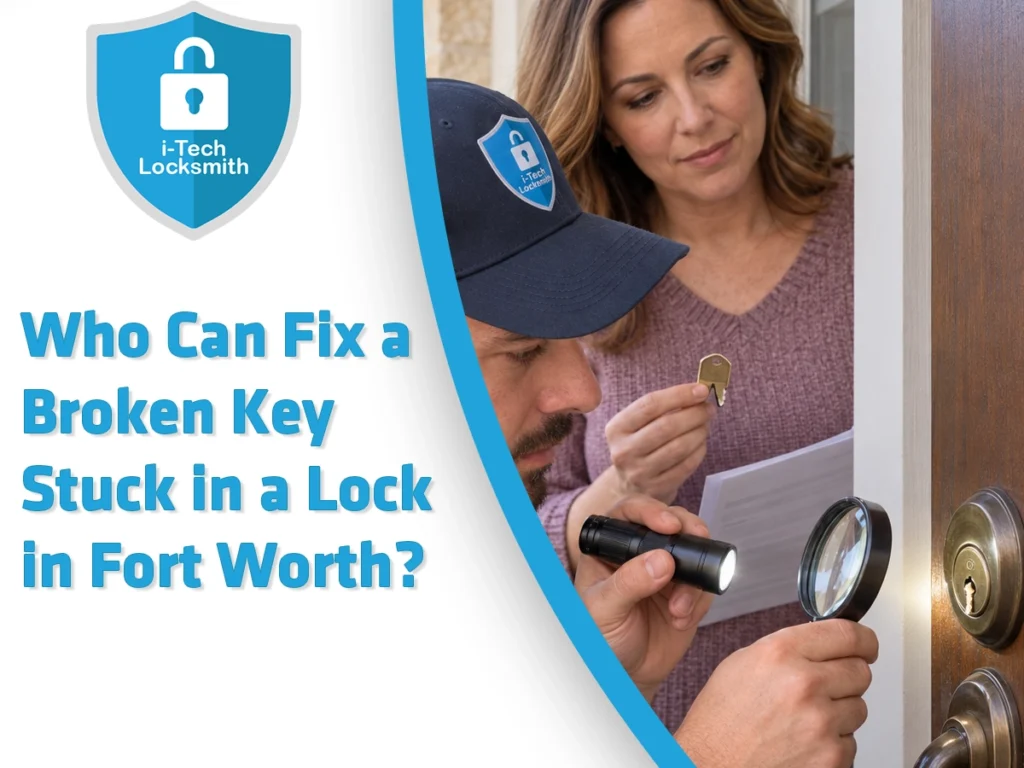
12 Expert Steps for a Broken Key Stuck in a Lock in Fort Worth
Here is a surprising fact: a hard turning key may point to door or latch misalignment, not only a worn key. Manufacturer guidance from CISA recommends checking the lock, latch, door, and frame alignment when a key becomes difficult to turn. Therefore, a broken key stuck in a lock in Fort Worth may signal a wider hardware problem. A qualified locksmith can remove the fragment, inspect the cylinder, identify the cause, and explain whether repair, rekeying, or replacement makes sense.
AI Overview
A licensed locksmith with the right experience can address a broken key stuck in a lock in Fort Worth. Stop turning or pushing the fragment because added force can move it deeper or damage the cylinder. Do not add glue, random tools, grease, oil, or an unknown spray. Instead, photograph the lock, note what happened, and call a verified locksmith. The technician should confirm your authority to access the property or vehicle, inspect the keyway and door alignment, explain the extraction plan, and provide a written estimate before work begins.
- Keep the key fragment and any other working key available for inspection.
- Ask for extraction, lock inspection, and a safe access plan rather than removal alone.
1. Stop Turning the Broken Key Immediately
The safest first step is simple: stop. A key often breaks after it begins to bend, bind, or twist under load. More pressure can push the fragment past pins or other internal parts. It can also mark the keyway and make professional removal harder.
Next, place any broken piece in a small bag or container. The shape can help a locksmith understand where the blade failed. A second original key can also show whether wear, bending, or a poor duplicate contributed to the problem.
- Stop applying turning, pulling, or pushing force.
- Save every broken piece for inspection.
- Keep people from testing the same lock with another key.
If the door is open, keep it open when safe. That simple choice may prevent a lockout while you arrange service.
2. Check Whether the Situation Is an Emergency
A broken key is usually a property access issue. However, it becomes urgent when a child, vulnerable adult, pet, medical need, fire risk, or traffic danger is involved. Call 911 when someone faces immediate danger. Do not wait for normal locksmith dispatch.
For a vehicle, move away from traffic when possible. A key broken in an ignition can create a different problem from a key broken in an exterior door. Do not try to drive or tow the vehicle without proper guidance if the steering, ignition, or security system may be affected.
- Call emergency services first when life or immediate safety is at risk.
- Use only an approved alternate entrance when one is available.
- Tell dispatch whether the key is in a door, ignition, gate, safe, or other lock.
For a normal lockout, these calm emergency lockout steps can help you protect the property while waiting.
3. Call the Right Type of Locksmith
A general residential locksmith may handle a key broken in a home deadbolt, knob, lever, or gate lock. A commercial locksmith may be better for storefront cylinders, restricted key systems, master keyed doors, panic hardware, or managed access. An automotive locksmith is the right starting point for many vehicle doors and ignition keys.
Describe the lock before accepting dispatch. Give the property type, lock location, brand if visible, and whether the door is open or locked. For a vehicle, share the year, make, model, key type, and exact location of the fragment.
- Choose residential, commercial, automotive, or safe experience that fits the lock.
- Confirm that the assigned technician handles broken key extraction.
- Explain whether you also need entry, repair, rekeying, or a replacement key.
The goal is not merely sending the nearest person. It is sending someone prepared for the exact lock and key system.
4. Give Dispatch Clear Details and Photos
Accurate details save time and reduce price surprises. Start with the exact location and a safe meeting point. Then describe how the key broke. Did it snap during normal turning? Was the door pushing against the bolt? Was the key already bent or cracked? Did anyone add a product or insert a tool afterward?
Tell dispatch whether the lock still works from the other side. Mention recent stiffness, weather exposure, loose hardware, door sag, or a latch that rubs the strike. Those signs may point to a cause beyond the broken key.
- Provide the lock location, door status, and type of key.
- Describe every attempt already made.
- Send a safe photo without exposing sensitive security details.
This earlier guide on a key stuck in a lock explains why the symptoms before breakage matter as much as the final snap.
5. Verify the Locksmith Before Work Begins
Texas regulates locksmiths through the Department of Public Safety Private Security Program. The state’s TOPS licensing guidance explains how consumers can search licensed companies and individuals. Ask for the provider’s exact company and license information before dispatch.
When the technician arrives, compare the name with the company you called. Ask for suitable identification and confirm any contractor relationship. A responsible provider should also verify that you own the property or vehicle or have permission to request access.
Next, ask for a written estimate. It should separate the service call, extraction labor, entry work, parts, key cutting, rekeying, and possible replacement. Some conditions remain unknown until inspection, but the provider should explain what could change the total.
- Verify the company and locksmith through official Texas records.
- Match the arriving technician to the dispatch information.
- Review a written estimate before extraction or destructive work.
Keep the messages, estimate, and receipt. Good records protect both the customer and the service provider.
6. Let the Technician Inspect the Whole Lock System
The broken fragment is only one part of the problem. First, the locksmith should examine its depth and position. Next, the technician should inspect the keyway, cylinder face, lock movement, latch or bolt, strike alignment, hinges, and door pressure when relevant.
If the door is sagging, the bolt may drag against the strike. Then the user adds more turning force to the key. Likewise, dirt, corrosion, damaged pins, a loose cylinder, or an incorrect key can create resistance. Removing the fragment without finding that resistance can lead to another broken key.
The locksmith should also look at the saved key pieces. A smooth worn edge suggests a different history from from a fresh bend or an old crack. Still, visual clues are not proof by themselves. The technician should connect them with actual lock tests.
- Inspect the fragment position and condition of the keyway.
- Check the latch, bolt, strike, hinges, and door alignment.
- Examine the broken key and any working duplicate.
Our professional opinion is that extraction and diagnosis belong together. A clean removal is useful, but preventing the next failure provides greater value.
7. Understand Professional Broken Key Extraction
Professional extraction begins with control. The technician stabilizes the lock and chooses tools suited to the fragment and cylinder. The goal is to remove the piece without pushing it deeper, bending internal parts, or damaging the door finish.
The exact method varies. A fragment near the opening may differ from one twisted deep inside the keyway. A standard residential cylinder also differs from a vehicle ignition, restricted commercial cylinder, or high security lock. Therefore, a responsible locksmith should not promise one universal method before inspection.
This article avoids detailed bypass instructions because those techniques can support unauthorized access. Customers only need to know the service plan, expected effect on the lock, and price. Ask whether the provider expects nondestructive extraction or whether damage already makes replacement likely.
- Expect a lock specific method rather than one tool for every case.
- Ask how the technician will protect the cylinder and surrounding finish.
- Approve drilling or replacement only after a clear explanation and estimate.
Although online advice may make removal appear simple, do it yourself broken key extraction can create extra damage when the fragment is deep or twisted.
8. Decide Whether the Lock Needs Repair or Replacement
Successful extraction does not automatically mean the lock is healthy. After removal, the locksmith should test the cylinder with a correct key. The key should enter, turn, and exit smoothly. The latch or bolt should move without heavy pressure from the door.
Repair may make sense when the cylinder remains sound and the cause is minor alignment, loose hardware, or approved maintenance. Rekeying may be useful when access control must change but the lock body remains serviceable. Replacement may be better when the cylinder is damaged, badly worn, corroded, or no longer reliable.
Ask for options rather than one unexplained answer. Compare immediate cost, security, compatibility, key control, remaining life, and warranty. If the hardware serves a commercial door, make sure any change fits the building’s access plan and door function.
- Test the lock after the fragment is removed.
- Compare repair, rekeying, and replacement based on actual condition.
- Request the brand, model, finish, keys, and warranty for new hardware.
This comparison of rekeying and replacing locks can help owners understand the difference before approving added work.
9. Make the Replacement Key From a Reliable Source
A broken key may be too worn or distorted to serve as the best pattern for a new copy. Repeating every worn edge can create a key that operates poorly. Therefore, bring an original spare when one exists. The locksmith can assess the most reliable source for the replacement.
Some keys require more than mechanical cutting. Vehicle transponder keys, proximity fobs, restricted commercial keys, and patented systems may need programming or authorization. Tell the provider about the system before dispatch so the correct equipment and records are available.
After a key is made, test it several times with the door open when safe. It should insert and withdraw without scraping or force. Then test normal locking with the door closed while keeping another entry option available.
- Use a sound original or authorized key data when available.
- Confirm whether cutting, programming, or key control approval is required.
- Test every new key before the service is closed.
Do not keep using a key that bends, catches, or needs a special wiggle. That behavior is an early warning, not a normal feature.
10. Avoid Glue, Random Tools, and Wrong Lubricants
Glue is a common online suggestion, yet it can spread into the cylinder and bond internal parts. Pins, blades, magnets, and improvised hooks can also push the fragment deeper or scratch the keyway. Pliers may help only when enough metal is exposed and no turning pressure remains, but careless pulling can still worsen a twist.
Lubrication also requires care. Products and cylinder designs differ. CISA recommends a suitable non greasy silicone product for its cylinders. Meanwhile, ASSA ABLOY warns against grease, oil, and graphite products for its locking cylinders and recommends its specified lock spray. Therefore, follow the exact lock maker’s instructions or ask the technician.
Do not spray a random product into a cylinder that already contains debris, glue, or broken metal. Tell the locksmith what was applied and how much. That detail can change the cleaning or repair plan.
- Never put glue into the keyway.
- Avoid pins, blades, drill bits, and improvised extraction tools.
- Use only a lubricant approved for the exact lock and condition.
If someone already tried a home method, do not hide it. Accurate information helps the technician avoid a second problem.
11. Review Price, Work, and Documentation
Broken key service costs vary because the jobs differ. A visible fragment in an open residential door is not the same as a deep fragment in a locked ignition. Travel, time, access, lock design, prior damage, replacement parts, key cutting, and programming can affect the total.
Ask dispatch for the service call and likely range. Then request a written on site estimate after inspection. If the scope changes, approve a revised amount before added work begins. Do not accept blank forms or a price that changes without a reason.
Before paying, test the lock, door, and every new key. Inspect the cylinder face and nearby finish. Finally, obtain an itemized receipt that identifies the company, service, parts, date, and total.
- Separate extraction, entry, repair, parts, key cutting, and programming charges.
- Approve a written estimate and any later change.
- Test the result and keep an itemized receipt.
Price matters, but the lowest number is not always the best value. Verification, proper tools, clear scope, and protection from added damage matter too.
12. Prevent Another Key From Breaking
Pay attention when a key begins to change. A new catch, bend, crack, rough edge, or need for extra force deserves inspection. Stop using a weak key before it fails. Also, replace poor duplicates and keep a dependable spare in a secure place.
Watch the door as well. If lifting, pushing, or pulling the door makes the key easier to turn, alignment may be affecting the bolt. Loose hinges, a shifted strike, swelling, weather exposure, or frame movement can increase load. Fixing the cause protects the next key and the lock.
Follow the lock maker’s maintenance schedule and product instructions. Clean keys, keep harsh products away from the cylinder, and never use the key as a door pull. For high use commercial doors, include locks, closers, hinges, and strikes in routine inspections.
- Replace bent, cracked, badly worn, or unreliable keys.
- Correct door, strike, latch, or hinge problems early.
- Follow manufacturer guidance for cleaning and lubrication.
Review these common lock problems and prevention steps before stiffness becomes a broken key and an urgent service call.
Illustrative Broken Key Scenarios in Fort Worth
These examples are educational. They are not claims about named customers or completed I-Tech Locksmith jobs.
In the first scenario, a homeowner feels the key bind for several days. The key finally breaks while the deadbolt rubs the strike. The locksmith removes the fragment, checks the cylinder, and finds that door alignment contributed to the force. The solution addresses both the key and the door.
In the second scenario, an office key breaks in a restricted cylinder. The manager does not allow an unapproved duplicate. Instead, the manager checks the key system records and authorizes service through the proper channel. This protects key control while restoring access.
In the third scenario, a vehicle key breaks in an exterior door. The driver saves the piece and calls an automotive locksmith. The technician confirms whether the vehicle also needs a cut key, chip, or programming before accepting the job.
- The first case shows why alignment must be checked.
- The second case protects commercial authorization and key control.
- The third case separates extraction from electronic key needs.
Frequently Asked Questions About Broken Keys in Locks
Can a locksmith remove a broken key without damaging the lock?
Often, a trained locksmith can remove a fragment without destroying the cylinder. However, the outcome depends on its depth, twist, prior attempts, keyway condition, and existing lock damage. The technician should inspect the lock first, explain the planned method, and state whether repair or replacement may still be needed after extraction.
How much does broken key extraction cost in Fort Worth?
The price depends on travel, time, lock type, fragment position, door status, previous damage, and whether you need entry or a new key. Vehicle programming or new hardware can add separate costs. Ask for the service call and likely range, then approve a written estimate after the technician inspects the lock
Should I put glue on the broken key to pull it out?
No. Glue can spread into the keyway and bond moving parts, turning a key extraction into a cylinder repair or replacement. It can also make the fragment harder to grip safely. Stop using the lock, save the broken piece, and tell the locksmith about any product already placed inside the cylinder.
Does a broken key mean I need a new lock?
Not always. If the fragment comes out cleanly and the cylinder remains sound, repair, alignment, or a proper replacement key may solve the problem. Replacement becomes more likely when the keyway, pins, plug, housing, or other hardware is damaged or badly worn. Ask for testing and options before approving new hardware.
Can a locksmith make a new key from the broken pieces?
Sometimes the pieces provide useful information, but a badly worn or bent key may not be the best pattern. A sound original spare, authorized key record, code, or vehicle data may produce a better result. Restricted and electronic keys can require ownership proof, approval, compatible parts, or programming in addition to mechanical cutting.
Get Safe Help for a Broken Key in Fort Worth
A qualified locksmith can remove a broken key stuck in a lock in Fort Worth and determine why it failed. The best service includes careful extraction, full lock inspection, a clear repair plan, and a tested replacement key when needed.
Stop using the lock, save the fragments, and avoid glue or random tools. Then verify the locksmith, describe the situation, and approve a written estimate. Those steps give the lock, door, and new key the best chance of reliable operation.
Contact I-Tech Locksmith – Fort Worth to confirm current availability and request an assessment for your lock and key problem.
Contact us at
Phone: 817-663-0642
Location: 8520 Tamar Trail, Fort Worth, TX 76118
Website: www.i-tech-locksmith.com