12 Vital Checks for Upfront Pricing From an Arlington Locksmith
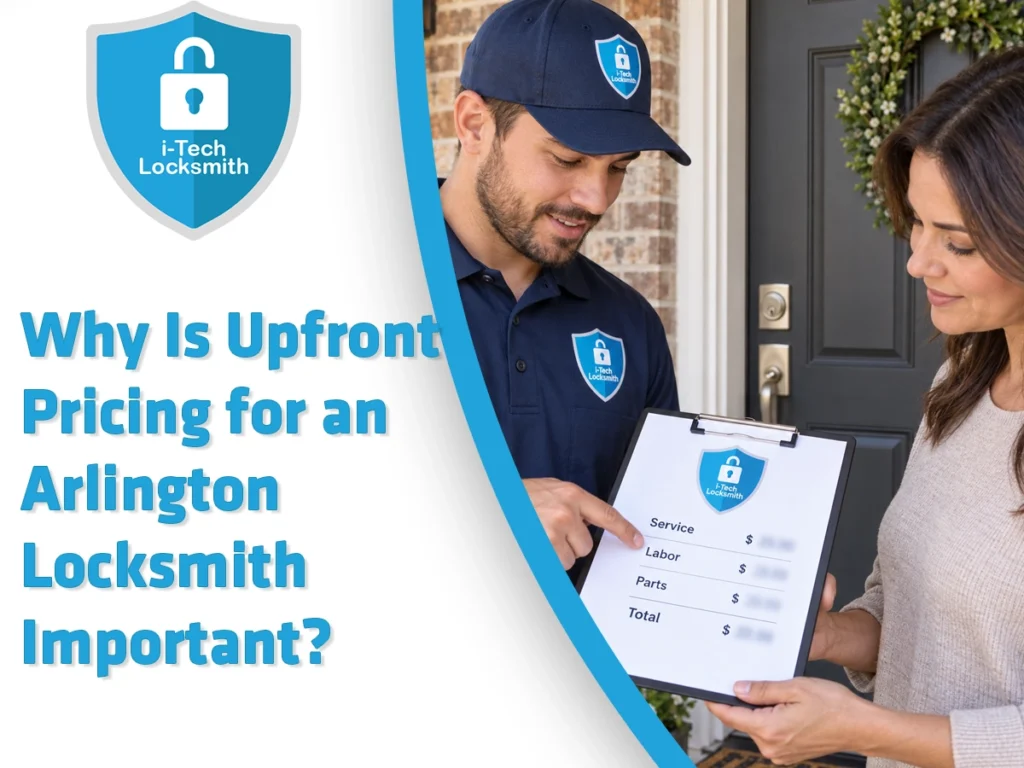
Here is a surprising consumer benchmark: the Federal Trade Commission advises getting three written estimates before planned home repairs and not starting until a written agreement is reviewed. An emergency lockout may not allow three on site visits. However, the main principle still applies. Upfront pricing for an Arlington locksmith should define the service, likely charges, and approval process before tools touch the lock.
AI Overview
Upfront pricing helps an Arlington customer understand what a locksmith plans to do and how the price is built. Before dispatch, ask about the service call, labor range, parts, emergency fees, travel, taxes, payment methods, and cancellation terms. After inspection, request a written estimate with the company name, service scope, and expected total. If the technician finds a different problem, ask for a revised estimate before added work. Clear pricing does not mean every job has one fixed phone quote. It means assumptions, options, changes, and approval remain visible throughout the service.
- Compare the phone explanation with the written on site estimate.
- Approve the original scope and every later change before work continues.
1. Use Upfront Pricing to Define the Actual Service
The word “locksmith” covers many different jobs. Opening a door, extracting a key, rekeying a cylinder, replacing hardware, and programming a vehicle key require different time, tools, and parts. Therefore, price only makes sense when it is connected to a clear service.
Start by describing the problem in plain language. Say whether the door is locked, the key is lost, the lock is damaged, or access needs to change. For a vehicle, provide the year, make, model, and key type. For a business, state the door type and access system when known.
Then ask the dispatcher to repeat the likely service. A customer requesting rekeying should not assume the quote includes new locks. Likewise, a basic lockout quote may not include broken key extraction or damaged hardware.
- Define the property, door, lock, key, and access problem.
- Confirm what the quoted service includes and excludes.
- Separate entry, repair, rekeying, replacement, and key work.
Clear scope is the foundation of clear pricing. Without it, even an exact number can be misleading.
2. Separate the Phone Quote From the On Site Estimate
A dispatcher works with the information available during the call. The caller may not know the lock brand, damage, key system, or door condition. As a result, a responsible phone quote may be a range based on stated assumptions.
The on site estimate comes after inspection. It should reflect the real lock, actual condition, required work, parts, and access challenges. This estimate is the key approval point. Read it before the technician begins.
Ask which details could move the price outside the phone range. Good answers are specific. Hidden damage, a different service, specialized parts, or incorrect vehicle information may affect cost. A vague claim that every lock is “special” does not explain anything.
- Ask whether the phone amount is fixed, estimated, or only a starting charge.
- Request the assumptions behind any stated range.
- Approve the written on site estimate before work starts.
This distinction prevents a normal estimate adjustment from feeling like a surprise. It also makes an unexplained increase easier to identify.
3. Identify Every Part of the Locksmith Price
Upfront pricing for an Arlington locksmith should show how the total is built. Common categories include a service call, labor, parts, key cutting, programming, emergency scheduling, taxes, parking, tolls, and cancellation. Not every job includes every category.
Ask whether the service call covers travel and inspection only or includes basic labor. Then ask how labor is charged. It may be a task price, a range, or time based. If parts may be needed, request the expected type and price before installation.
For electronic or automotive work, confirm whether programming, a remote, a mechanical blade, and testing are separate. For commercial work, ask whether restricted keys, access credentials, or master key records add authorization or material costs.
- List the service call, labor, parts, fees, taxes, and payment terms.
- Ask whether key cutting and programming are separate charges.
- Confirm which items are optional and which are required.
A detailed breakdown allows customers to compare scope, not just the number at the bottom.
4. Compare Estimates on Equal Terms
Two locksmith estimates may look different while covering different work. One may include the service call, entry, and tax. Another may show only the dispatch fee. Therefore, comparing totals without comparing scope can lead to the wrong choice.
Place each estimate beside the same checklist. Compare the lock or key service, labor, parts, arrival range, warranty, payment terms, and possible added charges. Also confirm whether the company or a separate contractor will perform the work.
The lowest quote can be reasonable when the job is simple and the provider explains it. However, a very low number with no defined scope is not a useful estimate. Ask for the likely total for the exact facts you gave.
- Compare the same service, hardware, key count, and warranty.
- Check whether dispatch, labor, parts, and taxes are included.
- Treat an undefined minimum as different from a complete estimate.
For residential entry work, these Arlington house lockout cost factors provide useful context for a more informed comparison.
5. Understand What Can Change the Final Price
Some price changes are valid. A technician may find a broken internal part, a damaged cylinder, a different key system, or a door condition that dispatch could not see. The important issue is how that discovery is handled.
The locksmith should pause, explain the new fact, and show the problem when practical. Next, the technician should describe the revised service and price. The customer can then approve, decline, or ask about another option.
No added task should silently appear on the invoice. Likewise, authorization for entry does not automatically approve replacement hardware. A revised estimate creates a record of the decision.
- Require a specific reason for every scope or price change.
- Request an updated written estimate before added work.
- Keep the right to accept, decline, or compare alternatives.
Upfront pricing is not a promise that hidden conditions never exist. It is a promise that changes will not be hidden from the customer.
6. Ask About Repair, Rekeying, and Replacement Options
Many lock problems have more than one possible solution. A stiff lock may need alignment or repair. A lost key may call for rekeying. Worn or damaged hardware may justify replacement. Each option has a different cost and long term effect.
Ask the locksmith to explain which options are suitable after inspection. Then compare security, expected life, compatibility, key control, warranty, and total price. The cheapest immediate choice may not be the best value, yet the most expensive option is not always necessary.
When new hardware is proposed, request the brand, model, finish, grade, key count, and warranty. When rekeying is proposed, confirm how many cylinders and new keys are included.
- Request every reasonable service option and its price.
- Compare cost, security, life, compatibility, and warranty.
- Confirm the exact hardware, cylinders, and keys included.
This guide to rekeying versus replacing locks can help customers prepare for that choice.
7. Clarify Emergency and After Hours Charges
Emergency service may cost more because timing, travel, demand, and technician availability differ. However, the phrase “emergency rate” should not replace a price explanation. Ask exactly which added fee applies and whether it is included in the stated range.
Give the dispatcher an exact location and safe meeting point. Ask for an arrival range rather than an impossible guarantee. Then confirm whether waiting time, parking, tolls, or cancellation can add charges.
Safety still comes first. If a child, vulnerable person, fire risk, medical issue, or traffic danger is involved, call 911. Do not delay emergency help while comparing locksmith prices.
- Ask whether an evening, weekend, or holiday fee applies.
- Confirm travel, parking, toll, waiting, and cancellation terms.
- Put immediate personal safety ahead of property cost.
For normal urgent access, follow these calm steps during an emergency lockout while arranging verified service.
8. Verify the Company Along With the Price
A detailed estimate has little value when the company identity is unclear. Ask for the complete company name, callback number, Texas license information, and technician relationship. Compare those details across the website, dispatch message, estimate, and receipt.
Texas regulates locksmiths through the Department of Public Safety Private Security Program. Consumers can use the official Texas DPS licensing and registration resources to search license information.
When the technician arrives, confirm the connection to the company you called. A responsible locksmith should also verify that you own or may access the property or vehicle. Identity checks should protect both sides of the transaction.
- Verify the business and technician through official Texas records.
- Match the estimate and receipt to the company you hired.
- Prepare proof of ownership or authorized access.
Price transparency and identity transparency belong together. Both help create an accountable service record.
9. Require Clear Payment and Invoice Terms
Before work starts, ask which payment methods the company accepts. Also ask when payment is due and whether card, cash, check, or payment app terms differ. A provider should not wait until the end to reveal a payment restriction or added processing charge.
After the work, compare the invoice with the approved estimate. The invoice should identify the company, date, service location or vehicle, labor, parts, taxes, and total. It should also record any warranty or follow up terms.
Do not sign a blank document or a statement that the work is complete when a problem remains. Note the concern in writing and ask how the company plans to correct it.
- Confirm accepted payment methods and due dates in advance.
- Match each invoice charge with the approved scope.
- Keep the estimate, invoice, receipt, and warranty together.
The Texas Attorney General’s broader repair guidance also stresses writing down total cost, work, payment terms, and expectations. That principle supports clear locksmith transactions as well.
10. Use Upfront Pricing for Business Decisions
Commercial locksmith work often affects more than one door. A project may include cylinders, keys, master key levels, exit hardware, access credentials, labor schedules, and employee access. Therefore, decision makers need a scope that can be reviewed and approved.
Ask for door counts, hardware types, key quantities, access levels, labor windows, testing, and documentation. Also confirm whether work outside normal business hours changes the price. If unknown conditions exist, establish unit prices or an approval limit.
A written change process protects the manager and locksmith. It prevents an employee from approving a major addition without authority. It also gives the technician a clear contact when field conditions require a decision.
- Define doors, hardware, keys, credentials, labor, and testing.
- Name the person authorized to approve added work.
- Set written unit prices or spending limits when useful.
Good commercial pricing supports budgeting, access control, and future maintenance. It is more than a simple total.
11. Review Value, Not Only the Lowest Price
Price is important, but value includes what happens before, during, and after the work. Consider provider verification, response communication, diagnostic care, safe methods, hardware quality, testing, documentation, and warranty.
A low price can be good value when the scope is complete and the service fits the need. A higher price can also be justified by specialized key systems, quality hardware, difficult access, or broader work. The estimate should show why.
Avoid paying for work that does not solve the cause. For example, replacing a cylinder may not correct a door that places heavy pressure on the bolt. A sound estimate connects the proposed service to the actual problem.
- Compare diagnosis, method, materials, testing, and warranty.
- Ask how the proposed work addresses the cause.
- Choose the option that balances cost, safety, and service life.
Ignoring a problem can also increase future costs. These examples of the real cost of a faulty lock explain why timely, suitable work may offer better value.
12. Follow a Simple Approval Checklist
Before dispatch, write down the company, dispatcher, service call, price range, arrival range, and payment methods. On arrival, verify the technician and ownership requirements. Then read the written estimate before authorizing work.
During the job, ask for a revised estimate if the scope changes. Afterward, test the lock, door, key, remote, or access credential. Finally, compare the invoice with the approved amount and save every record.
This process takes only a few minutes for many jobs. Yet it creates a clear path from the original problem to the final payment. It also reduces confusion when several people are involved.
- Record the dispatch terms and verify the arriving technician.
- Approve the estimate and every change in writing.
- Test the result and keep a detailed final invoice.
From a professional service viewpoint, the best estimate is easy to understand and easy to compare with the completed work.
Illustrative Upfront Pricing Scenarios in Arlington
These examples are educational. They are not claims about named customers or completed I-Tech Locksmith jobs.
In the first case, an Arlington homeowner needs entry after losing a key. Dispatch gives a service call and entry range based on a standard cylinder. The on site inspection confirms that assumption. The customer signs the matching estimate, receives entry service, tests the lock, and pays the stated total.
In the second case, a business requests rekeying for several doors. Inspection finds one damaged cylinder. The locksmith pauses, gives the manager repair and replacement options, and issues a revised estimate. The authorized manager approves one option before the added work begins.
In the third case, a driver requests a replacement car key but describes it as a basic metal key. The vehicle actually uses a transponder. The technician explains the programming requirement and revised price before cutting anything. The driver can approve or decline with full information.
- The first case shows a phone range matching the inspected scope.
- The second case shows a clear commercial change process.
- The third case shows how new facts can fairly change an estimate.
Frequently Asked Questions About Locksmith Pricing
Can an Arlington locksmith give an exact price over the phone?
Sometimes, but many jobs require inspection before the final price is known. The caller may not know the lock type, damage, key system, or door condition. Ask for the service call and likely range, including assumptions. Then request a written on site estimate before work begins or any parts are installed.
What should a locksmith estimate include?
A useful estimate should identify the company, service scope, labor, parts, key quantities, programming, added fees, taxes, payment terms, and expected total. It should also explain conditions that could change the price. For planned work, include hardware details and warranty terms. Never sign an estimate with important blank spaces.
Why might a locksmith price change after inspection?
The technician may discover hidden damage, a different lock, an electronic key system, or work not described during dispatch. A valid change should have a clear reason and revised scope. The locksmith should pause and provide an updated estimate before proceeding. You should have the chance to approve, decline, or ask about alternatives.
Is the cheapest locksmith quote always the best option?
No. The lowest quote may cover only dispatch or a narrow service, while another includes labor, parts, testing, and warranty. Compare estimates on equal terms. Review company verification, method, hardware, likely total, documentation, and support. A low complete quote can be valuable, but an undefined minimum is difficult to judge.
What should I do if the final invoice exceeds the estimate?
Ask the provider to identify each difference and show where you approved the change. Compare the invoice with the original and revised estimates. If you did not authorize added work, state the concern in writing and preserve all records. For suspected licensing violations or fraud, contact the appropriate Texas or federal consumer agency.
Choose Clear Pricing Before Locksmith Work Starts
Upfront pricing for an Arlington locksmith protects the customer’s budget and the provider’s scope. It defines the problem, separates expected charges, documents options, and creates a fair process when new conditions appear.
Ask clear questions during dispatch. Then verify the company, review the on site estimate, approve changes, test the work, and keep the invoice. Transparent pricing does not remove every unknown. Instead, it prevents unknowns from becoming unexplained charges.
Contact I-Tech Locksmith – Arlington to confirm current availability and request clear pricing for your lock, key, or access problem.
Contact us at
Phone: 817-383-1387
Location: 1738 W Division St, Arlington, TX 76012
Website: www.i-tech-locksmith.com