
Locksmith Rekey Guide for Safer Arlington Locks
The FBI reported data on more than 14 million criminal offenses in 2024, which shows why access control still matters for homes and businesses.
That fact may sound broad, yet it points to a simple local truth. Your locks are only as secure as the keys that can open them. Therefore, if old keys are still floating around, your door may not be as protected as you think.
A locksmith rekey service can solve that problem without replacing every lock. In many cases, a trained locksmith can change the pins inside your existing locks. After that, the old keys stop working, and a new key opens the door.
For homeowners, property managers, landlords, and business owners in Arlington, TX, this is a smart and often cost friendly security move. I-Tech Locksmith – Arlington helps local customers decide when rekeying is enough and when a full lock replacement is the better choice.
AI Overview: A locksmith can usually rekey all locks if the locks are in good shape and use compatible keyways. Rekeying is useful after moving, losing keys, employee turnover, tenant changes, break ins, and access concerns. However, damaged, outdated, or mismatched locks may need replacement instead.
- Key points for this section
1. What Does Rekey Mean?
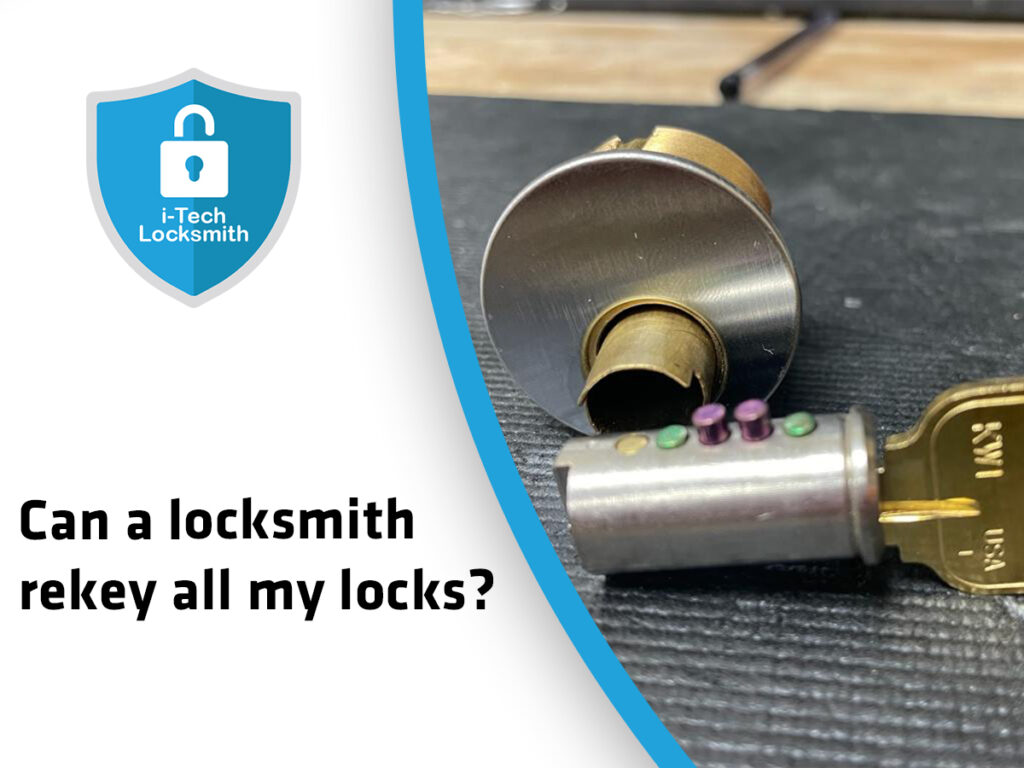
To rekey a lock means to change the inner pin setup of the lock cylinder. The lock stays on the door, but the working key changes. As a result, any old key no longer turns the lock.
This process is different from replacing a lock. When you replace a lock, the full lock hardware comes off the door. When you rekey, the locksmith changes the lock’s internal code.
Rekeying matters because keys are easy to lose, copy, loan, or forget about. For example, a former tenant, contractor, roommate, employee, or cleaner may still have a working key. Even if you trust people, that creates a weak point.
For a deeper comparison, read this guide on rekeying vs replacing locks. It explains when each option makes the most sense.
- Why this matters
2. Can a Locksmith Rekey All My Locks?
Yes, a locksmith can often rekey all your locks. However, the answer depends on the lock brand, keyway, condition, and cylinder type.
If your locks are the same brand or use the same keyway, a locksmith may be able to make one key work for every door. This is helpful for homes, offices, rental units, and small shops. Instead of carrying several keys, you use one simple key for daily access.
However, not every lock can be matched. Some locks use different keyways. Others may be too worn, damaged, or low grade. In those cases, the locksmith may suggest replacing some locks and rekeying others.
This blended approach often gives the best value. You keep strong locks that still work well. Then, you replace weak locks that no longer protect the property.
- What a locksmith checks
3. When Should You Rekey Your Locks?
You should rekey your locks when you are no longer sure who has a working key. That is the clearest and most important reason.
For example, rekeying is wise after moving into a new home. Previous owners, agents, contractors, neighbors, or service workers may have copies. Even when the sale or lease feels smooth, you rarely know the full key history.
Rekeying also makes sense after losing keys. A lost key may never be used, but you cannot know that for sure. Therefore, rekeying gives you peace of mind.
Businesses should also rekey after employee turnover. This is especially true for offices, stores, storage rooms, cash areas, and supply closets. Access control protects people, inventory, files, tools, and daily operations.
You can also review this helpful article on how often you should rekey your locks.
- Common times to rekey
4. Why Rekeying Is Important for Home Security
Rekeying is important because a lock is not only about hardware. It is also about control. If too many people have keys, the strongest door can still be at risk.
Many homeowners focus on cameras, alarms, and smart devices. Those tools can help, yet they do not replace basic key control. If an unknown person has a working key, they may not need to force the door.
Rekeying helps close that gap. It is a simple step that makes old keys useless. Also, it can be done without changing the look of your door.
This makes rekeying useful for families who want better safety without a major project. It also helps landlords prepare units for new tenants. Likewise, it helps business owners protect staff and assets after access changes.
For more home protection ideas, see this home security checklist.
- Security benefits
5. Rekeying Versus Replacing Locks
Replacing and rekeying both improve security, but they solve different problems. Rekeying changes the key that opens the lock. Replacing changes the full lock hardware.
Rekeying is usually best when the lock is still strong and works well. The door closes correctly. The cylinder turns smoothly. The hardware still fits your safety needs.
Replacing is better when the lock is damaged, loose, outdated, or low quality. It is also smart when you want stronger hardware, smart locks, high security locks, or a new finish.
For example, after a break in, some locks can be rekeyed. However, if the lock or door was forced, replacement may be safer. A locksmith can inspect the hardware and explain the right choice.
You may also find this guide useful: rekey or replace locks after a break in.
- Simple rule
6. Can One Key Open Every Lock?
Yes, one key can often open several locks if the locks are compatible. This is called keying alike. It can make daily access much easier.
For example, your front door, back door, side door, and garage entry may all use one house key. This reduces key clutter and makes family access simpler. It also helps property managers and small business owners work faster.
However, one key for every lock is not always the best setup. Some areas need tighter control. A business may want one key for the main entry and another for storage. A landlord may want a separate key for each rental unit.
A professional locksmith can build a key plan that matches how people use the property. That plan can balance ease, control, and safety.
- Access options
7. How the Locksmith Rekey Process Works
The locksmith starts by checking your current locks. They look at the brand, keyway, cylinder, wear, and door function. Then, they confirm your goal.
Next, the locksmith removes the cylinder or opens the lock body. They replace the pins inside the cylinder so the old key no longer matches. Then, they cut or provide the new key.
After that, the locksmith tests each lock. This step is important because the key should turn smoothly. The door should also latch and lock without force.
Finally, the locksmith can label keys, explain access zones, and suggest upgrades if needed. The goal is not only a working key. The goal is safer, clearer access control.
- What you can expect
8. Locks That May Not Be Good Rekey Candidates
Some locks should not be rekeyed. If a lock is badly worn, it may still fail after rekeying. If it sticks, jams, or feels loose, replacement may be a better investment.
Very old locks may also be hard to rekey. Parts may be limited, and the lock may not meet modern security needs. In that case, replacing the lock can improve both safety and daily use.
Some low cost locks are not worth rekeying. If the hardware is weak, spending money on rekeying may not add enough value. A better lock may cost more now, but it can protect better over time.
Smart locks and electronic locks vary by model. Some have a mechanical backup cylinder that can be rekeyed. Others may need a different service process.
- Watch for these signs
9. Rekeying for Arlington Homeowners
Arlington homeowners often rekey after moving, remodeling, renting rooms, or changing family access. It is also helpful after service workers, cleaners, pet sitters, or contractors had temporary keys.
Because homes often have several exterior doors, rekeying can make life easier. A locksmith may be able to key those doors alike. This helps reduce confusion and improves control.
Rekeying also supports home resale and rental readiness. If you manage a property, it shows care and responsibility. New occupants can feel safer knowing old keys no longer work.
In addition, Arlington weather can affect locks over time. Heat, rain, dust, and seasonal changes can make locks harder to use. During a rekey visit, a locksmith can also check lock function and alignment.
For related maintenance advice, read these locksmith tips to weatherproof your locks.
- Homeowner benefits
10. Rekeying for Businesses and Decision Makers
For business owners, rekeying is a practical risk management tool. It helps control who can enter offices, shops, stock rooms, file areas, and service doors.
When staff changes, access should change too. This is not about distrust. Instead, it is about clear policy and safe operations. Former employees should not retain access to business spaces.
Rekeying can also support vendor control. If vendors, cleaners, or contractors need access, a locksmith can help plan limited access. This keeps sensitive rooms separate from general entry points.
Decision makers should think beyond the front door. Storage cabinets, back entries, roll up doors, file rooms, and utility spaces may also need review. A full access check can reveal gaps before they become costly.
The Better Business Bureau warns consumers to watch for locksmith scams during urgent lock situations. Therefore, working with a clear local provider matters when security is involved.
- Business benefits
11. How Rekeying Helps After a Move
When you move into a property, you inherit its key history. That history is often unclear. You may receive a few keys at closing, but more copies may exist.
Previous owners may have given keys to friends, family, neighbors, agents, cleaners, or repair workers. In rental homes, past tenants may also have copies. Therefore, rekeying should be one of the first security steps after moving.
This step is simple, but it can change how safe your new place feels. Once the locks are rekeyed, you know the old keys no longer work. That creates a cleaner start.
Rekeying after a move also gives you a chance to review every exterior lock. A locksmith can spot weak locks, loose screws, poor strike plates, and other issues.
- Move in checklist
12. How to Choose a Locksmith Rekey Service
Choosing the right locksmith matters because the person is working with your access and security. You should look for a local provider with clear service details, direct communication, and a professional process.
In Texas, locksmith related work is regulated under private security rules. The Texas Administrative Code includes locksmith company license requirements. This is one reason customers should avoid random, unclear, or suspicious listings.
The Federal Trade Commission also offers consumer scam guidance that can help people stay alert. If a quote sounds too vague or too good to be true, ask more questions before agreeing.
I-Tech Locksmith – Arlington focuses on practical locksmith solutions for homes and businesses in Arlington, TX. The team helps customers understand the difference between rekeying, replacement, repair, and upgrade options.
- What to look for
Useful external resources:
13. Common Locksmith Rekey Questions
Many customers ask whether rekeying damages the lock. In normal cases, it does not. The locksmith changes internal pins and tests the lock after service.
Customers also ask whether they need new locks after losing keys. Sometimes rekeying is enough. However, if the lock is weak or worn, replacement may be smarter.
Another common question is whether rekeying improves security. It improves key control, which is a major part of security. However, it does not turn a weak lock into a high security lock.
People also ask if rekeying can fix a sticky lock. Sometimes cleaning, adjustment, or repair helps. Yet if parts are worn out, replacement may be needed.
- Fast answers
14. Why I-Tech Locksmith – Arlington Is a Smart Choice
I-Tech Locksmith – Arlington understands that lock problems are not just hardware problems. They are access, safety, time, and trust problems.
For homeowners, the goal may be peace of mind after moving. For landlords, the goal may be tenant readiness. Business owners, the goal may be access control after staff changes. Each situation needs a clear plan.
The team can help review your locks, explain your options, and rekey compatible locks when appropriate. They can also recommend replacement when rekeying would not give enough protection.
This practical guidance helps customers avoid waste. You do not want to replace good locks for no reason. Also, you do not want to rekey poor locks that should be replaced.
- Why customers value expert help
15. Final Answer: Can a Locksmith Rekey All My Locks?
A locksmith can rekey most locks if they are compatible, serviceable, and in good condition. In many homes and businesses, several locks can even be set to work with one key.
However, not every lock should be rekeyed. Damaged locks, outdated locks, mismatched keyways, and low quality hardware may need replacement. That is why a professional inspection matters.
Rekeying is important because it restores control. It helps make old keys useless. It also helps protect homes, rentals, offices, shops, and storage areas from unwanted access.
If you recently moved, lost keys, changed tenants, ended employee access, or had a security concern, rekeying is a smart next step. It is simple, effective, and often more affordable than replacing every lock.
To learn more about common lock problems, visit this guide on common lock problems and how to prevent them.
- Key takeaway
Contact I-Tech Locksmith – Arlington
If you want safer access and better key control, contact I-Tech Locksmith – Arlington today.
Phone: 817-383-1387
Location: 1738 W Division St, Arlington, TX 76012Website: www.i-tech-locksmith.com