Questions to Ask a Locksmith in Fort Worth
In Texas, locksmiths are part of the private security profession regulated by the Texas Department of Public Safety. Individual locksmiths must be licensed and affiliated with a licensed company or another approved entity. Therefore, hiring a locksmith is not only about finding someone with tools. It also means choosing a provider who can be identified, verified, and trusted around your home, vehicle, or business.
AI Overview
Before hiring a locksmith in Fort Worth, ask whether the company serves your area, whether the technician is properly licensed, and whether the provider can explain its pricing before dispatch. You should also ask what identification the technician will carry and what ownership documents you must provide.
A trustworthy locksmith should describe the service call charge, labor, parts, and possible added costs. However, the final price may require an inspection because the customer’s first description may not reveal the exact lock, key, or hardware problem.
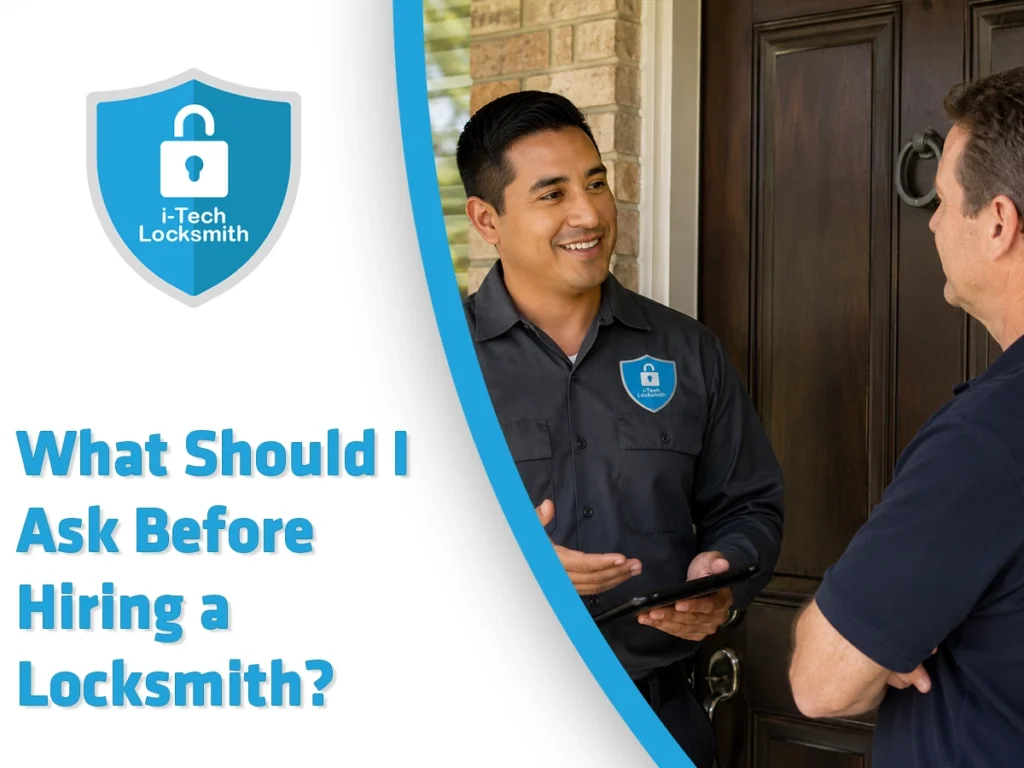
When the technician arrives, expect company identification, professional tools, ownership verification, and a clear explanation before work begins. The locksmith should ask permission before drilling, replacing hardware, or adding services.
The most important questions include:
• Can you provide a reasonable price range before sending a technician?
• Will I approve the final price and added work before service begins?
Why Should You Ask Questions Before Hiring a Locksmith?
A locksmith may work on the systems that protect your family, property, vehicle, records, stock, and business operations. Therefore, the hiring decision deserves more care than choosing the first search result.
During an emergency, customers often feel pressure to call quickly. Unfortunately, urgency can make it harder to compare companies, understand pricing, or notice warning signs.
ALOA Security Professionals Association warns that questionable providers may advertise an unusually low amount and then raise the price after arriving. It also warns that poor work may leave locks, doors, homes, or vehicles damaged.
Asking clear questions helps you:
• Understand the expected service and possible cost.
• Confirm that the arriving technician represents the company you called.
The purpose is not to delay urgent service. Instead, the goal is to reduce confusion before someone begins work on your security hardware.
A reliable provider should be able to explain its process in plain language. Although an exact diagnosis may require an inspection, the company should still discuss likely services, pricing factors, and customer approval.
Are You a Local Locksmith Serving Fort Worth?
Start by confirming that the company actually provides service in Fort Worth. A local phone number or search listing does not always prove that a business has a local operation.
Ask where the technician will travel from and whether the company regularly serves your area. You can also request the business name that will appear on the invoice.
Useful questions include:
• What company will send the technician?
• Does your team regularly serve my Fort Worth location?
ALOA advises consumers not to rely only on the first search results. Its consumer guidance notes that some national networks may use local looking advertisements, addresses, or phone numbers while sending unrelated subcontractors.
Before dispatch, confirm the exact company name. Then, use that name when the technician arrives.
A legitimate company should not change names during the call or provide vague answers about who will perform the service.
Are You Properly Licensed to Perform Locksmith Work?
Texas regulates locksmiths through the Department of Public Safety Private Security Program. The state includes locksmiths among the individual license types it issues and regulates.
Therefore, Fort Worth customers should ask whether the technician and company hold the required Texas credentials.
Ask these questions:
• Is the technician licensed through the Texas Department of Public Safety?
• What licensed company is the technician affiliated with?
Texas DPS states that individuals generally must be licensed and affiliated with a licensed company or approved entity. The agency also provides the Texas Online Private Security system, which includes a search function for licensed individuals and businesses.
Licensing does not guarantee that every service will be perfect. However, it gives customers a formal way to confirm identity and regulatory status.
It also shows that the provider is operating within a regulated profession rather than presenting locksmith work as an informal side service.
Can You Give Me a Price Range Before Dispatch?
Based on the experience supplied for this article, refusing to provide even a basic price range is a major warning sign.
An exact final amount may not be possible before inspection. The caller may describe a simple lockout when the door has damaged hardware, a high security cylinder, or another issue.
However, the company should still explain:
• The initial service call or dispatch charge.
• The likely labor range and factors that may change it.
ALOA specifically warns consumers about prices that appear too good to be true and then rise substantially after arrival or completion.
Ask whether the phone amount represents a complete estimate, a minimum starting charge, or only a service call.
Also ask whether time, distance, hardware, programming, drilling, after hours service, or emergency conditions may affect the amount.
A clear provider should not promise an unrealistic fixed price without understanding the job. Likewise, it should not hide every price detail until the technician arrives.
What Charges Could Be Added to the Estimate?
A useful price discussion should separate the parts of the service. Otherwise, a customer may believe one amount covers everything.
Ask the company to explain whether the estimate includes:
• The service call, travel, and basic labor.
• Parts, replacement hardware, programming, and added work.
Other possible charges may relate to emergency timing, complex locks, vehicle key systems, damaged hardware, or work outside normal service conditions.
The company should explain which charges are known and which depend on inspection.
For example, opening a standard residential lock may require a different method from servicing a damaged commercial door. Likewise, producing a mechanical car key differs from programming an electronic key fob.
Clear pricing does not mean every job costs the same. It means the customer understands why the price may change.
For more guidance, read this article about protecting yourself from locksmith scams.
Will I Approve the Final Price Before Work Begins?
A phone estimate may change after the technician sees the actual problem. However, the technician should explain any change before beginning additional work.
Based on the service standards selected for this article, a trustworthy locksmith should:
• Inspect the lock, vehicle, or security hardware.
• Explain the final price and receive approval before continuing.
If new damage appears during service, the technician should pause and discuss the available choices.
For example, a lockout may reveal a broken cylinder. The customer should understand whether the technician recommends repair, rekeying, or replacement.
Do not approve work you do not understand. Ask what problem was found, why the proposed service is needed, and what will happen if you decline it.
The Federal Trade Commission identifies pressure to act immediately as a common scam warning. Taking a moment to review an unexpected price or service change is reasonable.
How Will I Identify the Technician?
Before dispatch, ask what name, company information, vehicle description, or contact details you should expect.
When the technician arrives, compare those details with the information provided by the company.
Look for:
• A technician who can identify the business represented.
• A service vehicle or work materials connected with that company.
An unmarked vehicle does not automatically prove wrongdoing. However, the technician should still be able to provide clear identification and explain the company relationship.
Avoid allowing an unidentified person to begin work on a home, vehicle, office, safe, access system, or commercial entrance.
The technician should also know what service was requested. If the person has no record of the call or gives a different company name, contact the original provider before proceeding.
Will You Verify That I Am Authorized to Request Service?
Ownership and authorization checks protect customers. A locksmith should not unlock a home, vehicle, office, storage area, or other secured property based only on a verbal claim.
Ask what proof you need before the appointment.
Depending on the job, suitable documents may include:
• Government issued photo identification.
• Vehicle registration, lease records, ownership papers, or business authorization.
The exact requirement depends on the property and situation. For example, a tenant may have different documentation from a homeowner. Likewise, a company vehicle may require approval from a manager or fleet owner.
Based on the experience supplied for this article, ownership verification is one sign of a careful service process.
Customers may view the request as inconvenient during an emergency. However, the same policy helps prevent an unauthorized person from gaining access to protected property.
Are You Trained for My Exact Lock or Security System?
Locksmith work covers more than basic door locks. Professional services may include homes, vehicles, commercial doors, safes, electronic access controls, master key systems, and other security hardware.
ALOA explains that locksmiths may install locks, create keys, rekey hardware, respond to emergency calls, work on electronic access systems, and service automotive transponders or fobs.
Therefore, ask whether the technician has the tools and experience needed for your specific system.
Explain whether the job involves:
• A residential lock, vehicle key, commercial door, or electronic system.
• A smart lock, high security cylinder, access control device, or damaged lock.
A company should avoid claiming expertise without identifying the exact equipment. For vehicle service, provide the year, make, model, and key type.
For commercial service, explain the door type, lock brand, access needs, and operational concern.
The right technician should arrive prepared or tell you when another specialist is required.
Will You Try Careful Entry Before Drilling?
Drilling can be necessary when a lock is badly damaged or cannot be serviced through another reasonable method. However, it should not always be the automatic first choice.
Ask whether the technician will inspect the lock and consider less destructive methods before drilling.
A careful approach may include:
• Identifying the lock and checking its condition.
• Trying an appropriate entry method when practical.
No locksmith can promise damage free entry in every situation. The lock may already be broken, jammed, modified, or affected by an attempted entry.
However, the technician should explain why drilling is recommended. The customer should also understand which parts will need replacement afterward.
For guidance during a lockout, review what to do during an emergency lockout.
Will You Ask Permission Before Replacing Parts?
A lockout service should not quietly become a full hardware replacement.
If the technician believes parts are damaged or unsuitable, the customer should receive an explanation before removal or replacement.
Ask the technician to clarify:
• Which part is damaged or failing.
• Whether repair, rekeying, or replacement options exist.
A responsible recommendation should connect the proposed work to the condition found during inspection.
For example, changing a lock may be reasonable when the cylinder is broken. However, replacing usable hardware may be unnecessary when the customer only needs old keys disabled.
The technician should explain the difference between the choices and provide an updated price.
Customers can prepare by reading this comparison of rekeying and replacing locks.
Will You Provide a Receipt and Service Record?
A receipt gives the customer a record of the business, service, amount paid, and work completed.
Ask whether the final document will show:
• The company name and service date.
• Labor, parts, and other approved charges.
For replacement hardware, ask whether product details or warranty information will appear on the record.
For key or access services, the receipt should clearly describe the completed work without exposing sensitive security information.
Keep the record with your property or vehicle files. It may help with warranty questions, future service, rental records, insurance matters, or business accounting.
If a provider refuses to provide a basic receipt, pause before approving the work.
A receipt does not replace proper identification or licensing. However, it supports transparency and gives the customer evidence of the transaction.
What Warning Signs Should Make You Pause?
One warning sign may have an innocent explanation. However, several warning signs together should cause greater concern.
Pay attention when:
• The company refuses to discuss any price range before dispatch.
• The technician cannot identify the business or explain the service.
Other concerning signs include immediate drilling without inspection, pressure to approve extra work, missing ownership checks, unexplained price increases, and demands for unusual payment methods.
ALOA warns about low initial quotes, major price increases, out of state call centers, and work that leaves customer property damaged.
The FTC also advises consumers to slow down when someone creates pressure or demands immediate action.
If something feels wrong, do not allow work to begin. Contact the company using verified information and ask for clarification.
Should You Always Choose the Lowest Price?
Price matters, especially during an unplanned lockout or repair. However, the lowest advertised amount may not represent the total service.
Compare providers based on:
• Clear pricing and service explanations.
• Licensing, identification, tools, and customer protections.
A higher estimate may include service, labor, hardware, and testing. A lower number may represent only a starting charge.
Ask each company to explain the same details. Then compare equivalent services rather than isolated numbers.
The goal is not to choose the most expensive provider. Instead, choose the provider that gives a clear, credible explanation of what you are paying for.
You can also review the real cost of ignoring a faulty lock before delaying necessary repairs.
What Should Businesses Ask Before Hiring a Locksmith?
Commercial decision makers often have broader needs than opening one door. They may need to protect staff, records, inventory, equipment, and customer areas.
Before hiring a commercial locksmith, ask:
• Can you review our access needs before recommending hardware?
• Can you document which doors, keys, or users will be affected?
Commercial work may involve master key systems, panic hardware, access controls, restricted areas, employee changes, and code considerations.
ALOA notes that professional locksmiths may work on electronic access controls, master key systems, commercial doors, frames, panic bars, and other related hardware.
Business owners should also ask who will receive copies of keys, programming credentials, combinations, or system information.
Any proposed work should preserve life safety and required exit functions. Complex commercial systems may need coordination with property managers, security teams, door professionals, or other qualified contractors.
What Should Vehicle Owners Ask?
Automotive locks and keys may involve both mechanical and electronic systems. Therefore, describe the exact vehicle problem before dispatch.
Ask whether the estimate includes:
• Vehicle entry, key cutting, and programming when needed.
• Testing the door, ignition, transponder, remote, or smart key.
Provide the year, make, model, key type, and vehicle location. Explain whether every key is lost or a working copy remains.
Also ask what ownership documents the technician will require. A careful automotive locksmith should verify that the customer is authorized to access the vehicle.
When locked out, avoid forcing the door or using improvised tools. These actions can damage glass, trim, wiring, locks, and weather seals.
For more information, read what to do before calling a tow truck.
What Should Homeowners Ask?
A residential locksmith may work at the main entrance protecting your family and belongings. Therefore, ask what will happen to the existing hardware.
Questions should include:
• Can this lock be opened or repaired without replacement?
• Will the old keys continue working after the service?
If you recently moved, ask whether rekeying can remove access held by former occupants, contractors, cleaners, or property workers.
If the lock has been damaged, ask whether the door and strike plate also need inspection.
Do not focus only on the cylinder. A secure entry depends on the lock, bolt, strike, frame, door, hinges, and installation.
For a wider review, use this home security checklist.
Illustrative Fort Worth Hiring Example
The following example combines the situations selected for this article. It is illustrative and is not presented as a documented customer case.
A Fort Worth customer contacts two locksmith providers after a residential lock stops working.
The first provider advertises a very low price but refuses to discuss a reasonable range. The caller only says the technician will decide everything after arrival.
The second provider asks questions about the door, lock, symptoms, location, and ownership. The company explains the service charge and possible labor range.
When the second technician arrives, the technician:
• Identifies the company and requests proof of authorization.
• Inspects the lock before recommending a service.
The technician explains that a safer entry method may work before drilling. The customer approves the quoted work.
During the service, the technician finds worn hardware. Before replacing anything, the technician explains the issue and gives an updated price.
The customer chooses whether to repair or replace the lock. After completion, the technician tests the door and provides a receipt.
This example shows why customers should compare process, transparency, and accountability instead of choosing only the lowest opening number.
Frequently Asked Questions
What should I ask before hiring a locksmith?
Ask about licensing, local service, identification, pricing, ownership checks, service methods, possible added fees, and receipts. You should understand who is coming, what the visit may cost, and when you will approve the final work. Clear answers can reduce confusion during an urgent service call.
• Confirm the company and technician.
• Request pricing details before dispatch.
Are locksmiths required to be licensed in Texas?
Texas includes locksmiths within the private security profession regulated by the Department of Public Safety. Individual locksmiths generally must hold the proper license and be affiliated with a licensed company or approved entity. Customers can use the state’s licensing resources to review individuals and companies.
• Ask for current license information.
• Verify the company relationship.
Can a locksmith give an exact price over the phone?
Sometimes a provider can quote a defined service. However, an exact price may require inspection because lock type, damage, hardware, and job conditions vary. The company should still explain its service charge, expected range, and factors that may increase the total.
• Ask what the phone quote covers.
• Require approval before additional work.
What is a locksmith bait price?
A bait price is an unusually low advertised or phone amount used to gain the service call. The price may then increase sharply after arrival without a clear technical reason. Ask whether the quoted amount is a complete estimate, minimum charge, or dispatch fee.
• Be cautious with unrealistic prices.
• Request a clear breakdown.
Should a locksmith ask for proof of ownership?
Yes, a responsible locksmith should confirm that the customer owns or is authorized to access the property, vehicle, or protected area. Required proof varies by situation. Identification, registration, lease records, ownership documents, or business authorization may be requested.
• Prepare documents before arrival.
• View authorization checks as protection.
Should a locksmith drill my lock immediately?
Not always. Drilling may be necessary for damaged or resistant locks, but the technician should first inspect the hardware and explain available options. Ask why drilling is required and which parts will need replacement. Do not approve destructive work without understanding the reason.
• Request an inspection first.
• Approve drilling only after an explanation.
What identification should a locksmith show?
The technician should be able to identify the company represented and provide the information required for licensed work. Customers should compare the technician, business name, and vehicle details with the dispatch information. Contact the original company when the details do not match.
• Confirm the business name.
• Pause when identities conflict.
Should I get a receipt from a locksmith?
Yes. The receipt should identify the company, date, service, approved charges, and installed parts when relevant. Keep it for warranties, property records, insurance questions, rental documentation, or future repairs. A provider should be willing to document the transaction.
• Review the receipt before payment.
• Save hardware and warranty details.
How can I check a Texas locksmith license?
The Texas Department of Public Safety operates the Texas Online Private Security system. Its licensing resources allow searches for individuals and companies regulated by the Private Security Program. Search carefully using the business or technician information supplied by the provider.
• Use exact names when possible.
• Confirm active company affiliation.
What should I do when the final price changes?
Ask the technician to explain what changed after inspection. Request an updated total before authorizing new work. You may decline additional services you do not understand. Do not allow pressure or urgency to replace informed approval.
• Pause before agreeing.
• Request a written breakdown.
Conclusion: Ask Before You Approve the Work
The best time to evaluate a locksmith is before the work begins. Even during an emergency, a few direct questions can protect your property and budget.
Ask whether the locksmith is local, properly licensed, trained for your system, and able to explain the likely cost.
Before dispatch, confirm:
• The company name, service charge, and expected price range.
• The documents, identification, and authorization required.
When the technician arrives, verify the company connection. Then, ask for an inspection and explanation before approving the final work.
A trustworthy locksmith should not object to reasonable questions. Instead, clear answers should be part of the service.
Be especially cautious when a provider refuses to discuss any pricing before dispatch. Also pause when the price rises without explanation or the technician recommends immediate drilling.
The lowest price does not always provide the best value. A safer decision considers licensing, identity, training, pricing, care, authorization, and documentation.
Most importantly, do not approve extra work until you understand why it is needed and what it will cost.
Contact I-Tech Locksmith Fort Worth
Contact I-Tech Locksmith Fort Worth to discuss your lock, key, vehicle, or security service before scheduling an appointment.
Ask about the service process, expected pricing factors, required documents, and available options. Then, approve the work after the technician completes an inspection and explains the recommendation.
Contact us at
Phone: 817 663 0642
Location: 8520 Tamar Trail, Fort Worth, TX 76118
Website: www.i-tech-locksmith.com