Steps for Safe and Fast Office Entry
An office lockout is not always caused by a failed lock. A lost, stolen, or broken key can stop normal business activity even when the commercial door hardware still works correctly. However, the missing key can also create an ongoing access risk after the office reopens.
AI Overview
A qualified commercial locksmith can help with office lockouts in Fort Worth. I-Tech Locksmith Fort Worth can identify the commercial lock, confirm authorization with the property owner or building manager, and attempt a careful entry method before considering drilling or replacement.
When an office key is lost, stolen, or broken, reopening the door is only the first concern. The locksmith should also determine whether the missing key could still open the office later. If that risk remains, rekeying may be recommended after entry.
A professional office lockout service normally includes:
• Confirming that the caller is authorized to enter the property.
• Identifying the lock and selecting a suitable entry method.
The locksmith may also inspect the cylinder, latch, deadbolt, lever, strike plate, door, and frame. If the hardware remains sound, replacement may not be needed.
However, a stolen key, damaged lock, unreliable cylinder, or wider key control problem may require rekeying, repair, or new commercial hardware.
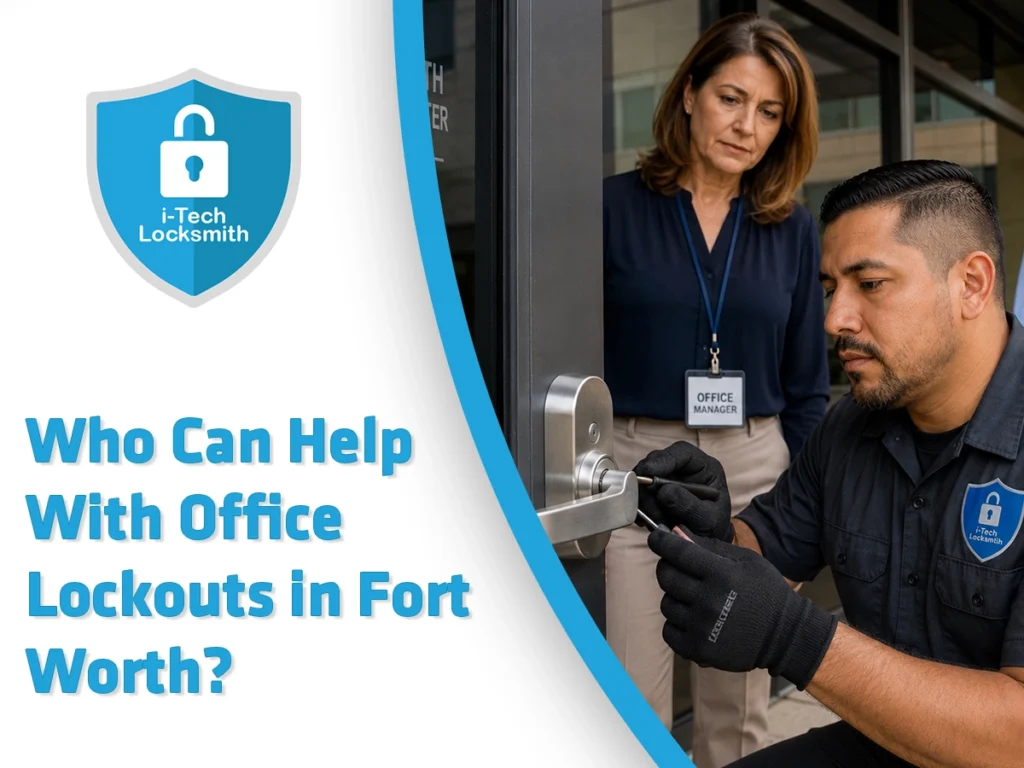
Who Can Help With Office Lockouts in Fort Worth?
A trained commercial locksmith can help when a manager, owner, or approved employee cannot enter an office.
Commercial doors often use different hardware from residential doors. Therefore, the technician should understand business locks, commercial levers, mortise hardware, interchangeable cores, restricted keys, and electronic access systems.
A commercial locksmith may provide:
• Emergency office entry and broken key removal.
• Lock repair, rekeying, replacement, and key control advice.
ALOA Security Professionals Association explains that locksmiths can install and service business locks, create keys when originals are lost, rekey hardware, and respond to emergency service calls.
However, the locksmith must first confirm that the caller has permission to enter. Office access may involve an owner, tenant, building manager, property manager, or another authorized decision maker.
Based on the process provided for this article, I-Tech Locksmith Fort Worth confirms authorization with the property owner or building manager when required.
Why Are Office Lockouts Different From Home Lockouts?
An office lockout can affect more than one person. Employees may be unable to start work, receive customers, access records, or use essential equipment.
The locked door may also protect:
• Private records, money, stock, equipment, or customer information.
• Shared areas used by several workers, tenants, or departments.
Commercial properties may have lease rules or building management procedures. Therefore, the person requesting entry may need approval beyond personal identification.
For example, a manager may run the business but not own the building. The property manager may need to confirm that the caller controls the rented suite.
Commercial doors may also form part of an exit route or fire protection system. OSHA requires workplace exit routes and related safeguards to remain properly maintained. Therefore, commercial lock work should not interfere with required emergency exit functions.
The locksmith should treat the door as part of a larger building system rather than only a locked opening.
What Causes Most Office Lockouts?
For this article, the selected service situation is a lost, stolen, or broken commercial key.
A lost key may be left at home, dropped in a parking area, or misplaced during travel. A stolen key creates a more serious concern because another person may possess it.
A broken key may fail because of:
• Wear, bending, poor duplication, or repeated force.
• A stiff cylinder, poor door alignment, or worn hardware.
ALOA lists worn keys, lock wear, weather, lubrication needs, and door alignment among common causes of difficult lock operation.
Other office lockouts may involve a jammed cylinder, failed keypad, inactive credential, damaged lever, or access system problem.
However, the cause should be confirmed before recommending repair. A key problem and a lock problem may produce similar symptoms.
What Should the Business Do First?
The business should first confirm whether another approved key holder can provide access.
Contact the owner, building manager, property manager, security team, or another authorized manager. Do not force the door while waiting.
Immediate steps include:
• Confirming who has authority to approve entry.
• Checking whether another safe and approved entrance is available.
Avoid climbing through windows, damaging doors, or bypassing building controls. These actions may create injury, property damage, or security concerns.
Also, avoid posting details about the lockout publicly. Announcing that an office is unsecured or unattended may create another risk.
When the key was stolen, make a note of when and where it disappeared. That information may help the business decide whether rekeying is urgent.
What Information Should You Give the Locksmith?
Clear information helps the locksmith prepare suitable commercial tools and verification steps.
Provide the business name, building type, suite number, door location, and lock symptoms. Explain whether the key was lost, stolen, broken, or left inside.
Helpful details include:
• The lock brand or visible hardware type.
• Whether the key opens other office doors.
Tell the locksmith whether the entrance uses a deadbolt, commercial lever, mortise lock, keypad, card reader, or another system.
Also, explain whether the property has a building manager, security desk, alarm system, or controlled parking access.
Accurate information can prevent delays. However, the locksmith should still inspect the actual hardware before choosing a method.
How Does the Locksmith Verify Authorization?
A commercial locksmith should not open an office based only on a phone request.
The technician may need authorization from the business owner, property owner, building manager, or another approved representative.
Verification may involve:
• Government issued identification and business records.
• Written, verbal, or documented approval from an authorized person.
The exact process depends on the property. A sole business owner may provide different proof from an employee working inside a managed office building.
A tenant may also need to show a lease, business document, company identification, or another connection to the suite.
Based on your selected process, I-Tech Locksmith Fort Worth contacts or confirms authorization with the property owner or building manager when required.
This step may feel inconvenient during an urgent lockout. However, it helps prevent unauthorized access to business property.
How Does the Locksmith Identify a Commercial Lock?
After authorization is confirmed, I-Tech Locksmith Fort Worth identifies the commercial lock type and security level.
This inspection guides the entry method. A standard commercial cylinder may allow different options from a mortise lock or high security system.
The technician may examine:
• The cylinder, keyway, lever, deadbolt, and visible markings.
• The door type, frame, strike, and surrounding hardware.
Commercial locks may include standard pin cylinders, interchangeable cores, restricted key systems, mortise cylinders, rim cylinders, electronic locks, or access control devices.
Texas locksmith training and company representative requirements include subjects such as commercial cylinders, master keying, high security systems, panic devices, door closers, and access control.
Correct identification prevents the technician from treating every office lock like a basic residential lock.
How Is the Office Door Opened Carefully?
Based on your answers, I-Tech Locksmith Fort Worth first attempts a careful nondestructive entry method after identifying the lock.
The exact method depends on the lock, door, security level, and hardware condition.
The technician’s goals include:
• Restoring authorized access without unnecessary damage.
• Preserving usable commercial hardware whenever practical.
Professional picking may be suitable for some mechanical cylinders. Other locks may require another approved commercial entry method.
Detailed bypass instructions should not be shared publicly. However, the general process is simple: inspect first, select the least damaging practical method, and stop when the hardware does not respond as expected.
No locksmith should guarantee a damage free result before inspection. A lock may already be damaged, blocked, or internally broken.
What Happens When the First Method Does Not Work?
A failed first attempt does not always mean that drilling is necessary.
The technician should reassess the lock and select another method suited to the identified hardware.
The next step may involve:
• Trying another controlled nondestructive approach.
• Checking whether internal damage is blocking normal operation.
A commercial cylinder may contain wear, debris, broken key material, or damaged internal components. Likewise, the latch or bolt may be under pressure from the door.
The technician should avoid using greater force simply because one method failed.
Instead, the process should remain deliberate. The locksmith should explain any change in method before work continues.
When Is Drilling Necessary?
Drilling may be required when the lock is damaged, internally failed, or resistant to suitable nondestructive methods.
However, drilling should not be the automatic first response to an office lockout.
Before drilling, the technician should explain:
• Why safer methods are no longer suitable.
• Which lock component will require replacement.
The customer or authorized decision maker should approve the method and updated price before drilling begins.
Commercial properties may require approval from a building manager or property owner before hardware is altered.
Controlled drilling normally targets a specific cylinder or component. It should not mean careless damage to the entire door.
What Happens When an Office Key Is Broken?
A broken commercial key may leave part of the blade inside the cylinder.
The locksmith may need to remove the fragment before determining whether the lock can still operate.
The technician should inspect:
• How deeply the key is lodged.
• Whether the cylinder or internal parts were damaged.
Avoid inserting glue, wire, knives, or another key into the cylinder. These attempts can push the broken piece deeper.
After removal, the technician should test the lock with a suitable working key. If the cylinder turns smoothly, replacement may not be needed.
However, internal damage may require repair or replacement after the customer receives an explanation.
Why Does a Lost Key Remain a Security Risk?
Opening the office solves the immediate lockout. However, it does not stop the missing key from working later.
When the key is lost or stolen, another person may find or possess it.
The business should determine:
• Which door the key opens.
• Whether the key belongs to a wider master key system.
For this reason, I-Tech Locksmith Fort Worth may recommend rekeying after entry when the missing key remains an access risk.
Rekeying changes the cylinder so the old key no longer operates it. The main commercial hardware may remain in place when it is compatible and in good condition.
Learn more by comparing rekeying and replacing locks.
When Should the Office Lock Be Rekeyed?
Rekeying may be appropriate when the lock still works but the missing key should no longer provide access.
This situation often applies after a lost or stolen commercial key.
Rekeying may help when:
• The hardware remains sound and reliable.
• The business only needs to change key access.
The locksmith should determine whether the affected lock belongs to a master key system. A careless change may disrupt access for management or other authorized users.
Therefore, the technician should document which keys must continue working.
A business may also need new copies for approved employees after the cylinder is rekeyed.
For related planning, review this article about temporary access solutions for employees.
When Should the Commercial Lock Be Replaced?
Replacement may be necessary when the cylinder, lever, latch, deadbolt, or internal mechanism is damaged.
It may also be suitable when the hardware is unreliable or no longer fits the office’s security needs.
Replacement may be considered when:
• The lock remains stiff, loose, or inconsistent after entry.
• The business wants stronger commercial or high security hardware.
A lost key alone does not always require full replacement. Rekeying may solve the access risk when the existing lock remains serviceable.
However, rekeying cannot repair broken or worn mechanical parts.
The final recommendation should follow inspection and testing rather than assumptions.
Why Must Exit Hardware Remain Safe?
Commercial locksmith work can affect doors used during emergencies. Therefore, the technician must consider more than exterior security.
OSHA defines an exit route as a continuous and unobstructed path from the workplace to a place of safety. Workplace safeguards and exit features must remain properly maintained.
This means office security changes should not prevent required exit from the occupied side.
A commercial locksmith should avoid:
• Installing hardware that blocks required emergency movement.
• Changing exit devices without considering their safety function.
Fire doors, panic hardware, exit routes, and access control systems may involve specific requirements.
Complex commercial changes may also require coordination with building management, fire safety professionals, access control teams, or door specialists.
How Can Businesses Reduce Downtime?
Office lockouts can delay staff, meetings, deliveries, and customer service.
Preparing key and access procedures can reduce disruption.
Businesses should maintain:
• An updated list of approved emergency contacts.
• A secure process for backup keys and building authorization.
The backup key should not be hidden near the entrance. Instead, it should remain under controlled access.
Businesses should also know who can approve locksmith work when the owner is unavailable.
A written plan can identify the property manager, office manager, security contact, and approved locksmith.
For wider emergency planning, review this business security emergency plan.
How Should Businesses Control Office Keys?
A business should know who has each exterior, office, storage, and restricted area key.
Informal key sharing makes it difficult to respond when one copy goes missing.
A basic key control record should include:
• The person who received each key.
• The doors or areas that key can open.
When an employee leaves, the business should collect keys and remove electronic credentials.
However, receiving the physical key does not prove that no duplicate exists. Rekeying may be appropriate when access risk is high.
A restricted or managed key system may offer better control for some businesses. The locksmith should explain both its benefits and limits.
What Should Businesses Ask Before Hiring a Locksmith?
Ask whether the provider has experience with the exact commercial hardware involved.
Also, confirm how authorization and pricing will be handled.
Important questions include:
• Will you identify the lock before choosing an entry method?
• Will you obtain approval before drilling or replacing parts?
Texas regulates locksmiths through the Department of Public Safety Private Security Program. Locksmiths are included among regulated private security professionals, and individual locksmiths must be licensed and affiliated with an approved company or entity.
Customers can review licensing information through Texas Online Private Security.
The provider should also give a clear estimate or reasonable price range before dispatch.
For consumer protection guidance, read how to avoid locksmith scams.
What Warning Signs Should a Business Avoid?
A business should pause when the provider refuses to identify the company or discuss basic pricing.
Other warning signs may include:
• Immediate drilling without inspecting the commercial lock.
• Pressure to approve unexplained replacement work.
ALOA warns that questionable locksmith providers may advertise unusually low prices and then increase them after arrival. Poor work may also leave doors and locks damaged.
The business should request a written or digital receipt after completion.
The receipt should identify the company, service, approved costs, and installed parts.
A clear record supports accounting, warranty questions, lease responsibilities, and future security planning.
Illustrative Fort Worth Office Lockout
The following example reflects the situation selected for this article. It is illustrative and is not presented as a documented customer record.
A Fort Worth office manager arrives before opening time and discovers that the only available key is missing.
The manager contacts a commercial locksmith. However, the office is located in a managed building, so authorization must first be confirmed.
The locksmith coordinates with:
• The building manager or property owner.
• The office representative requesting access.
After approval, the technician identifies the commercial lock and security level.
The technician then chooses a suitable nondestructive entry method. The office door is opened without automatically replacing usable hardware.
After entry, the business confirms that the missing key remains unaccounted for.
Therefore, the technician explains the risk and offers rekeying as a separate service. The manager can then decide whether to disable the lost key.
This example shows why office lockouts require more than opening a door. Authorization, hardware protection, business continuity, and future access control all matter.
What Should Happen After the Door Opens?
The locksmith should test the door and lock after restoring access.
The inspection may cover:
• Cylinder movement, latch operation, and key function.
• Door alignment, strike position, and secure closing.
If the key was broken, the technician should confirm that no metal fragment remains inside the cylinder.
If the key was lost or stolen, the business should decide whether rekeying is needed.
The locksmith should also explain any signs of wear or damage.
However, the customer should not feel pressured into replacement when the hardware remains serviceable.
How Can an Office Prevent Another Lockout?
A prevention plan should combine key control, hardware maintenance, and clear authority.
Businesses can reduce future lockouts by:
• Creating a secure backup access process.
• Replacing worn or damaged keys early.
Do not wait until a key bends, cracks, or requires force.
Likewise, inspect locks that stick or only work when the door is pushed.
These signs may indicate cylinder wear, poor door alignment, or another hardware problem.
The business should also review access after staff, tenant, contractor, or vendor changes.
For more maintenance guidance, read about the real cost of ignoring a faulty lock.
Frequently Asked Questions
Who can help with office lockouts in Fort Worth?
A qualified commercial locksmith can restore authorized access to an office. The technician should confirm permission, identify the commercial lock, and try a careful entry method first. After opening the door, the locksmith can inspect the hardware and explain whether rekeying, repair, or replacement is needed
What proof is needed for an office lockout?
The locksmith may request photo identification, business documents, lease information, or approval from the property owner or building manager. Requirements depend on the property and caller’s role. These checks help prevent unauthorized entry into offices, records, equipment, and restricted business areas.
Can a locksmith open an office without damaging the lock?
A locksmith may be able to open many office locks through controlled nondestructive methods. However, the outcome depends on the lock type, security level, condition, and previous damage. The technician should identify the hardware before choosing an entry method.
Should an office lock be rekeyed after a key is lost?
Rekeying may be appropriate when the lock remains usable but the missing key could still provide access. The locksmith should determine which doors the key opens and whether it belongs to a master key system before changing the cylinder.
What happens when an office key breaks inside the lock?
The locksmith may remove the broken fragment and inspect the cylinder for damage. After extraction, the lock should be tested with a working key. Repair or replacement may be needed when internal parts were damaged or the lock remains unreliable.
Does a lost office key require lock replacement?
Not always. Rekeying may remove the lost key’s access while preserving usable hardware. Replacement is more suitable when the lock is damaged, unreliable, incompatible, or unable to meet current business security needs.
Can an employee approve an office lockout service?
That depends on the employee’s authority and building procedures. The locksmith may require approval from the business owner, property owner, building manager, or another designated person. Callers should confirm authorization before the technician arrives.
How much does an office lockout cost?
The price depends on the commercial lock, entry method, time, location, security level, and hardware condition. Ask whether the estimate includes the service call, labor, and possible added work. Approve any changed price before drilling or replacement begins.
Can a locksmith rekey several office doors?
Yes, compatible commercial cylinders may be rekeyed. However, the locksmith must review the key system, door groups, management access, and existing master keys. The plan should preserve approved access while removing credentials that create risk.
How can businesses prevent office lockouts?
Businesses should control key distribution, maintain a secure backup plan, document approved locksmith contacts, and replace worn keys. They should also inspect locks that stick, bind, or require force before those problems cause a complete lockout.
Conclusion: Restore Access and Protect the Office
A qualified commercial locksmith can help with office lockouts in Fort Worth.
However, professional service should begin before the technician touches the lock.
First, the caller’s authority must be confirmed. In managed buildings, this may require approval from the property owner or building manager.
Next, the technician should identify the commercial lock and security level.
When possible, the locksmith should use a careful nondestructive entry method.
The complete process should protect:
• The office door, lock, frame, and usable hardware.
• The business from unauthorized entry and future key risks.
After the office opens, the technician should test the lock and inspect the surrounding hardware.
When a key was lost or stolen, the business should consider whether that key can still open the office.
Rekeying may be the right choice when the hardware remains sound but the missing key creates an access risk.
Replacement may be better when the lock is damaged, unreliable, or no longer suitable for the office.
Most importantly, businesses should not select a locksmith based only on the lowest advertised amount.
Choose a provider that explains authorization, pricing, entry methods, and replacement needs before work begins.
Contact I-Tech Locksmith Fort Worth
Contact I-Tech Locksmith Fort Worth for help with an office lockout, lost commercial key, stolen office key, or broken key.
Provide the company name, building information, lock details, and authorized contact information before dispatch.
Contact us at
Phone: 817 663 0642
Location: 8520 Tamar Trail, Fort Worth, TX 76118
Website: www.i-tech-locksmith.com