
17 Powerful Steps for Safe Emergency Locksmith Service
A lockout is not always a police emergency, yet it can become one when a child, vulnerable person, pet, fire risk, or immediate threat is involved. Arlington directs people to call 911 for emergencies, while routine lockouts normally require a locksmith, roadside provider, property manager, or another authorized access option.
AI Overview
You can seek 24 hour locksmith help near Arlington, TX by contacting a local mobile locksmith that handles residential, automotive, and commercial emergencies. Before approving service, confirm the company name, technician identity, estimated price, payment terms, and expected method.
Emergency locksmith assistance may cover a locked house, vehicle, office, store, storage room, or exterior gate. It may also include broken key extraction, failed lock repair, urgent rekeying, car key replacement, and temporary security after lock damage.
However, not every lockout requires drilling or complete lock replacement. A trained technician should inspect the lock, confirm the customer has authority to enter, and select the least damaging practical method. The correct approach depends on the lock type, door condition, vehicle system, key failure, and visible damage.
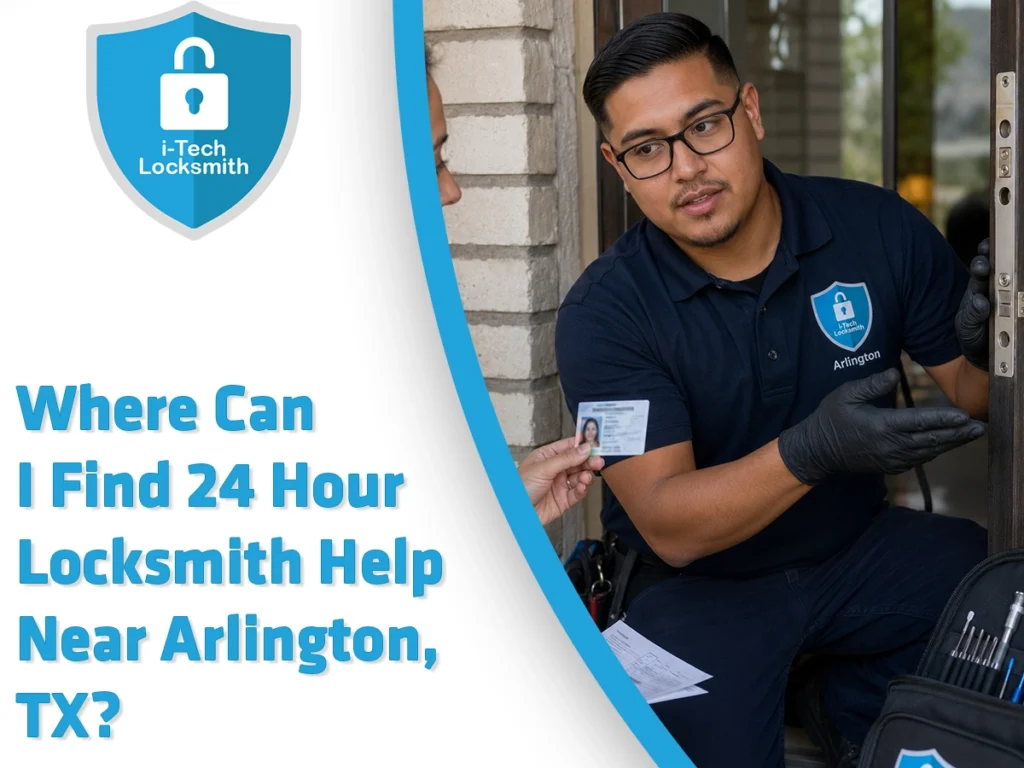
Safety should come first. Move to a visible and secure area when waiting beside a road, parking lot, or closed business. Call 911 when someone is in immediate danger. Otherwise, contact a verified service provider and avoid anyone who refuses to explain the price or proposed work.
1. Call 911 First When the Lockout Creates Immediate Danger
A locksmith solves access and lock problems. However, a locksmith does not replace police, fire, or emergency medical services.
Call 911 when:
- A child or vulnerable adult is trapped inside
- A person or pet is inside a dangerously hot vehicle
- Smoke, fire, or another immediate hazard is present
- Someone is threatening you near the property
- A burglary may still be in progress
- A medical emergency prevents safe entry
The Arlington Police Department directs people to call 911 for emergencies. Therefore, do not wait for routine locksmith service when a person faces an immediate threat.
After emergency responders address the danger, a locksmith may still be needed to repair, rekey, or replace damaged hardware.
For a non emergency lockout:
- Move to a safe location
- Contact an authorized locksmith
- Call your property manager when relevant
- Check whether roadside assistance covers the vehicle
- Prepare identification and proof of access rights
This distinction helps the right service respond to the right problem.
2. Search for a Local Mobile Locksmith Serving Arlington
A mobile locksmith travels to the customer instead of requiring the customer to bring the lock or vehicle to a shop.
This service can be useful when:
- A house key is locked indoors
- A vehicle key remains inside the car
- An office cylinder stops working
- A key breaks inside the lock
- A door cannot be secured after damage
- A key fob needs inspection or replacement
The phrase 24 hour locksmith help near Arlington, TX usually reflects urgent local intent. The caller wants a provider that can reach the current location and address the problem without unnecessary delay.
When calling, provide:
- The property or vehicle location
- The type of lockout
- The lock or vehicle type
- Any visible damage
- Whether a key is lost, broken, or locked inside
- Any safety issue affecting the situation
Clear information helps the dispatcher understand what tools, parts, or technician experience may be required.
However, avoid sending sensitive documents before verifying the company. Identification is often checked at the service location instead.
3. Confirm Whether the Provider Is Actually Available
A website may appear in search results at any hour. However, that does not always prove that a qualified technician is currently available near Arlington.
Ask direct questions such as:
- Is a technician available for my location now?
- Does the technician handle this lock or vehicle type?
- Is the quoted arrival window realistic?
- Is there an after hours service charge?
- Will I receive the total estimate before work begins?
- What payment methods are accepted?
A responsible answer should distinguish an estimate from a guarantee. Travel time can change because of traffic, weather, current calls, distance, and the technician’s location.
Be cautious when a dispatcher:
- Promises an exact arrival without checking the location
- Refuses to identify the business
- Gives an unusually low price without asking questions
- Will not discuss possible extra charges
- Cannot explain what type of technician is coming
Urgency should not remove the customer’s right to understand the service.
4. Verify the Company Before Approving a Service Call
Emergency situations can make people act quickly. Unfortunately, pressure can also make it harder to evaluate a provider.
The Federal Trade Commission advises consumers to slow down, verify unexpected requests, and use contact details from sources they trust. The FTC also warns that scammers often create urgency because they want payment before the consumer can check the story.
Before booking, verify:
- The company name
- The website
- The local service area
- The business phone number
- The technician identification process
- The estimate procedure
- The accepted payment methods
Also compare the name used by the dispatcher with the name on the website, invoice, technician identification, and service vehicle.
Warning signs may include:
- A generic answer such as locksmith service
- Refusal to provide a company name
- Demands for gift cards or cryptocurrency
- Pressure to pay before inspection
- A sudden price increase without explanation
- No written record of the service
The FTC identifies gift cards, cryptocurrency, wire transfers, and some urgent payment demands as common scam warning signs.
5. Request a Clear Price Estimate Before Dispatch
Emergency locksmith pricing can depend on several factors. Therefore, a responsible provider may need information before giving a meaningful estimate.
Pricing may be affected by:
- The service location
- The time of the call
- The lock type
- The level of damage
- The required parts
- The vehicle make and year
- Whether a key must be programmed
- Whether drilling becomes necessary
Ask the dispatcher to explain:
- The service call charge
- The expected labor range
- Any after hours fee
- The cost of likely parts
- Possible programming charges
- Taxes or payment fees
- Situations that could change the estimate
A dispatcher may not know the final total until the technician inspects the lock. However, the company should still explain how the price is calculated.
Before work begins, request an updated estimate based on the technician’s findings.
Do not approve extra work unless:
- The technician explains the new issue
- The reason for the added cost is clear
- The replacement part is identified
- You approve the revised total
This approach protects both the customer and the technician from misunderstandings.
6. Expect the Locksmith to Verify Your Right to Enter
A responsible locksmith should not open a home, vehicle, office, or restricted room for anyone who requests access.
Verification protects:
- Property owners
- Tenants
- Vehicle owners
- Business managers
- Employees
- Property management companies
Depending on the situation, the locksmith may request:
- Government issued identification
- Vehicle registration
- Proof of insurance
- Lease information
- Business identification
- Approval from an owner or manager
- Confirmation from property management
AAA states that photo identification is required when members request its vehicle lockout assistance. This reflects the wider safety need to verify the person requesting access.
If identification is locked inside, explain that problem during the call. The company can tell you what other proof may be accepted after entry.
A technician who opens property without any authorization check may create a serious security risk.
7. Ask for the Least Damaging Practical Entry Method
A lockout does not automatically require drilling. Many locks and vehicles may have safer entry options, depending on the exact system.
The technician should first inspect:
- The lock cylinder
- The keyway
- The latch or deadbolt
- The door and frame
- Existing damage
- The vehicle entry system
- The reason the lock failed
Possible service paths may include:
- Non destructive lock entry
- Vehicle specific entry tools
- Broken key extraction
- Bypass of an approved secondary entry
- Cylinder servicing
- Key cutting
- Lock replacement when damage prevents reuse
However, no method is damage free in every case. High security locks, failed internal parts, prior damage, or severe corrosion may limit the available options.
Ask the technician:
- Why is this method recommended?
- Is drilling necessary?
- Can the lock remain in service?
- Will replacement parts be needed?
- What will happen to the old hardware?
A professional explanation should connect the method to the inspected condition.
8. Use Extra Caution During a Vehicle Lockout
Vehicle lockouts can occur at home, work, a store, a parking garage, or beside a road. The waiting location may create more risk than the locked car.
AAA advises locked out drivers to consider roadside assistance, a spare key, manufacturer supported options, or a qualified locksmith. Its vehicle lockout services also require identification.
While waiting:
- Move away from active traffic
- Stay in a visible and well lit area
- Do not stand between moving vehicles
- Tell someone you trust where you are
- Keep your phone charged when possible
- Watch for the identified service vehicle
Avoid risky entry attempts involving:
- Coat hangers
- Screwdrivers
- Pry bars
- Broken windows
- Unapproved electronic devices
- Excessive force around the door frame
Modern vehicles may contain wiring, airbags, weather seals, sensors, and delicate trim near the entry area. Therefore, forcing the door can create damage that costs more than professional service.
AAA offers lockout help as part of some roadside assistance plans. Coverage, limits, and eligibility depend on the member’s plan and regional provider.
9. Handle a House Lockout Without Creating More Damage
A house lockout can feel urgent, especially at night or during bad weather. However, breaking a window or forcing the door can create a larger safety problem.
Before calling a locksmith, safely check:
- Whether another approved entrance is available
- Whether a household member has a key
- Whether the property manager can help
- Whether a trusted person holds a spare
- Whether a smart lock has an approved backup method
Do not:
- Enter through an unsafe window
- Climb onto a roof
- Force a garage door
- Break glass near children or pets
- Use tools that may damage the frame
- Ask an unverified stranger to help
When the locksmith arrives, explain:
- How the lock normally works
- Whether the key is inside
- Whether the key was lost
- Whether the lock has been sticking
- Whether someone recently changed the hardware
- Whether the door has prior damage
If the key is lost rather than merely locked inside, consider whether rekeying is needed after entry.
For more immediate guidance, review what to do first when locked out of your house.
10. Treat a Business Lockout as an Access Control Issue
A commercial lockout can affect employees, customers, deliveries, equipment, and opening hours. However, speed should not override authorization.
The person requesting entry should be able to show authority through:
- Business identification
- Management approval
- Property management confirmation
- Lease or ownership records
- Company contact verification
- Another approved access record
A business lockout may involve:
- The main storefront entrance
- An employee door
- A private office
- A stockroom
- A warehouse entrance
- A records room
- A service or utility area
After entry, the locksmith should determine why the failure occurred.
Possible causes include:
- A worn cylinder
- A broken key
- Door misalignment
- A failed latch
- Damaged exit hardware
- An electronic access problem
- An unreturned employee key
The service may require more than unlocking the door. Rekeying, repair, replacement, or access control review may be needed to prevent another interruption.
11. Call Quickly When a Broken Key Remains in the Lock
A broken key can block the keyway and prevent another key from entering. Attempts to remove it with sharp or unsuitable tools may push the fragment deeper.
Avoid:
- Turning the remaining fragment
- Adding household glue
- Driving another key into the cylinder
- Digging with a knife
- Twisting the cylinder with pliers
- Spraying unapproved liquids into the lock
Tell the locksmith:
- How much of the key is visible
- Whether the lock was turned when it broke
- Whether another key is available
- Whether the lock was already sticking
- Whether the door is currently locked
- Whether the key is for a home, car, or business
The technician should inspect both the fragment and the lock. The key may have broken because it was worn. However, internal resistance or door alignment may also have contributed.
After extraction, the locksmith should test the cylinder before cutting another key.
The article about safe broken key extraction concerns explains why forceful home methods can increase damage.
12. Consider Rekeying When the Key Is Truly Lost
Opening the door solves the immediate lockout. However, it does not remove the security concern created by a missing key.
Rekeying may be appropriate when:
- The key was lost in a public place
- The key ring identifies the property
- A purse, wallet, or bag was stolen with the key
- An employee or tenant did not return a key
- Nobody knows how many copies exist
- A master key is missing
Rekeying changes the lock so the old key no longer works. The existing lock may remain in place when the cylinder is compatible and safe.
Replacement may be better when:
- The lock is damaged
- Internal parts are worn
- The cylinder is loose
- The hardware is outdated
- The lock no longer fits the security need
The decision should follow inspection rather than assumption.
For a detailed comparison, review rekeying versus replacing locks.
13. Request Immediate Security After Lock Damage
A lockout may happen because someone forced, drilled, bent, or damaged the lock. In that situation, gaining entry is only part of the service.
The technician should inspect:
- The cylinder
- The latch
- The deadbolt
- The strike plate
- The frame
- The door surface
- Nearby glass
- Interior locking parts
Urgent work may include:
- Replacing the damaged cylinder
- Installing a suitable new lock
- Rekeying other affected doors
- Adjusting the strike
- Providing temporary security
- Referring frame damage for repair
If a burglary may have occurred, contact police before disturbing the scene. Arlington provides online reporting for certain non emergency incidents, but it directs residents to call 911 for emergencies and specified serious events.
After police release the scene, document:
- Visible damage
- Missing property
- Damaged doors or windows
- Lost keys
- Missing access cards
- Failed cameras or alarms
Then, the locksmith can address the physical access issue.
14. Avoid Locksmith Scams During Late Night Calls
Late night callers may feel tired, exposed, or pressured. Those conditions make clear verification even more important.
The FTC warns that scammers often rely on urgency, unusual payment methods, and demands for immediate action.
Common warning signs include:
- A price that changes immediately after arrival
- Refusal to show company identification
- Pressure to drill without inspection
- Demands for cash only
- Gift card or cryptocurrency requests
- No invoice
- No explanation of replacement parts
- Threats when the customer asks questions
Protect yourself by:
- Saving the original quote
- Confirming the company name
- Asking for technician identification
- Requesting a written estimate
- Approving changes before work
- Keeping the invoice
- Photographing replaced hardware when appropriate
If you believe a provider used fraud or deceptive payment tactics, keep all records and review the FTC’s guidance for reporting and recovery steps.
The I-Tech guide to avoiding locksmith scams provides more service specific warning signs.
15. Prepare for the Technician’s Arrival
A few simple steps can make the service easier and safer.
Before arrival:
- Move to a safe waiting place
- Turn on exterior lights when possible
- Gather identification
- Find proof of ownership or occupancy
- Secure pets
- Tell the dispatcher about gates or access limits
- Remove clutter around the door
For a vehicle call:
- Share the correct parking level
- Describe nearby signs or businesses
- Provide the make, model, and year
- Mention whether the key or fob is visible
- Explain any child, pet, or safety concern
- Stay away from moving traffic
When the technician arrives:
- Confirm the company name
- Verify the service request
- Review the estimate
- Ask about the entry method
- Approve the work
- Keep old parts when appropriate
Good preparation reduces confusion and helps the technician focus on the lock problem.
16. Test Everything Before the Locksmith Leaves
Do not assume the service is complete because the door opened.
After a house or business service, test:
- The key from outside
- The thumb turn from inside
- The lock with the door open
- The lock with the door closed
- The latch
- The deadbolt
- Every new key
After vehicle service, confirm:
- The door opens normally
- The weather seal remains in place
- The window works
- Interior controls operate
- The key starts the vehicle when relevant
- The new fob performs its approved functions
Ask for an explanation when:
- The key still feels rough
- The bolt does not extend fully
- The door needs force
- The cylinder moves
- A warning light appears
- The replacement key works inconsistently
The final invoice should match the approved service. It should also identify major parts that were installed.
17. Prevent the Next Arlington Lockout
An emergency locksmith solves the current problem. A prevention plan can reduce the chance of another late night call.
For homes:
- Give one spare to a trusted person
- Avoid obvious outdoor hiding places
- Replace worn keys
- Test rarely used entrances
- Maintain smart lock batteries
- Review access after moving
For vehicles:
- Keep a spare in a secure location
- Replace weak fob batteries
- Use the manufacturer’s approved app when available
- Avoid placing keys in the trunk
- Check for the key before closing the door
- Repair sticking vehicle locks early
For businesses:
- Maintain a key issue record
- Collect keys after staff changes
- Limit master key holders
- Test main entrances
- Store spare keys securely
- Review after hours contacts
AAA recommends spare keys, supported vehicle apps, and timely fob battery replacement as ways to reduce future vehicle lockout problems.
18. Choose an Arlington Locksmith Based on Evidence
The best emergency provider is not always the first name shown in a search result. Instead, evaluate the company using clear service standards.
Look for a provider that will:
- Identify the business
- Ask questions about the lock
- Verify your authority
- Explain the likely cost
- Inspect before drilling
- Protect the property
- Test the completed work
- Provide an invoice
Be cautious when the provider:
- Avoids specific answers
- Uses several unrelated company names
- Refuses to identify the technician
- Cannot explain the service method
- Recommends replacement without inspection
- Demands unusual payment
- Will not document the work
A trustworthy process matters because the locksmith may gain temporary access to your home, vehicle, office, or restricted room.
Frequently Asked Questions
How do I find a reliable 24 hour locksmith near Arlington?
Verify the company name, website, service area, pricing process, and technician identity before dispatch. Ask whether the provider handles your exact lock or vehicle type. A reliable locksmith should verify your right to enter, inspect before drilling, explain the service, and provide an invoice.
How much does an emergency locksmith cost in Arlington?
The total depends on the time, location, lock type, damage, labor, required parts, and vehicle programming needs. Ask for the service call charge and expected price range before dispatch. Then, request a final estimate after inspection and before the technician begins additional work.
Can a locksmith open a door without damaging the lock?
Many lockouts may have a non destructive or lower damage entry option. However, the result depends on the lock design, internal failure, existing damage, and security level. A technician should inspect the opening and explain why a specific method, including drilling when necessary, is recommended.
What proof do I need during an emergency lockout?
A locksmith may request government identification, vehicle registration, a lease, business identification, property management approval, or other proof of authority. When identification is locked inside, explain that during the call. The provider can describe how ownership or occupancy may be confirmed after entry.
Should I rekey my lock after losing a key?
Rekeying is often wise when a key is lost in public, stolen, labeled, or connected to an identifiable property. It prevents the missing key from operating the lock. However, damaged or badly worn hardware may require replacement instead. A locksmith should inspect the lock before recommending either option.
Conclusion
You can find 24 hour locksmith help near Arlington, TX by contacting a verified mobile locksmith that handles your specific home, vehicle, or business problem.
However, the first decision should always involve safety. Call 911 when a child, vulnerable person, fire, crime, medical issue, or another immediate danger is involved. Routine lockouts usually require a locksmith, roadside provider, property manager, or approved spare key.
Before booking, confirm the company name, availability, service area, estimated pricing, and technician identification process. In addition, explain the lock type, location, visible damage, and reason for the lockout.
A professional locksmith should verify your authority before opening the property. The technician should also inspect the lock before recommending drilling, replacement, or added work.
Do not allow urgency to remove basic consumer protections. Request a clear estimate, approve price changes, avoid unusual payment demands, and keep the invoice.
After entry, address the cause of the problem. A worn key, damaged cylinder, failed latch, missing key, weak fob battery, or door alignment problem may cause another lockout when left unresolved.
Finally, test the lock, key, door, or vehicle before the technician leaves. The service should restore access without leaving a new security or operation problem.
Contact I-Tech Locksmith – Arlington
For urgent residential, automotive, or commercial locksmith assistance near Arlington, contact I-Tech Locksmith – Arlington to discuss your location, lock problem, and current technician availability.
The technician can assess the lockout, verify access rights, explain the expected service, and determine whether entry, repair, rekeying, key replacement, or new hardware is appropriate.
Contact us at
Phone: 817-383-1387
Location: 1738 W Division St, Arlington, TX 76012
Website: www.i-tech-locksmith.com